Academic Calculators for Students

Published: 15 November 2026 · Updated: 15 November 2026
The calculators colleges ask students to buy — graphing, scientific, statistics, financial and matrix tools — free in your browser, with formulas, worked examples and sources on every page. No sign-up, no install, nothing uploaded. Built for homework and revision; exam rooms have their own approved-device rules, explained honestly below.
Expensive college calculators, free here. Six working tools across five categories, each tested with real inputs and each showing its formulas. Pick your course below and start — the mathematics is identical to the handheld devices.
Researched by MixKhazana Team · Last updated 15 November 2026 · Data: College Board AP calculator policy; OpenStax and LibreTexts textbooks
What are academic calculators?
Academic calculators are the specialist calculators that schools, colleges and universities require: graphing calculators for calculus, scientific calculators for the sciences, statistics suites for data courses, financial calculators for finance and accounting, and matrix tools for linear algebra. Handheld versions of these devices are expensive — often the price of a textbook or more — and many students are told to buy one before the first week of class. This hub collects free browser-based versions of the same working tools, so the cost of a device is never the reason a student falls behind.
Every tool here runs entirely in the browser: no sign-up, no install, nothing uploaded. Each one shows its formulas, works a checked example, and explains its answers — because a calculator that only prints digits teaches nothing. The tools are built for homework, revision and checking your work. They are not exam-room devices: exam boards allow only approved handheld calculators and their own built-in exam calculators inside the exam room, and this hub says so plainly on every page.
Calculator categories
Pick the category that matches your course. Each guide explains what the category covers, which courses require it, and which free tool to open first.
Graphing Calculators
Plot functions, read intercepts, and see calculus come alive — required for AP Calculus and Precalculus.
Open →Scientific Calculators
Trig, logs, powers and roots with degree and radian modes — the workhorse of science and engineering courses.
Open →Statistics Calculators
Means, standard deviations, quartiles and regression lines — the statistics course toolkit.
Open →Financial Calculators
Time value of money: loans, savings, payments and rates — the finance and accounting toolkit.
Open →Matrix & Algebra Calculators
Matrices, determinants, inverses and quadratic equations — the linear algebra toolkit.
Open →All academic tools in one place
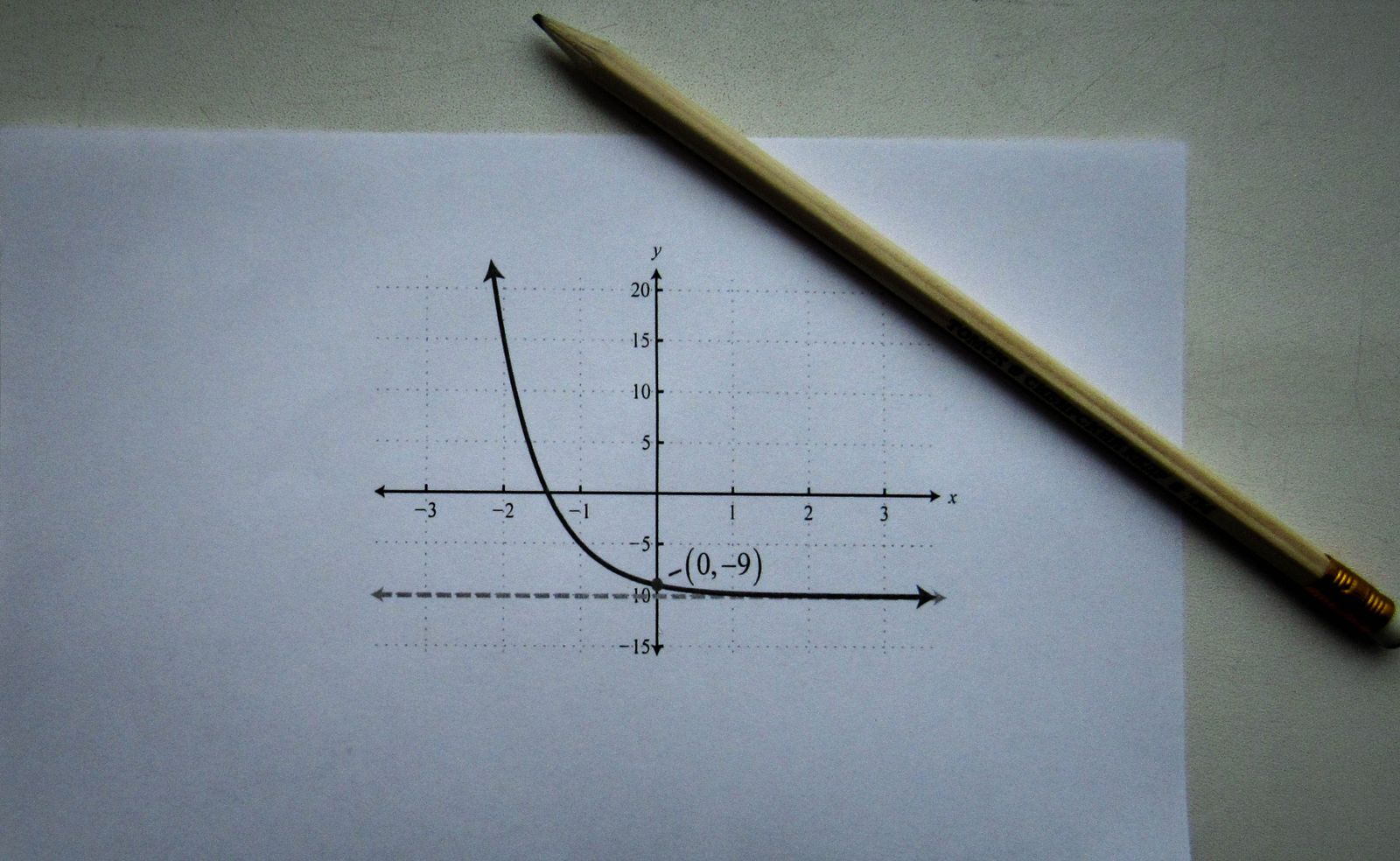
Free Graphing Calculator
Plot any function with a table of values and exact evaluation at any x.
Open →

Free Statistics Calculator
Descriptive statistics plus least-squares regression and predictions.
Open →
Free Matrix Calculator
Add, multiply, determinant, inverse and transpose for 2×2 and 3×3 matrices.
Open →
Free Quadratic Equation Calculator
Roots, discriminant, vertex and axis for any quadratic equation.
Open →Card photos: Sergey Meshkov / Pexels, Pexels licence · Pittigrilli / Wikimedia Commons, CC0 · Lukas Blazek / Pexels, Pexels licence · Yulia Meshkova / Wikimedia Commons, CC BY 4.0 · Joost J. Bakker / Wikimedia Commons, CC BY 2.0 · Coyau / Wikimedia Commons, CC BY-SA 3.0
Which tool do I need?
| Your task | Open this tool |
| Draw the graph of a function, find intercepts | Graphing Calculator |
| sin, cos, tan, logs, powers, roots | Scientific Calculator |
| Mean, standard deviation, quartiles, regression | Statistics Calculator |
| Loan payments, savings growth, interest rates | Financial Calculator |
| Matrix arithmetic, determinants, inverses | Matrix Calculator |
| Solve ax² + bx + c = 0, find the vertex | Quadratic Equation Calculator |
What the research says students are asked to buy
Three sources shaped this collection. First, the College Board's AP calculator policy: graphing calculators are required for parts of AP Calculus AB, Calculus BC and Precalculus, and a graphing calculator with statistical capabilities is expected for AP Statistics, while scientific (nongraphing) calculators are allowed for the AP science exams. Second, finance and accounting courses teach time value of money on five-key financial calculators, and professional finance exams restrict the exam room to dedicated financial calculator models — the same N, I/Y, PV, PMT, FV working this hub's financial tool reproduces. Third, linear algebra and college algebra textbooks teach determinants, inverses and Cramer's rule as core skills, which is why the matrix tool shows its working instead of hiding it. Where a category had no genuine free tool to offer, no hub was built for it: every category here has working tools behind it.
Study tools, not exam devices — an honest note
Nothing on this hub may be used inside an exam room. Exam boards publish approved-calculator lists and check devices before the exam; phones, laptops and websites are not allowed, and using a non-approved device can void a result. What these tools replace is the expensive device students are told to buy for homework and practice. Learn the ideas here, check your answers here, then use whatever approved device your exam requires on the day — the mathematics is identical, and so are the answers.
Frequently asked questions
Are these academic calculators really free?
Yes. Every tool on this hub is free to use in your browser, with no sign-up, no install and no payment. There are no locked features: the graphing, statistics, financial, matrix, scientific and quadratic tools are complete as they stand.
Do I still need to buy a handheld calculator?
For homework and revision, no: these tools cover the same work. For exam day, check your exam board's approved-calculator list, because exam rooms allow only approved handheld devices and the exam platform's own built-in calculator.
Which calculator do I need for calculus?
A graphing calculator: calculus courses use graphs to study functions, limits, derivatives and integrals. Start with the Free Graphing Calculator here, and use the scientific calculator for trig and log values.
Which calculator do I need for statistics class?
One with statistical capabilities: descriptive statistics plus linear regression. The Free Statistics Calculator covers both, and the graphing calculator can plot your regression line.
Which calculator do I need for finance or accounting?
A financial calculator that solves time value of money problems with the five keys N, I/Y, PV, PMT and FV. The Free Financial Calculator solves for any of the five, including the interest rate.
Can these tools handle engineering coursework?
The scientific calculator covers the trig, log, exponential, power and root functions engineering courses use, and the matrix and graphing tools cover linear algebra and function work. Start with the scientific calculators guide for the engineering angle.
Why do the tools show formulas and worked examples?
Because a bare answer teaches nothing and hides mistakes. Every tool states the formula it uses, works a checked example with real numbers, and cites the textbook source, so you can verify the answer by hand.
Will more academic tools be added?
The collection grows where students genuinely need it: new tools are added only when they cover real coursework with verified formulas, and every tool is tested with real inputs before it appears here.
Sources
- College Board, AP Exams Calculator Policy — which exams require graphing calculators, which allow scientific calculators, and what is expected for AP Statistics.
- Business LibreTexts, Time Value of Money — the formulas behind the financial calculator.
- OpenStax, Statistics §12.2, The Regression Equation — the least-squares formulas behind the statistics calculator.
- OpenStax, Algebra and Trigonometry, Solving Systems with Cramer's Rule — determinant formulas behind the matrix calculator.
Disclaimer: a study guide. The linked tools are homework and revision aids, not approved exam-room devices; check your exam board's calculator policy before exam day.