Financial Calculators
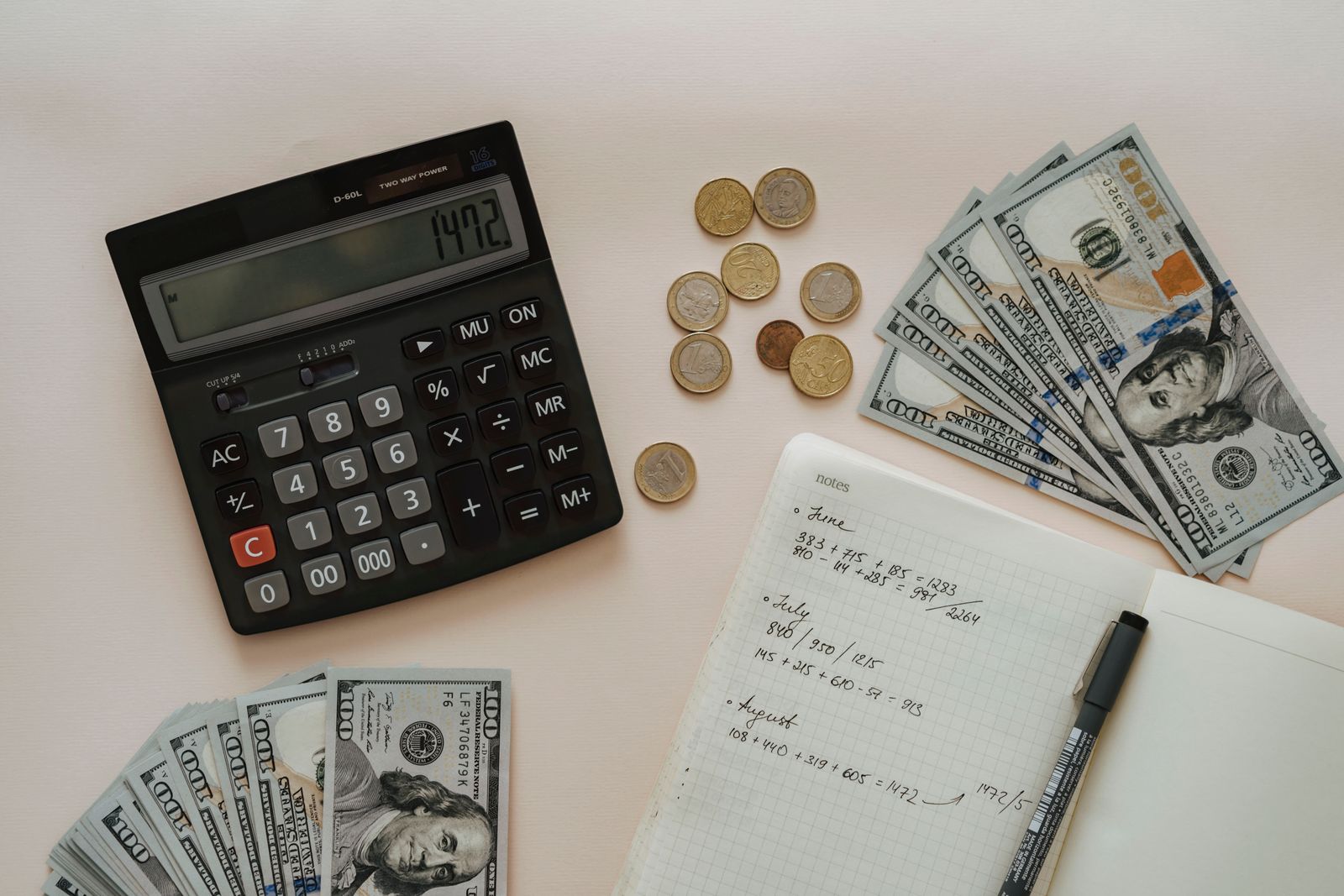
Published: 15 November 2026 · Updated: 15 November 2026
Financial calculators solve time value of money problems — the five keys N, I/Y, PV, PMT and FV behind every loan, savings plan and bond price. The free tools below solve for any of the five, including the interest rate, with the sign rule and payment timing explained beside the inputs.
Four values in, the fifth out. Give any four of N, I/Y, PV, PMT and FV and the financial tool finds the fifth. Money in is positive, money out is negative — that sign rule is the whole secret.
Researched by MixKhazana Team · Last updated 15 November 2026 · Data: Business LibreTexts, Time Value of Money; College Board AP calculator policy
What is a financial calculator?
A financial calculator solves time value of money problems. Money today is worth more than the same amount later, because money held now can earn interest — and every loan, savings plan, bond price and pension calculation is built on that one idea. A financial calculator works with five values — N (periods), I/Y (rate per period), PV (present value), PMT (regular payment) and FV (future value) — and finds whichever one is unknown. Finance and accounting courses teach the subject on these five keys, and professional finance exams restrict the exam room to dedicated financial calculator models, which tells you how central the tool is to the profession.
The one idea that trips up every beginner is the sign rule: money received is positive, money paid out is negative. Get the signs right and the five-key equation answers loans, savings, and rate questions alike; get them wrong and the equation has no sensible answer at all. The free tool explains the rule beside the inputs and refuses to invent an answer when the signs cannot work.
Tools in this category
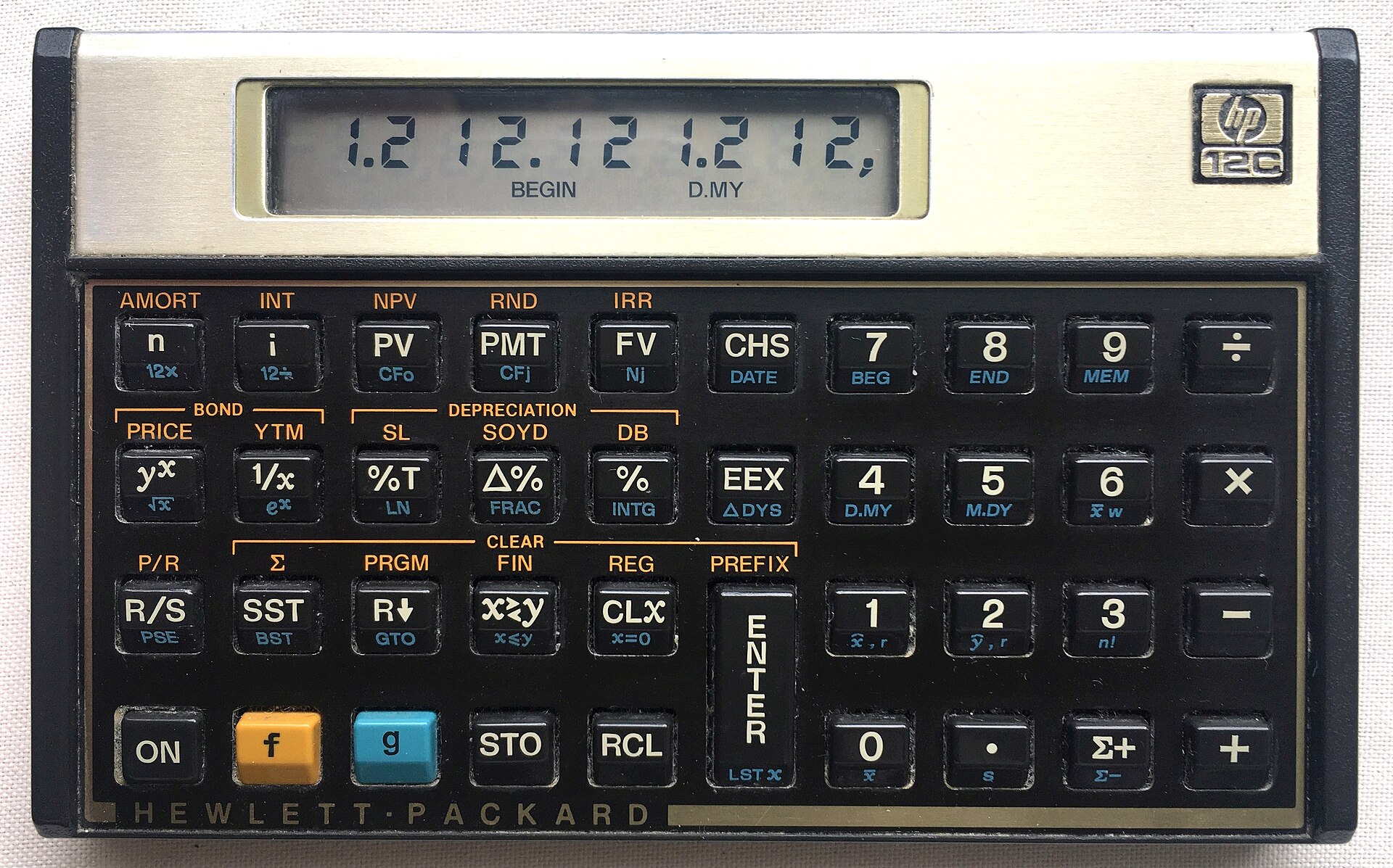
Free Financial Calculator
Solve any time value of money problem: PV, FV, PMT, N or I/Y, with annuity-due timing. The main tool of this category.
Open →
Free Compound Interest Calculator
Savings growth with EU rate presets and a year-by-year breakdown.
Open →
Free Student Loan Payoff Calculator
See when a student loan is cleared and what it costs in total.
Open →Card photos: Pittigrilli / Wikimedia Commons, CC0 · Сергей Михель / Wikimedia Commons, CC BY-SA 3.0 · McElspeth / Wikimedia Commons, CC0
The five keys, and what each question asks
| Question | Solve for | Example |
| What will my savings grow to? | FV | 1,000 at 8% for 10 years → 2,158.92 |
| What is a future sum worth today? | PV | 5,000 in 5 years at 6% → 3,736.29 today |
| What payment clears this loan? | PMT | 10,000 over 60 months at 0.5% → 193.33/month |
| How long until the goal is reached? | N | Periods until the balance hits the target |
| What rate makes this deal work? | I/Y | The implied rate, found by search |
Ordinary annuity or annuity due?
Most loan problems use end-of-period payments: borrow, wait a month, then pay. Rent and lease problems usually use beginning-of-period payments: pay first, then use the flat. The difference is exactly one period of interest on every payment — annuity-due values are ordinary-annuity values multiplied by (1 + i). If an answer is off by a factor of (1 + i) from the textbook's, the payment timing is almost always the reason. The free tool offers both timings in one box so the comparison takes one click.
The rate question has no formula — and that is fine
Four of the five values can be isolated with algebra. The interest rate cannot: it sits inside the equation in a way that resists rearrangement, so handheld devices find it by iteration, and so does the free tool — testing rates across a wide range, finding where the equation changes sign, then narrowing in. The answer is the same one a handheld device reaches, accurate to four decimal places.
Frequently asked questions
What is time value of money?
The idea that money available today is worth more than the same amount in the future, because money held now can earn interest. It is the foundation of loan, savings, bond and pension mathematics.
What do N, I/Y, PV, PMT and FV mean?
N is the number of periods, I/Y is the interest rate per period, PV is the value today, PMT is the regular payment each period, and FV is the value at the end. Give any four and a financial calculator solves for the fifth.
Why must the rate match the period?
Because the equation counts periods: if N counts months, I/Y must be the monthly rate. A 6% yearly rate paid monthly is 0.5% per period. Mixing a yearly rate with monthly periods is the most common time-value mistake.
What is the sign rule?
Money received is positive and money paid out is negative. A loan received (+PV) is repaid with negative payments (-PMT). If both have the same sign, the equation has no sensible answer.
What is the difference between an ordinary annuity and an annuity due?
In an ordinary annuity payments come at the end of each period, as with most loans. In an annuity due they come at the beginning, as with most rents. Annuity-due values equal ordinary-annuity values multiplied by (1 + i).
How is the interest rate solved?
By search: the tool tests rates, finds where the time-value equation changes sign, and narrows that bracket until the rate is accurate to four decimal places. There is no closed-form formula for the rate.
Can I practise for professional finance exams here?
Yes, for practice: the same five-key working, sign rule and timing choices. The exams themselves allow only specific approved handheld financial calculators in the room, so use an approved device on exam day.
Which tool should I open for a savings goal?
For a target amount with monthly saving, the savings goal calculator gives the monthly figure directly. For the general five-value problem — any unknown, including the rate — use the financial calculator.
Sources
- Business LibreTexts, Time Value of Money — compound interest, present and future value, and annuity formulas.
- College Board, AP Exams Calculator Policy — how exam boards control calculator use in exam rooms.
Disclaimer: a study guide, not financial advice. The linked tools are homework and revision aids, not approved exam-room devices; check your course and exam board rules before exam day.