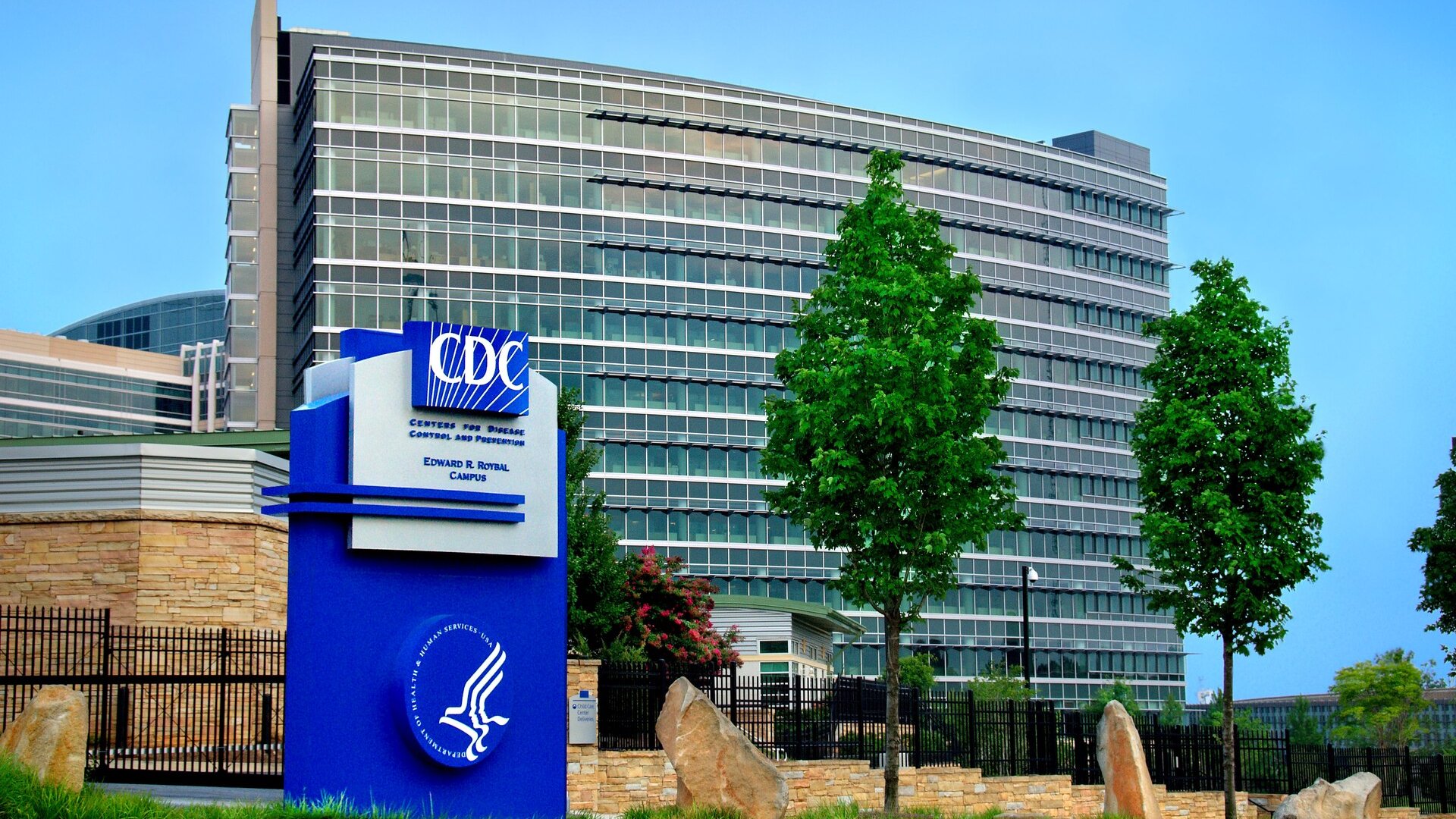
The United States may be about to lose a public health distinction it has held for 26 years. The Centers for Disease Control and Prevention counted 5,182 confirmed measles cases in 2026 as of 5 November — the first time the annual total has passed 5,000 since 1991, when 9,643 cases were reported. This week, an international panel of experts is meeting in Washington to decide whether the country still meets the standard for measles elimination, a status it has held since 2000. A decision is expected early next week.
The review is not about whether measles exists in the United States. It does, in large numbers. It is about a formal designation: whether the virus is once again spreading continuously inside the country, rather than arriving in isolated cases from abroad. That distinction matters for how the world judges American public health — and for the children who are catching a disease that was, a generation ago, considered beaten.
The numbers behind the review
The CDC's most recent weekly update, published on 6 November 2026, put the national case count at 5,182 confirmed cases across 45 states and Washington, DC. That is more than double the 2,289 infections reported in the whole of 2025, and the worst year since 1991. The count had reached 4,852 as of 29 October, meaning about 330 new cases were added in a single week.
The CDC's national tally lists four measles-associated deaths in 2026. The death count itself has become a point of dispute: Reuters reported that state health departments recorded 11 measles-related deaths since early 2025, compared with seven deaths included in CDC national figures for 2025 and 2026, after the CDC switched from state figures to mortality data from the National Center for Health Statistics. The discrepancy does not change the direction of the story, but it shows how even the basic numbers are contested.
The picture is worse across the Americas. The Pan American Health Organization recorded 57,666 confirmed measles cases across 17 countries and territories up to 31 October 2026, with 81 deaths: 53 in Guatemala, 23 in Mexico, three in the United States, and one each in Peru and Bolivia. The United States is not an outlier in the region — but it is the country whose status is now under formal review.
Johns Hopkins University's International Vaccine Access Center, which tracks the outbreak independently, counts more than 5,400 cases — higher than the CDC's figure, because it includes cases the CDC has not yet confirmed in its weekly update.
What elimination status actually means
Elimination status is a formal designation, not a claim that a country has zero cases. A country is considered to have eliminated measles when it has interrupted endemic transmission — when the virus is no longer spreading continuously among its own population — for at least 12 months, under high-quality surveillance. Imported cases can still occur: a traveller can bring measles in, and a small cluster can follow, without the country losing the status.
A country loses the status when transmission is re-established — when the same viral strain spreads without interruption for 12 months or more. That is what the panel is examining: not how many people are sick, but the genetics of the virus. The question is whether the same genotype and lineage has been circulating continuously in the United States since the current outbreaks began.
The United States achieved elimination in 2000, when PAHO determined the country had interrupted endemic transmission. Losing it would place the US alongside Canada, which the same commission found had re-established endemic measles at its November 2025 meeting.
Who decides, and when
The review is being conducted by the Measles and Rubella Elimination Regional Monitoring and Re-Verification Commission, an independent panel of eight experts in epidemiology, virology, paediatrics, public health and immunisation. Its annual meeting runs from 10 to 13 November in Washington. The panel asked all 35 member states in the Americas to submit measles status reports, which the experts are now reviewing in closed deliberations.
The commission does not announce a ruling on its own. It sends its findings and recommendations to the PAHO director, Jarbas Barbosa, who makes the final decision on each country's status and communicates it to the relevant authorities. A public announcement is expected early next week, possibly by 17 November, according to the Washington Post.
The review was originally scheduled as a special session in April 2026, but it was postponed to November so that authorities could complete technical analyses, including full viral genome sequencing. At its November 2025 meeting, the commission had classified the US status as "sustained with major concerns" — a warning that the designation was already fragile.
Public health experts widely expect the commission to conclude that the United States has lost its elimination status, given that the analysis period began in January 2025 and transmission has continued since. But the outcome has not been decided: the judgment will turn on the genetic evidence — whether the same virus has circulated without a break — and that evidence is still being weighed.
How the outbreak began
The current outbreaks began in January 2025 in West Texas, and spread from there. By January 2026, transmission was continuing unchecked. The rise coincides with declining childhood vaccination rates: the measles, mumps and rubella vaccine, known as MMR, is the protection, and coverage has fallen in parts of the country below the level needed to stop the virus spreading.
CDC Director Dr. Erica Schwartz told Reuters in an interview on 10 November that the agency would not fundamentally change its approach even if the country loses the status. "Let's say we did lose our measles elimination status. We're going to be doing the same thing that we've been doing today, which is working with states, public awareness and promoting the MMR vaccine," she said. She said she expected a decision from PAHO by early next week.
That is the practical truth of the review: losing the designation changes no law, no funding formula and no CDC programme. What it changes is the message. A country that eliminated measles in 2000, and held that status through 26 years of imported cases and small outbreaks, would be formally recognised as a country where measles once again spreads on its own. It is a verdict on vaccination coverage, on public trust in the vaccine, and on the health system's ability to find and contain cases quickly.
What to watch next
The panel's meeting ends on Friday 13 November. The announcement is expected early next week. Watch for three things: whether the commission finds continuous transmission of the same strain for 12 months or more; whether the finding covers the whole country or specific regions; and what the CDC says in response — whether it accepts the finding, disputes the genetic evidence, or announces new measures.
For parents, the advice has not changed and does not depend on the panel's decision. Measles is prevented by the MMR vaccine, given in two doses in childhood. The CDC's message, repeated by its director this week, is the same one it has given throughout the outbreak: check vaccination records, and get the vaccine if it is missing. The panel in Washington is deciding a label. The vaccine is what decides whether a child gets the disease.
🔗 See also
Frequently asked questions
How many measles cases has the US had in 2026?
The CDC counted 5,182 confirmed measles cases in 2026 as of 5 November, across 45 states and Washington, DC. That is the most since 1991, when 9,643 cases were reported, and more than double the 2,289 cases reported in all of 2025.
What is measles elimination status?
Elimination status is a formal designation meaning a country has interrupted endemic transmission of measles — the virus is no longer spreading continuously among its own population — for at least 12 months, under high-quality surveillance. Imported cases can still occur without losing the status. The US has held it since 2000.
Who is deciding whether the US keeps the status?
The Pan American Health Organization's Measles and Rubella Elimination Regional Monitoring and Re-Verification Commission — an independent panel of eight experts — is meeting in Washington from 10 to 13 November 2026. It sends its findings to PAHO Director Jarbas Barbosa, who makes the final decision.
When will the decision be announced?
A public announcement is expected early next week, possibly by 17 November, according to the Washington Post. The commission's meeting ends on 13 November, but the director's decision and announcement may lag the meeting.
Why is the US at risk of losing the status?
The commission must decide whether the same measles strain has spread without interruption for 12 months or more. The current outbreaks began in January 2025 in West Texas and transmission has continued since, while childhood vaccination rates have declined in parts of the country.
How many people have died of measles in 2026?
The CDC's national tally lists four measles-associated deaths in 2026. Reuters reported that state health departments recorded 11 measles-related deaths since early 2025, against seven in CDC figures — a discrepancy caused by the CDC's switch to National Center for Health Statistics mortality data.
What happens if the US loses elimination status?
Losing the designation changes no law, funding formula or CDC programme. CDC Director Erica Schwartz told Reuters the agency's response would not fundamentally change. What changes is the formal recognition that measles is once again spreading continuously inside the country.
How is measles prevented?
Measles is prevented by the MMR vaccine — measles, mumps and rubella — given in two doses in childhood. The CDC's advice throughout the outbreak has been to check vaccination records and get the vaccine if it is missing.
Which other countries have lost elimination status?
Canada was found by the same commission to have re-established endemic measles at its November 2025 meeting. Across the Americas, PAHO recorded 57,666 confirmed measles cases in 17 countries and territories up to 31 October 2026, with 81 deaths.
Sources
- Medical Daily: Measles response will stay unchanged if US loses elimination status, CDC director says (11 Nov 2026)
- Astig: The US may lose its measles-free status next week, 26 years after it was certified (11 Nov 2026)
- Explainedly: US measles elimination status under review — what it means (11 Nov 2026)
Facts checked against Reuters reporting via Medical Daily and the CDC's measles cases and outbreaks page (update of 6 November 2026) and PAHO announcements. The elimination-status decision has not yet been made; the commission's meeting runs 10-13 November 2026 and the announcement is expected early next week.