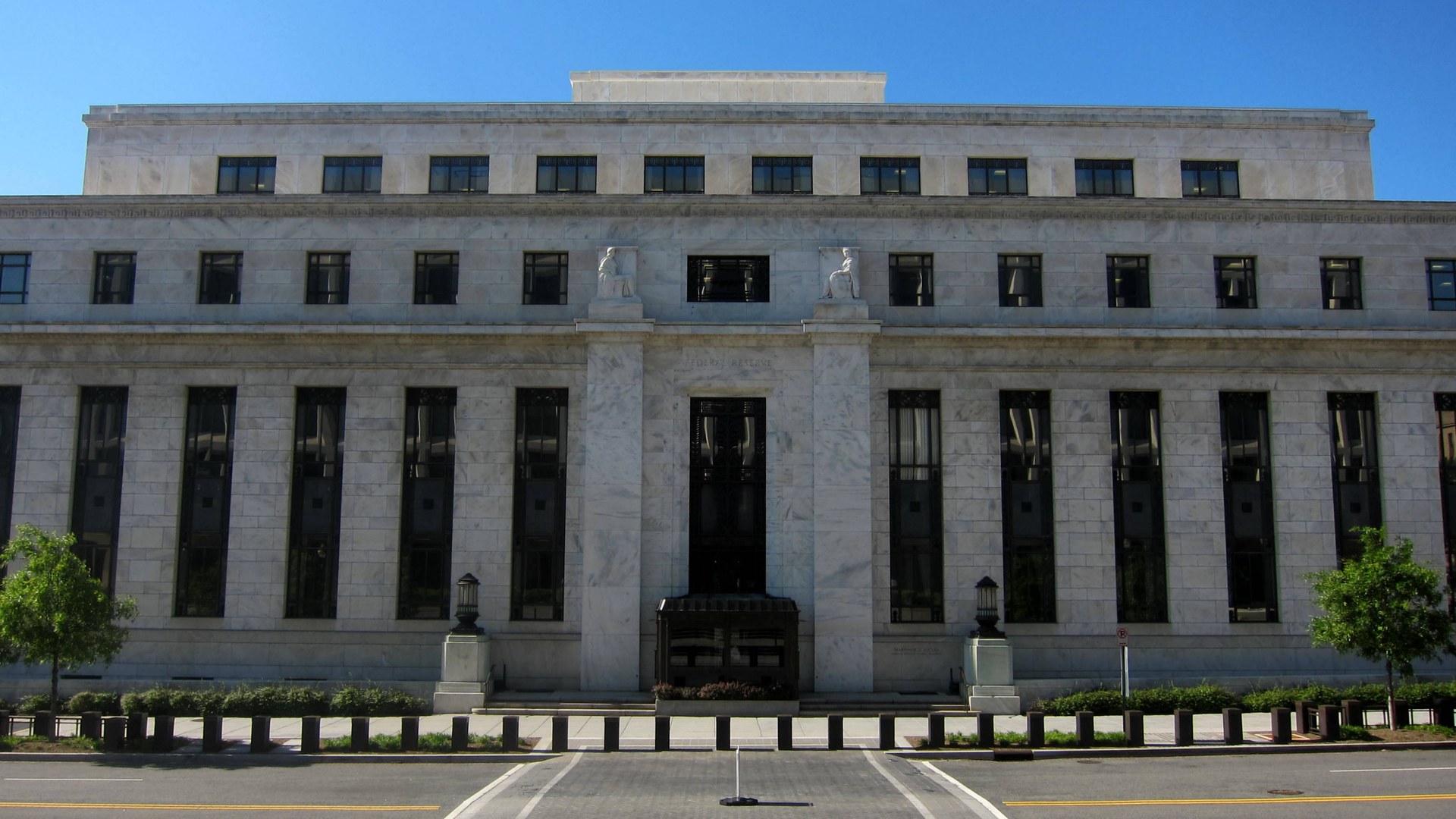
Tuesday 10 November 2026 was a remarkable day for American monetary policy — not because the Federal Reserve made a decision, but because the morning's data landed exactly on a line a Fed governor had drawn hours earlier. The Bureau of Labor Statistics reported that US consumer prices rose 0.4% in October, and that core prices, which exclude food and energy, rose 0.3% — both hotter than economists had forecast. Earlier that morning in London, Federal Reserve Governor Christopher Waller had said that if October core inflation came in at around 0.3% or higher, a half-point interest-rate rise at the Fed's December meeting should be considered. The data printed exactly 0.3%. Waller's test was met on the same day he set it.
That does not mean a half-point rise will happen. The decision belongs to the whole Federal Open Market Committee, which meets on 8 and 9 December, and Waller himself has not made a new call since the data came out. But the combination — hot inflation, a governor's public test, and the test being met — has put a bigger December rise firmly on the table. This article explains what the inflation report actually said, what Waller said and when, and what the Fed decides next.
What the October inflation report actually said
The Bureau of Labor Statistics released the Consumer Price Index for October 2026 on Tuesday at 8:30 a.m. Eastern Time. The headline index — the Consumer Price Index for All Urban Consumers, or CPI-U — increased 0.4% on a seasonally adjusted basis in October, after rising 0.6% in September. Economists polled by Reuters had forecast 0.3%, so the headline number came in hotter than expected even though it was slower than September.
Core inflation, which strips out volatile food and energy prices, rose 0.3% in October — the third month in a row at exactly 0.3%, after August and September. Economists had forecast 0.2%. Three straight months at 0.3% works out at an annual pace of roughly 3.6%, far above the Fed's 2% target, which is why the core figure matters more to the Fed than the headline one.
Inside the report, shelter was the biggest driver. The shelter index rose 0.3% in October and accounted for more than 30% of the monthly increase in the whole index; rent of a primary residence rose a cooler 0.2%. The food index rose 0.5% in October — food at home up 0.4% and food away from home up 0.5% — after groceries had slipped 0.1% in September. Energy prices rose 0.7%, much slower than the 5.2% jump in September; gasoline rose 1.0% on a seasonally adjusted basis, after a 9.1% jump in September. Real average hourly earnings — pay adjusted for inflation — were unchanged from September to October.
The missing number
One number was absent from the report, and it matters. The Bureau of Labor Statistics published no annual inflation rate for October — no 12-month change for the headline index or the core measure. The reason is simple and it is stated in the release itself: "BLS did not collect survey data for October 2025 because of a lapse in appropriations." Last year's government shutdown meant the bureau never collected the October 2025 prices, so it cannot calculate a 12-month comparison for October 2026.
Anyone quoting an October year-over-year inflation rate is quoting a number the bureau never published. The last published annual reading remains September's, when consumer prices rose 3.7% over 12 months. A few individual series still have an annual figure — gasoline, for example, was up 37.4% from a year earlier before seasonal adjustment, compared with a 34.2% annual rise in September — but there is no official overall annual rate for October. The 12-month comparison returns with the November report, which is scheduled for 10 December.
Waller's test — set in the morning, met by the afternoon
The most striking part of the day was the sequence. At 9:00 a.m. London time on Tuesday — about four and a half hours before the inflation data was released — the Federal Reserve published the text of a speech by Governor Christopher Waller, "The Economic Outlook and Some Thoughts on Labor Market Dynamism", delivered at the Bank of England Watchers Conference in London, hosted by King's Business School and the Money Macro and Finance Society.
Waller's base case was clear: he is leaning towards supporting a quarter-point — 25 basis point — increase in the policy rate at the Fed's 8–9 December meeting, and he said he would support it even if October inflation improved. But he set a specific condition for a larger move. If the October figures resembled the past two monthly readings, with core consumer price inflation "around 0.3 percent or even higher", he said, "a stronger policy move may be needed" — and: "In that case, I believe a 50 basis point hike in the policy rate should be considered at the December meeting." He added a warning about choosing the smaller step if the data warranted a bigger one: "Hiking only 25 basis points would put our credibility at risk, a risk I am not eager to take."
Four and a half hours later, the Bureau of Labor Statistics reported core inflation of exactly 0.3% — the third straight month at that level. The condition Waller described was met, numerically, on the same day he described it. Waller also said his views were his own, and not necessarily those of his colleagues on the Fed Board or the Open Market Committee — and he has made no new statement since the data came out. So the correct reading is careful: the data landed on the ground he had prepared, and a half-point rise is now a live possibility. It is not a decision, and it is not a promise.
What the Fed actually decides in December
The Federal Open Market Committee next meets on 8 and 9 December 2026, with the rate decision announced at 2:00 p.m. Eastern on 9 December. The current target range for the federal funds rate is 3.75% to 4.00%. The committee raised it to that level by a quarter point on 16 September, and held it there on 28 October, in a 10–2 vote. A quarter-point rise in December would take the range to 4.00% to 4.25%. A half-point rise — the move Waller said should be considered — would take it to 4.25% to 4.50%.
Before the meeting, the committee will see two more pieces of evidence. The minutes of the October 27–28 meeting are published on Wednesday 18 November, and they will show how close the 10–2 hold came to being a rise, and what the committee said about December. The second estimate of third-quarter GDP and the October PCE price figures follow on 25 November. But the November inflation report — the next CPI — is not published until 10 December, the day after the Fed's decision. That makes the October report the last inflation data the committee will see before it decides.
Not every Fed official is as clear as Waller. Richmond Fed President Thomas Barkin said on Monday that he had no base case yet for December. That leaves Waller's framing as the clearest official guide the market has: a quarter-point rise is the base case, and a half-point rise is on the table if the committee agrees the inflation data warrants it.
How markets reacted
Markets moved quickly on the combination of hot data and Waller's warning. The two-year Treasury yield — the part of the bond market most sensitive to Fed policy — jumped about 12 basis points to 4.68%, up from 4.56% on Monday. The ten-year yield climbed about 5 basis points to 4.93%. Gold fell sharply: spot gold traded at about $4,058.50 an ounce, down roughly 2% from Monday's close of $4,140.69. Stocks fell too: the S&P 500 closed Tuesday down 0.38% at 7,520.93, and the Nasdaq Composite closed down 0.74% at 25,065.88.
Those moves reflect a repricing of the same question Waller raised: whether the Fed will raise rates by a quarter point or a half point in December, and whether rates will stay higher for longer. A half-point rise would be the Fed's largest single step in this phase of policy, and markets had not priced it as the base case before Tuesday.
What it means for your money
For ordinary households, the federal funds rate is not an abstraction: it sets the floor for the cost of borrowing across the economy. A rise in December would tend to push up the rates on credit cards, car loans and variable-rate mortgages, and to keep mortgage rates elevated for new buyers. It would also tend to lift the returns on savings accounts and money-market funds, though banks pass those on slowly. The October report's details show why the squeeze is felt at the checkout as well as at the bank: food prices rose 0.5% in a single month, shelter — the biggest single cost for most households — rose 0.3% and drove more than 30% of the whole increase, and gasoline was up 37.4% on a year earlier.
There is one small piece of good news at the pump, even in a hot report. The national average price of petrol in the United States was $3.98 a gallon on 10 November, according to AAA — down from $4.01 the day before, and the first time below $4 since July. Energy inflation eased sharply in October, rising 0.7% after 5.2% in September. But the broader picture in the report is of prices still rising faster than the Fed wants, with the stickiest part — core services and shelter — barely slowing at all.
What to watch next
Three dates matter. Wednesday 18 November brings the minutes of the October meeting, which will show how the committee argued about December. Tuesday 25 November brings the second estimate of third-quarter GDP and the October PCE price figures — the Fed's preferred inflation measure. And 8–9 December is the meeting itself, with the decision at 2:00 p.m. Eastern on the 9th. The November inflation report follows on 10 December, one day too late to change the decision.
Until then, the story of Tuesday is simple enough to state plainly. Inflation came in hotter than expected. A Fed governor had said, hours before the data, that a core reading of 0.3% would mean a half-point rise should be considered. The reading was 0.3%. The December meeting will decide whether the committee agrees with him.
Frequently asked questions
What did the October 2026 inflation report say?
US consumer prices rose 0.4% in October on a seasonally adjusted basis, after 0.6% in September, the Bureau of Labor Statistics reported on 10 November 2026. Core prices, excluding food and energy, rose 0.3% for the third straight month. Both figures were hotter than economists forecast.
What is core inflation, and why does the Fed watch it?
Core inflation excludes volatile food and energy prices, so it shows the underlying trend. The Fed watches it closely because it is a better guide to whether price rises are persistent. Three straight months at 0.3% works out at an annual pace of roughly 3.6%, far above the Fed's 2% target.
Why is there no annual inflation rate for October?
The Bureau of Labor Statistics did not collect survey data for October 2025 because of a lapse in appropriations — last year's government shutdown — so it cannot calculate a 12-month change for October 2026. The last published annual reading is September's 3.7%. Anyone quoting an October year-over-year rate is quoting a number the bureau never published.
What did Fed Governor Waller say about December?
Speaking in London on Tuesday, before the data was released, Waller said he is leaning towards a quarter-point rise in December, and would support it even if October inflation improved. But if core inflation came in around 0.3% or higher, he said a 50-basis-point (half-point) hike 'should be considered' at the December meeting, warning that 'hiking only 25 basis points would put our credibility at risk'.
Did October's data meet Waller's test?
Yes, numerically. Core inflation printed exactly 0.3% — the third straight month at that level. But Waller has made no new statement since the data came out, and the decision belongs to the whole Federal Open Market Committee, not to one governor.
When does the Fed decide?
The Federal Open Market Committee meets on 8 and 9 December 2026, with the decision announced at 2:00 p.m. Eastern on 9 December. The current target range is 3.75% to 4.00%. A quarter-point rise would take it to 4.00% to 4.25%; a half-point rise would take it to 4.25% to 4.50%.
Why is the October report the last one the Fed sees before deciding?
The next inflation report, covering November, is scheduled for 10 December — one day after the Fed's December meeting ends. So October's figures are the last CPI data policymakers will have when they vote.
How did markets react to the report?
The two-year Treasury yield jumped about 12 basis points to 4.68%, the ten-year yield rose about 5 basis points to 4.93%, gold fell about 2% to roughly $4,058.50 an ounce, the S&P 500 closed down 0.38% at 7,520.93 and the Nasdaq fell 0.74% to 25,065.88.
What does a rate rise mean for households?
It tends to push up rates on credit cards, car loans and variable-rate mortgages, and keep mortgage rates elevated for new buyers. It also tends to lift returns on savings accounts, though banks pass those on slowly. The October report also showed food up 0.5% in a month and shelter — the biggest household cost — driving more than 30% of the increase.
Sources
- The Hindu BusinessLine: US CPI inflation slows to 0.4% in October as energy prices ease (10 Nov 2026)
- Business Day: Fed may consider half-point hike after core CPI rises (10 Nov 2026)
- JBizNews: October Core Inflation Hits Waller's Threshold for Considering a Half-Point December Hike (10 Nov 2026)
- SHRM: Inflation Continued to Rise in October (10 Nov 2026)
- The Edge: Waller Leans Toward a 25bp December Hike and Puts 50bp on the Table (10 Nov 2026)
Facts checked against the Bureau of Labor Statistics release of 10 November 2026, the Federal Reserve Board's published text of Governor Waller's speech, and Reuters reporting. Waller's remarks were made before the CPI release; this article does not attribute any post-release call to him.