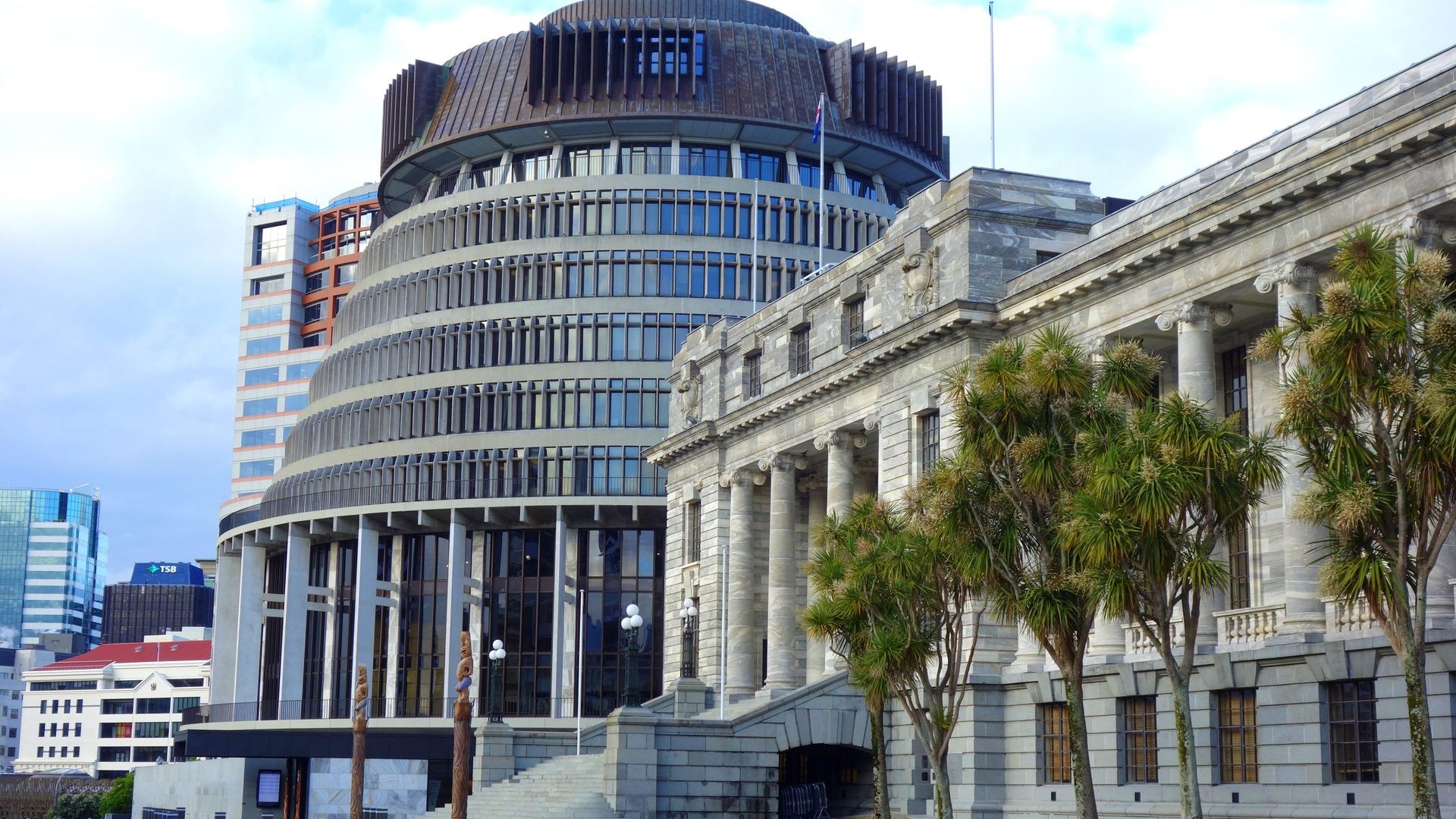
New Zealand's general election of Saturday 7 November 2026 produced one of the closest results in the country's history — and no winner. When the preliminary count was published, Labour had won the most party votes, National had won the most seats, the three parties in the current government together held a majority of exactly one seat, and about 399,000 special votes were still to be counted. Prime Minister Christopher Luxon told his supporters the election was too close to call. Labour leader Chris Hipkins refused to concede. Neither man will know for nearly three weeks whether he is governing.
The result in numbers
The Electoral Commission's preliminary results, published after voting closed at 7pm local time on Saturday, tell a strange story: the party that won the most votes did not win the most seats, and the coalition that holds a majority holds it by a single seat. The figures are preliminary — they exclude special votes and are not a formal declaration — but they are the official count so far.
| Party | Party votes | Share | Seats (preliminary) |
|---|---|---|---|
| Labour | 710,330 | 29.36% | 36 |
| National | 706,680 | 29.21% | 42 |
| Green Party | — | 13.30% | 16 |
| ACT New Zealand | — | 10.92% | 13 |
| New Zealand First | — | 9.78% | 12 |
| Opportunity Party | — | about 6.0% | 7 |
| Te Pāti Māori | — | 0.6% | 5 |
Labour beat National by 3,650 party votes — a margin of 0.15 percentage points, out of more than 2.4 million party votes cast. But National won 42 electorate seats, six more than Labour's 36, because it won more local races. The three parties in the current government — National (42), ACT (13) and New Zealand First (12) — together hold 67 seats in a Parliament of 131, one more than the 66 needed for a majority. Labour, the Greens (16) and Te Pāti Māori (5) together hold 57. The Opportunity Party, which crossed the threshold for the first time, holds 7.
The combined vote for the two big parties — Labour and National together — came to under 60 percent of the party vote, below the previous low of 62 percent recorded in 2002. New Zealand's politics, once a contest between two large parties, is now a contest between two blocs of smaller ones.
How New Zealand's voting system works
To understand why the party with the most votes has fewer seats, you need to understand how New Zealand votes. The country uses a system called MMP — mixed-member proportional representation. Every voter gets two votes: one for a local candidate in their electorate, and one for a political party — the "party vote". Parliament is then shared out roughly in proportion to the party vote, with local winners filling most seats and list MPs topping up the rest.
That is the theory. In practice, two quirks mattered on Saturday night. The first is the overhang. National won 42 local electorates — more seats than its 29.21 percent of the party vote would normally give it. Under the rules, it keeps all 42, and the extra seats are added on top. Te Pāti Māori did the same thing in reverse: it won only 0.6 percent of the party vote, but it leads in five of the seven Māori electorates, so it keeps five seats. The result is a Parliament of 131 seats instead of the usual 120 — a record — and 66 seats are needed to govern, not 61.
The second quirk is the special votes. New Zealand counts ordinary votes on election night, but about 399,365 votes are set aside as "special votes" — votes cast outside a voter's home electorate, votes cast from overseas, and votes cast by dictation for people who cannot vote in person. The Electoral Commission estimates about 96,947 of them were cast from overseas or by dictation. These votes are checked against the electoral rolls, counted over the following weeks, and added to the totals. They are a big number: roughly one in six of all votes cast. A one-seat majority built on the preliminary count can easily disappear when they are added.
The Electoral Commission is blunt about the status of Saturday's figures: the preliminary count is "indicative only", the numbers are "likely to change", and the preliminary results are "not directly comparable with the official results". The official count is expected on Friday 27 November.
Why nobody can claim victory
Both leaders said the same thing on Saturday night, in different words: wait. Luxon told National supporters the election was too close to call. Hipkins refused to concede. Both are right to wait, because three different outcomes are still possible.
In the first, the special votes leave the numbers roughly where they are, and the current three-party coalition — National, ACT and New Zealand First — keeps its one-seat majority and stays in government. In the second, the special votes shift enough seats to take the coalition below 66, and no bloc has a majority at all — which would mean days of negotiation between parties that have not yet agreed on anything. In the third, the shifts are larger still, and Labour, the Greens, Te Pāti Māori and the Opportunity Party find a path to 66 between them. On the preliminary numbers, that path does not exist: the four together hold 64. But preliminary numbers are exactly what the special votes exist to change.
That is why the next three weeks matter more than election night did. The official count runs from 8 to 27 November: rolls are checked, ordinary votes are recounted, electorate totals are verified, and special votes are counted. Only when the Commission publishes the official result on 27 November will anyone know the real shape of the new Parliament — and only then can government formation properly begin.
The two leaders
Christopher Luxon, the prime minister, leads the National Party and the current three-party coalition. He went into the election as the incumbent, and on the preliminary numbers his bloc still holds — by a single seat. Chris Hipkins leads Labour, the party that won the most votes on the night but finished six seats behind National. He was prime minister before Luxon, losing the 2023 election, and has spent three years rebuilding Labour in opposition. Saturday's result — the most party votes, the fewest seats among the two big parties — is the cruellest kind of near-miss: first in votes, second in the count that decides who governs.
Neither man made a victory speech, and neither conceded. In a country where coalition negotiations are a normal part of forming a government, both are keeping their options open — and their potential partners close. ACT and New Zealand First are the kingmakers if the coalition holds; the Greens, Te Pāti Māori and the Opportunity Party are the ones to watch if it does not.
What happens next
Until 27 November, the current government stays in place as a caretaker government — it keeps running the country, but by convention it does not make major new decisions. The counting is the main event: officials will check every special vote against the electoral roll, recount ordinary votes, and verify every electorate total. The Commission aims to publish the official results on Friday 27 November, twenty days after polling day.
After that, the politics starts. If the coalition keeps its majority, Luxon is expected to form a government quickly, with the same three partners. If it does not, negotiations begin — and in New Zealand those can take days or weeks. The Governor-General formally appoints the government only once it is clear who can command a majority in the new Parliament. Until then, New Zealand has a government that cannot be sure it will still be the government in a month, and an opposition that cannot be sure it has won anything at all.
For a country used to clear results, this is unfamiliar ground. For the rest of the world, it is a reminder of how MMP works: a system designed to make Parliament match the votes can also produce a Parliament in which nobody wins outright — and a three-week wait to find out who governs.
Timeline
| Date | What happens |
|---|---|
| 7 November 2026 | General election. Voting closes 7pm. Preliminary count: Labour 29.36%, National 29.21%; coalition 67 of 131 seats. |
| 8 November 2026 | Official counting process begins: rolls checked, ordinary votes recounted, special votes processed. |
| 8–27 November 2026 | Special votes (about 399,365) counted and added; electorate totals verified. |
| 27 November 2026 | Electoral Commission publishes the official results. Government formation can then begin. |
This page will be updated when the official results are published on 27 November 2026.
🔗 See also
Frequently asked questions
Who won the New Zealand election?
Nobody yet. In the preliminary count from the 7 November 2026 election, Labour won the most party votes (710,330, or 29.36%) and National won the most seats (42). The governing coalition of National, ACT and New Zealand First holds 67 of 131 seats — a majority of one. About 399,000 special votes are still to be counted, and the official result is due on 27 November.
What were the party vote results?
Labour 29.36% (710,330 votes), National 29.21% (706,680 votes), Greens 13.30%, ACT 10.92%, New Zealand First 9.78%, Opportunity Party about 6.0%, and Te Pāti Māori 0.6%. Labour led National by just 3,650 votes. These are preliminary figures from the Electoral Commission.
How many seats does each party have?
On the preliminary allocation: National 42, Labour 36, Greens 16, ACT 13, New Zealand First 12, Opportunity Party 7, and Te Pāti Māori 5 — a total of 131 seats. The figures can change when special votes are counted.
What are special votes?
Special votes are votes cast outside a voter's home electorate, votes cast from overseas, and votes cast by dictation. About 399,365 of them are still to be counted from this election, including about 96,947 cast from overseas or by dictation. They are checked against the electoral rolls before being added to the totals.
When is the official result?
The Electoral Commission aims to publish the official results on Friday 27 November 2026, twenty days after polling day. The preliminary count is indicative only and is likely to change.
What is MMP?
MMP — mixed-member proportional representation — is New Zealand's voting system. Each voter gets two votes: one for a local candidate and one for a party. Parliament is shared out roughly in proportion to the party vote, with list MPs topping up the parties that won fewer local seats than their vote share entitles them to.
Why does Parliament have 131 seats?
Because of overhang seats. National won 42 electorates — more than its party vote entitles it to — and keeps them all, and Te Pāti Māori won five Māori electorates on a 0.6% party vote. The extra seats are added on top of the usual 120, giving a record 131-seat Parliament. That is why 66 seats, not 61, are needed for a majority.
Who is the prime minister right now?
Christopher Luxon remains prime minister. Until a new government is formed after the official results, the current government stays in place as a caretaker government — it keeps running the country but by convention does not make major new decisions.
Sources
- New Zealand Election: No Winner in Preliminary Count — Zark News
- NZ Election 2026: Who Will Govern? 399,000 Votes Still to Count — Webfit News
- New Zealand Election: Labour Leads Preliminary Party Vote — Okay News
- Luxon says New Zealand election too close to call — Newswire NZ
All figures are the New Zealand Electoral Commission's preliminary results for the 7 November 2026 general election (electionresults.govt.nz) and can change when special votes are counted. Reporting basis: Reuters, 7 November 2026, and Radio New Zealand (RNZ).