 MixKhazana
Two Earthquakes Shake California in One Night
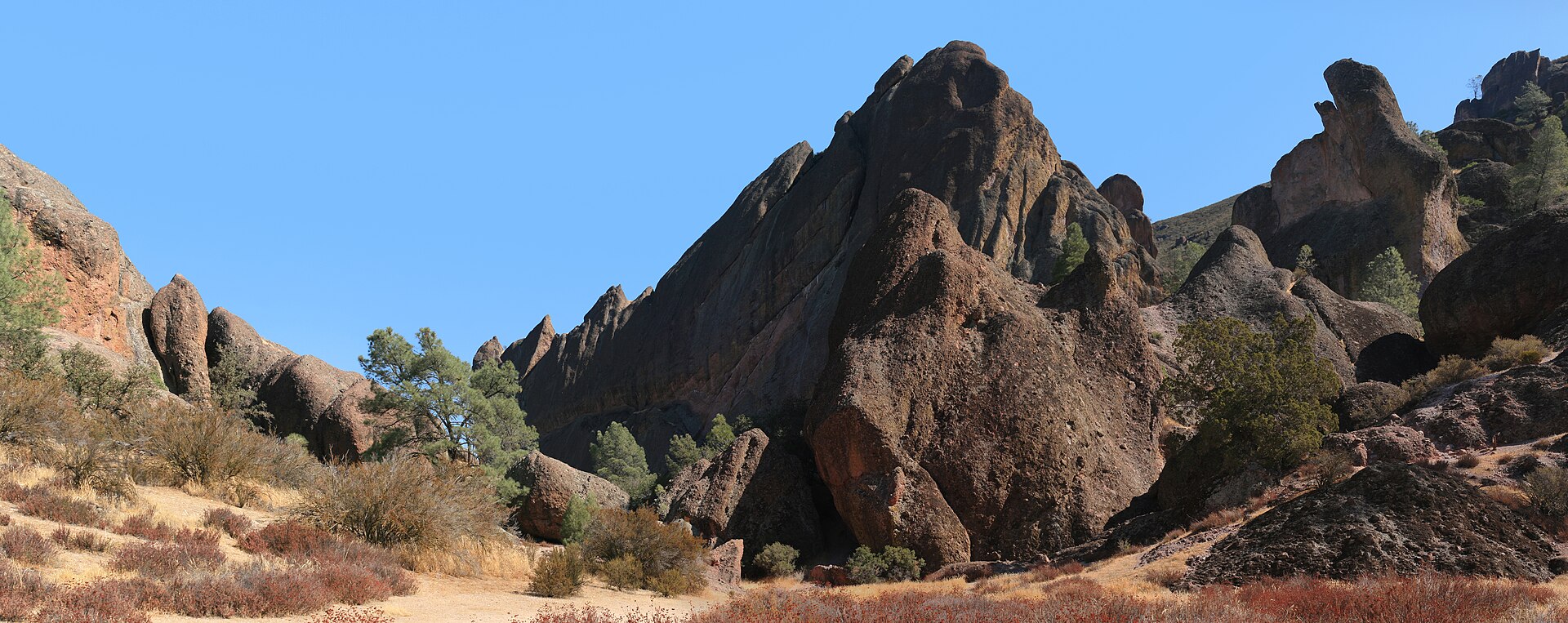
Update (20 November 2026): Two earthquakes shook California hours apart overnight on 19–20 November 2026: a magnitude 5.0 near Pinnacles National Park in central California at 10:49 p.m. on Thursday, and a magnitude 4.2 near Commerce in Los Angeles County at 3:25 a.m. on Friday. No serious injuries or major damage were reported from either quake. The U.S. Geological Survey says there is no established link between the two events.
California had a turbulent night on 19–20 November 2026. A magnitude 5.0 earthquake struck near Pinnacles National Park in central California at 10:49 p.m. Pacific time on Thursday, part of a swarm of dozens of smaller tremors along a section of the San Andreas Fault. Less than five hours later, at 3:25 a.m. on Friday, a separate magnitude 4.2 earthquake shook the Los Angeles area, waking people across the basin and prompting emergency inspections throughout the city. By 7 a.m., nearly 13,000 people had reported feeling the Los Angeles quake to the U.S. Geological Survey.
The two earthquakes struck hundreds of miles apart, in two very different parts of the state — one in a national park in sparsely populated ranch country, the other directly beneath one of the most densely populated urban regions in the United States. Neither caused serious injuries or major damage, according to reports on Friday morning. But the pair, coming so close together in time, put California's seismic monitoring under renewed attention, and raised the question everyone asks after two quakes in one night: are they connected? The short answer, from the USGS, is that there is no established evidence that they are. This article sets out what happened, what the numbers mean, and what to expect next.
What Happened Overnight
The night began in central California. At 9:53 p.m. Pacific time on Thursday 19 November, seismic instruments recorded a magnitude 3.1 earthquake northwest of Pinnacles National Park, in the mountainous terrain between San Benito and Monterey counties. A second tremor, magnitude 3.3, followed at 10:12 p.m. Both were in a concentrated area where numerous faults cut through the hills. At 10:49 p.m., the considerably stronger magnitude 5.0 earthquake struck the same area. By Friday afternoon, 29 earthquakes of magnitude 2.0 or larger had been recorded near Pinnacles since Thursday evening, and one count put the swarm at roughly 22 recorded quakes in a tight cluster along a central California section of the San Andreas Fault.
Then, at 3:25 a.m. on Friday 20 November, the second earthquake struck Southern California. Its epicentre was about a half-mile from Commerce, in Los Angeles County, and people felt it as far away as Lancaster and Poway, about 115 miles away. Los Angeles Mayor Karen Bass issued a statement on X early on Friday, saying a "4.4-magnitude earthquake centered in Commerce impacted the L.A. region just before 3:30 AM this morning that likely woke up many Angelenos" — using the magnitude as it was first reported, before the USGS revised it back to 4.2.
Magnitudes often change in the first hours after a quake as seismologists review more data, and both of these quakes were revised. The Pinnacles quake was first estimated at magnitude 5.4 and then revised to a reviewed moment magnitude of 4.98, which rounds to 5.0. The Los Angeles quake was first reported at 4.2, then upgraded to 4.4, and the reviewed record now lists it at 4.2. The figures in this article use the USGS reviewed values.
The Pinnacles Earthquake: Magnitude 5.0
The larger of the two earthquakes struck central California at 10:49 p.m. Pacific time on Thursday 19 November. Its epicentre was about 6 miles (10 kilometres) northwest of Pinnacles, in San Benito County, about 13 miles northeast of Soledad, at a depth of just 6.7 kilometres — about 4.2 miles beneath the surface. Because it was shallow, ground motion reached nearby communities with relatively little distance to travel, and the USGS ShakeMap estimated strong shaking in parts of central California.
Pinnacles National Park is known for its rock formations — the towering spires and crags left behind by an ancient volcano, split in two by the San Andreas Fault itself, which runs through the park. The earthquake struck in that fault region, one of the most closely monitored seismic zones in the world. The swarm that came with it — dozens of smaller tremors before and after the main shock — is typical of the area: the faults around Pinnacles produce clusters of quakes rather than single isolated events.
For all its strength, the Pinnacles quake caused little harm, because so few people live near its epicentre. The park and the surrounding ranch country are sparsely populated, and the nearest towns are miles away. There were no immediate reports of serious injuries or major damage.
The Los Angeles Earthquake: Magnitude 4.2
The Los Angeles earthquake was smaller, but it was felt by far more people. It struck at 3:25 a.m. on Friday 20 November, with its epicentre about 1 kilometre northwest of Commerce, 3 kilometres south of East Los Angeles and 9 kilometres southeast of downtown Los Angeles, at a depth of about 15 to 16 kilometres — directly beneath one of the most densely populated urban regions in the United States.
The shaking woke people across the Los Angeles basin. By 7 a.m. on Friday, nearly 13,000 people had reported feeling it to the USGS, and reports came in from as far as Lancaster to the north and Poway, about 115 miles to the south. Emergency inspections were carried out across the city through the morning. As of the early reports on Friday, there were no reports of structural damage, gas-line failures or injuries, and the USGS automatic impact estimate for the quake was at its lowest level, green — meaning little or no damage or loss of life is expected.
The Southern California Seismic Network said the fault that triggered the quake was probably the Lower Elysian Park fault, part of the Puente Hills blind-thrust system that runs for more than 40 kilometres beneath the northern Los Angeles basin. A blind thrust fault is one that does not break the surface, which makes it harder to map and study than a fault like the San Andreas, whose trace can be seen on the ground. The Puente Hills system is one of the faults seismologists watch most closely in Los Angeles, because it runs directly under the city.
At a news conference on Friday morning at Caltech's Seismological Laboratory, Bob de Groot, a USGS scientist, addressed the question of why so many people were woken but so few were warned. The ShakeAlert earthquake early warning system was activated, he said, and the USGS posted about the quake on X within a few minutes. But the threshold for sending an alert to mobile phones is magnitude 4.5 — and this earthquake, at a reviewed magnitude of 4.2, did not reach it.
Are the Two Quakes Connected?
The question everyone asks after two earthquakes in one night is whether one caused the other. The answer, on the evidence available on Friday, is that there is no established link between them. The two principal earthquakes occurred in geographically separate regions — central California and the Los Angeles basin, hundreds of miles apart — and there is currently no evidence that they were caused by the same fault movement.
That does not mean the timing is meaningless. California's faults are all part of the same plate boundary, and stress changes from one earthquake can, in principle, affect faults elsewhere. But seismologists are careful about this: two earthquakes hours apart in different parts of the state are, until proven otherwise, two separate events that happened to occur on the same night.
What the night does show is the scale of California's seismic activity. Dozens of earthquakes were recorded near Pinnacles alone between Thursday night and Friday afternoon, and the Los Angeles quake drew more than 12,400 felt reports. The state sits on the boundary between the Pacific and North American tectonic plates, and its instruments record thousands of small earthquakes every year. Most are too small to feel. A night like 19–20 November — a magnitude 5.0 and a magnitude 4.2 within five hours — is unusual, but it is the kind of night the system is built to handle.
Aftershocks: What the Forecasts Say
After any earthquake, the question is what comes next. The USGS publishes aftershock forecasts that give the odds of further shaking in the week after the main shock, and the two forecasts from this week tell the story of the two quakes' different sizes.
For the Commerce quake, the USGS forecast gives about a 36% chance of a magnitude 3 or larger aftershock in the following week, and about a 6% chance of magnitude 4 or larger. For the Pinnacles quake, the forecast is higher, because that quake was larger: about a 74% chance of a magnitude 3 or larger aftershock within a week, about 16% for magnitude 4 or larger, and about 2% for magnitude 5 or larger. The Southern California Seismic Network added that aftershocks may be expected after the Los Angeles quake, with the largest likely to be about one magnitude smaller than the initial shock.
Those numbers are probabilities, not predictions. A 36% chance of a magnitude 3 aftershock means it is more likely than not that one will not happen — and a 2% chance of another magnitude 5 near Pinnacles means it almost certainly will not. But the forecasts are the reason officials tell people to stay alert for a week after a quake, to check their homes for damage, and to keep emergency supplies at hand. Aftershocks are a normal part of an earthquake sequence, and they can continue for days.
Why No Phone Alert in Los Angeles
One detail from Friday morning drew particular attention: millions of people in Los Angeles were woken by the quake, but their phones did not sound an alert. The reason is the threshold. California's Earthquake Warning system sends wireless emergency alerts to mobile phones for earthquakes of magnitude 5.0 or larger with at least light shaking. The Los Angeles quake, at a reviewed magnitude of 4.2, was below that threshold, so no alert went to phones.
The ShakeAlert system itself did work. It detected the quake, and the USGS posted on its ShakeAlert X account within a few minutes: "Good morning Southern California! Did you feel the magnitude 4.2 quake about 1 mile northwest of Commerce at 3:25 am? The ShakeAlert Earthquake Early Warning system was activated." At the Caltech news conference, Bob de Groot said "the system operated exactly as designed" — and added that the threshold for alert delivery to cell phones is magnitude 4.5, which the earthquake did not reach.
The threshold exists for a reason. If phones sounded an alarm for every magnitude 4 earthquake in California, people would get alerts often enough to start ignoring them — and an ignored alert is worse than no alert when a big quake comes. The trade-off is that a magnitude 4.2 under a city of millions will wake people up without warning them first.
What to Do During an Earthquake
The guidance from the USGS and the California Office of Emergency Services is simple, and it is worth knowing before the next quake rather than after it: Drop, Cover, and Hold On. Drop to the ground. Take cover under a sturdy table or desk. Hold on until the shaking stops. If you are inside, stay inside — most injuries in earthquakes come from falling objects and from people trying to run outside during the shaking. If you are outside, move away from buildings, trees, street lights and power lines, and drop to the ground in an open area.
After the shaking stops, check yourself and others for injuries, and check your home for damage — especially gas leaks, broken water pipes and electrical damage. If you smell gas, leave the building and call the gas company from outside. Expect aftershocks, and be ready to Drop, Cover, and Hold On again. Keep a flashlight, water and a phone charger where you can reach them in the dark: the Los Angeles quake struck at 3:25 a.m., when most people were asleep and the power was the first thing they reached for.
One practical point from Friday morning: the USGS "Did You Feel It?" system collects felt reports from the public, and those reports help seismologists map how far the shaking spread. Nearly 13,000 people had filed reports for the Los Angeles quake by 7 a.m. If you feel an earthquake, reporting it takes a minute and helps the scientists who track the next one.
California's Earthquake Risk in Context
California sits on the boundary between the Pacific and North American tectonic plates, and the USGS records thousands of small earthquakes in the state every year. Most are too small to feel. A magnitude 5.0 earthquake like the Pinnacles event is strong enough to be felt widely and can cause light damage near the epicentre; a magnitude 4.2 like the Los Angeles event is felt across a city but rarely causes serious damage. The scale is logarithmic: each whole-number step up in magnitude means about 32 times more energy released, so the Pinnacles quake released roughly six times the energy of the Los Angeles quake.
The two quakes are a reminder of the two different kinds of risk California faces. The Pinnacles quake was the bigger event, but it struck a sparsely populated area and caused little harm. The Los Angeles quake was smaller, but it struck directly beneath millions of people — and if it had been a magnitude larger, the story would have been very different. That is why the faults beneath Los Angeles, like the Puente Hills blind-thrust system, are watched so closely.
For now, both sequences are being watched. The Pinnacles swarm was still active on Friday afternoon, with new tremors being recorded through the day. The Los Angeles area is under an aftershock forecast that runs for a week. Neither quake caused serious harm, and that — on a night when two parts of the state shook within five hours of each other — is the best outcome California could have asked for.
Frequently Asked Questions
How big were the California earthquakes on 19–20 November 2026?
Two significant earthquakes struck California hours apart. A magnitude 5.0 earthquake hit near Pinnacles National Park in central California at 10:49 p.m. Pacific time on Thursday 19 November 2026. About four and a half hours later, at 3:25 a.m. on Friday 20 November, a magnitude 4.2 earthquake struck near Commerce in Los Angeles County. The U.S. Geological Survey (USGS) reported both.
Where was the magnitude 5.0 earthquake near Pinnacles?
The earthquake's epicentre was about 6 miles (10 kilometres) northwest of Pinnacles in San Benito County, about 13 miles northeast of Soledad, at a depth of about 6.7 kilometres (4.2 miles). It struck in the San Andreas Fault region. The USGS first estimated it at magnitude 5.4, then revised it to a reviewed moment magnitude of 4.98, which rounds to 5.0. It was part of a swarm of roughly 22 to 29 earthquakes of magnitude 2.0 or larger near Pinnacles that night.
Where was the Los Angeles earthquake?
The Los Angeles earthquake struck at 3:25 a.m. on Friday 20 November 2026, with its epicentre about 1 kilometre northwest of Commerce, about 3 kilometres south of East Los Angeles and about 7 to 8 miles from downtown Los Angeles, at a depth of about 15 to 16 kilometres. The USGS first reported it at magnitude 4.2, then 4.4, and the reviewed record now lists it at magnitude 4.2. Nearly 13,000 people had reported feeling it by 7 a.m.
Was anyone hurt or was there damage?
As of Friday morning, there were no immediate reports of serious injuries, major damage, structural damage, gas-line failures or injuries from either earthquake. The USGS automatic impact estimate for the Los Angeles quake was at its lowest level, green, meaning little or no damage or loss of life is expected. Emergency inspections were carried out across Los Angeles.
Are the two earthquakes connected?
There is currently no established evidence that the two earthquakes were caused by the same fault movement. They struck hundreds of miles apart, in geographically separate regions — one in the San Andreas Fault region of central California, the other beneath the Los Angeles basin, where the Southern California Seismic Network says the fault was probably the Lower Elysian Park fault.
Why did phones not get an earthquake alert in Los Angeles?
California's Earthquake Warning system sends wireless emergency alerts to phones for magnitude 5.0 or larger earthquakes with at least light shaking. The Los Angeles quake, at a reviewed magnitude of 4.2, was below that threshold, so no phone alert was issued. The ShakeAlert system was activated and the USGS posted about the quake on X within a few minutes. A USGS scientist said at a Caltech news conference that "the system operated exactly as designed."
What are the chances of aftershocks?
The USGS aftershock forecast for the Commerce quake gives about a 36% chance of a magnitude 3 or larger aftershock in the following week and about a 6% chance of magnitude 4 or larger. The Pinnacles forecast is higher because that quake was larger: about a 74% chance of magnitude 3 or larger within a week, about 16% for magnitude 4 or larger, and about 2% for magnitude 5 or larger. The Southern California Seismic Network says aftershocks may be expected, with the largest likely to be about one magnitude smaller than the initial quake.
What should you do during an earthquake?
The guidance from the USGS and the California Office of Emergency Services is Drop, Cover, and Hold On: drop to the ground, take cover under a sturdy table or desk, and hold on until the shaking stops. Stay indoors if you are inside, and move away from buildings, trees and power lines if you are outside. After the shaking, check for gas leaks and damage, and expect aftershocks.
How common are earthquakes in California?
California sits on the boundary between the Pacific and North American tectonic plates, and the USGS records thousands of small earthquakes in the state every year. Most are too small to feel. A magnitude 5.0 earthquake like the Pinnacles event is strong enough to be felt widely and can cause light damage near the epicentre, while a magnitude 4.2 like the Los Angeles event is felt across a city but rarely causes serious damage.
Related Reading
- South Florida Floods, November 2026 — another American city hit by extreme weather this month.
- Polar Vortex, November 2026 USA — the cold snap gripping the United States this month.
Sources
- BeInSure — Magnitude 4.2 earthquake strikes Los Angeles as California sees multiple quakes — the USGS figures for both quakes, the revision history, and the Pinnacles swarm.
- NewsCubby — Quake near Commerce rattles L.A. hours after 5.0 near Pinnacles — the reviewed magnitudes, the epicentre details, the aftershock forecasts, and the Lower Elysian Park fault.
- Above the Norm News — California rattled by magnitude 5.0 earthquake near San Andreas Fault before 4.2 strikes East Los Angeles — the timeline of the swarm, the foreshocks, and the depth figures.
- The LA Local — A 4.2 magnitude quake struck near Commerce, rattling LA overnight — the felt reports, the Caltech news conference, and the ShakeAlert threshold.
This article was published on 21 November 2026 and covers the earthquakes of 19–20 November 2026. Magnitudes are USGS reviewed values and may be revised further. Check the USGS for the latest figures.