 MixKhazana
US Flu Season Arrives Early: Hospitalizations Surge
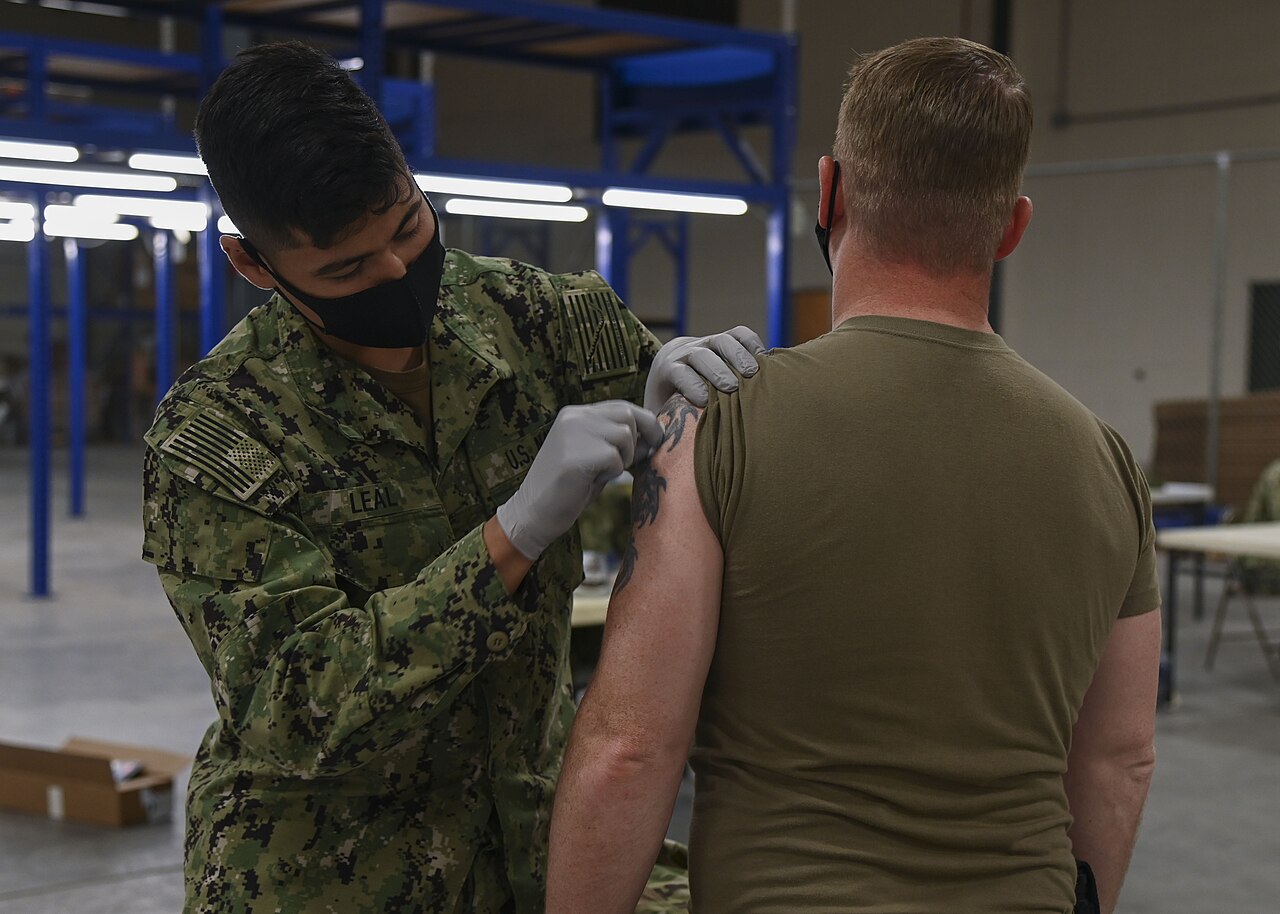
What happened: The US flu season has arrived weeks early — and it is arriving fast. In the week ending 14 November 2026, there were 11,734 laboratory-confirmed flu hospital admissions across the United States, up 22% from 9,584 the week before, according to the CDC's FluView report published on Friday 20 November. It is the first time this season that weekly admissions have crossed 10,000. The cumulative hospitalization rate has reached 12.0 per 100,000 people — the highest at this point in a season since 2010-11. The CDC estimates that flu has already caused at least 3.7 million illnesses, 50,000 hospitalizations and 2,800 deaths this season, including seven children. The wave is driven almost entirely by influenza A(H1N1), and it is building into Thanksgiving week.
Flu season in the United States normally creeps in slowly. Cases rise through October and November, gather pace in December, and peak somewhere between December and February. This year the pattern has broken. Flu activity began increasing in late August and early September — months ahead of schedule — and by mid-November the numbers had reached levels the country has not seen this early in a season for fifteen years.
The figures in this article come from the CDC's FluView report for the week ending 14 November 2026, published on Friday 20 November, and from the CDC's FluSurv-NET hospitalization network and FluSight forecast. Every number here is from those reports. Where the CDC urges caution — and it does, on what an early season means for the peak — that caution is reported too. This is general health information only, not medical advice.
The Numbers
The headline number is 11,734. That is how many laboratory-confirmed flu hospital admissions the CDC recorded in the United States in the week ending 14 November 2026 — a single week. It is up 22% from the 9,584 admissions recorded the previous week, and it is the first time this season that weekly admissions have crossed 10,000. A jump of more than 2,000 admissions in one week, on top of a total that was already high, is what has turned an early season into a national story.
The comparison with last season is even starker. In the week ending 7 November 2026, there were 9,584 flu hospital admissions. In the same week last season, there were 1,268. That is more than seven times as many admissions in the same week of the year. Whatever is driving this season, it is not a small shift — the gap between this year and last year at the same point in the calendar is enormous.
The cumulative picture tells the same story. The hospitalization rate in the CDC's FluSurv-NET network — the system that tracks flu hospitalizations in detail — has reached 12.0 per 100,000 people. That is the highest rate at this point in a season since the 2010-11 season. In other words, at this stage of the winter, more people per head of population are being hospitalized with flu than at the same stage in any season for fifteen years.
The CDC's estimates for the season so far put the scale in plain terms: at least 3.7 million illnesses, 50,000 hospitalizations and 2,800 deaths. Those are estimates, not counts of confirmed cases — the CDC builds them from surveillance data, because most flu cases are never tested or reported. Seven children have died of flu so far this season. Each of those deaths is counted individually by the CDC, and seven child deaths before Thanksgiving is a sombre marker of how early and how fast this season has moved.
How Early Is Early
To understand why these numbers are drawing attention, it helps to know what a normal flu season looks like. In a typical US season, flu activity begins to rise in October or November, builds through December, and peaks between December and February. The season is a winter story: it arrives with the cold weather, gathers through the holidays, and reaches its worst in the depths of winter.
This season broke that rhythm. Flu activity began increasing in late August and early September — months ahead of schedule, while summer was barely over. By the time November arrived, the season was already behaving like a season well into its rise, and by mid-November hospital admissions had crossed 10,000 in a week. The season did not just start early; it started early and then accelerated.
That acceleration is what the weekly figures show. From 9,584 admissions in the week ending 7 November to 11,734 in the week ending 14 November is a rise of 22% in seven days. Early seasons can be deceptive — a fast start does not always mean a bad winter — and the CDC is careful to say so. But a season that is already at 12.0 hospitalizations per 100,000 people in mid-November, the highest at this point since 2010-11, is a season that has everyone's attention before Thanksgiving has even arrived.
The H1N1 Strain
Almost all of this season's flu is one strain. The season is driven almost entirely by influenza A(H1N1)pdm09, which accounts for 98.9% of subtyped influenza A viruses. That is an unusually clean picture: when one strain makes up nearly 99% of the viruses being subtyped, there is little doubt about what is spreading.
H1N1pdm09 is not a new virus. It is a descendant of the 2009 pandemic virus — the swine flu that spread around the world in 2009 — and it is now a regular seasonal virus, one of the strains that circulates every winter. Its name carries history, but the virus itself is now part of the ordinary flu landscape. What is different this year is not the identity of the virus but its timing and its pace.
Reports link the early activity to a single mutation in the circulating H1N1 virus — a small change that may help it slip past some existing immunity. That is the working explanation for why the season started so early and rose so fast: a virus that the population's immune defences recognize a little less well can spread a little more easily, and in a population where immunity has built up over years of exposure and vaccination, even a small change can open a gap. The mutation is reported as a possible factor, not a proven one — the evidence is still being gathered — but it fits the pattern of a season that began months ahead of schedule.
Who Is Most at Risk
Flu does not hit everyone equally, and this season's hospital data shows the familiar pattern. Adults aged 65 and older have the highest flu admission rate — the oldest age group is, as in most seasons, the group most likely to end up in hospital with flu. Children aged four and under are next, with the second-highest admission rate. The two ends of the age range — the very old and the very young — are where flu most often turns serious.
That pattern is why the child deaths matter so much. Seven children have died of flu so far this season, according to the CDC. Child flu deaths are individually reported and counted, and seven before Thanksgiving — with the season still rising — is a reminder that for young children flu is not a mild illness to be brushed aside. The CDC's estimates put the season's deaths so far at 2,800 overall, alongside at least 3.7 million illnesses and 50,000 hospitalizations.
For most healthy adults, flu is a miserable week in bed rather than a hospital stay. But the hospitalization figures show who carries the risk: older adults first, then the youngest children. That is also why doctors' advice ahead of gatherings is aimed at protecting the people in those groups — a flu shot before visiting grandparents, or before a house full of small children, is about the people at the table as much as the person getting the shot.
Which States Are Hit Hardest
The early wave is not spread evenly across the country. Seven states are listed with high or very high flu activity: California, Louisiana, Oregon, South Carolina, Tennessee, Texas and Washington. They span the map — the West Coast, the South, and the Gulf — which suggests this is not a single regional outbreak but a wave that is rising in several parts of the country at once.
That spread matters for Thanksgiving. California and Texas are two of the most populous states in the country, and Washington and Oregon anchor the Pacific Northwest; Louisiana, South Carolina and Tennessee cover the South. With high or very high activity already recorded in states across the country, the flu is not something happening somewhere else — for millions of Americans, it is already happening where they live.
Activity levels are a measure of how much flu is circulating, not a prediction of where it will go next. A state at high activity today may stabilize; a state at moderate activity may rise. But the list of seven states gives a snapshot of where the season is furthest advanced in mid-November, and it is the backdrop against which the busiest travel week of the year is about to begin.
Thanksgiving Timing
Thanksgiving falls on Thursday 26 November 2026 — six days after the CDC published its FluView report for the week ending 14 November. It is the worst possible timing for a flu wave: the biggest travel week of the year, with millions of people crossing the country, sitting in crowded airports and cars, and then gathering indoors with family — often including the older relatives and young children who are most at risk.
Travel and indoor gatherings increase the spread of flu. That is not speculation; it is the basic arithmetic of a respiratory virus. More people in enclosed spaces, for longer, with more mixing between households and regions, means more chances for the virus to pass from one person to another. A wave that is already rising at 22% a week meets a week in which the whole country moves and mixes — and the result, the CDC's own forecast suggests, could be a sharp further rise.
The CDC's FluSight forecast for the week ending 28 November 2026 — Thanksgiving week — is 9,200 to 36,100 new flu admissions. The range is wide, because forecasting a week in which travel and gatherings distort the usual patterns is genuinely uncertain. But even the bottom of that range would be a heavy week, and the top of it — 36,100 admissions in a single week — would be more than three times the 11,734 recorded in the week ending 14 November. The forecast is not a prediction of what will happen; it is a measure of how much is at stake in the coming week.
What the CDC Says About the Peak
Before anyone assumes the worst, the CDC itself urges caution. An early rise does not necessarily mean a higher peak or a worse season overall. That is the CDC's own warning, and it is an important one: flu seasons that start early sometimes peak early and end early, and a fast November does not guarantee a terrible January. The shape of a season cannot be read from its first weeks alone.
The CDC still classifies the overall severity of this season as low. That classification may surprise anyone who has read the hospitalization figures, but it reflects the CDC's assessment of the season as a whole — including the proportion of outpatient visits for flu-like illness and the overall burden so far — rather than any single week's admissions. Severity is a summary judgement, and at this point in the season the CDC's judgement is that overall severity remains low.
Both of those cautions should be kept in mind alongside the numbers. The hospitalizations are real, the rate is the highest at this point in a season since 2010-11, and the forecast for Thanksgiving week runs as high as 36,100 admissions. At the same time, the season's peak has not happened yet, and an early rise is not a promise of a worse winter. What the numbers establish is that the season is early and fast; what happens next is still to be seen.
What to Do Before Gathering
With Thanksgiving six days away, the practical advice from doctors is straightforward: get vaccinated before gathering. Doctors urge vaccination before gatherings, because the season will continue well beyond Thanksgiving.
The other general guidance from the CDC is the familiar advice for any flu season. Stay home when you are sick, rather than bringing flu to a family gathering. Wash hands often, and cover coughs and sneezes. Keep gatherings ventilated where possible. None of this is new, and none of it is a guarantee — but with admissions rising 22% in a week and the forecast for Thanksgiving week running to 36,100, the simple steps are the ones available to everyone.
Anyone who is unwell in the days before Thanksgiving should think carefully about travelling or gathering, and about who will be at the table — particularly older relatives and young children, the two groups with the highest admission rates this season. This article is general health information only, not medical advice: if you have questions about vaccination or about flu symptoms, ask your own doctor or pharmacist, and check the CDC's FluView pages for the latest figures as the season develops.
Frequently Asked Questions
How many people were hospitalized with flu in the week ending 14 November 2026?
There were 11,734 laboratory-confirmed flu hospital admissions in the United States in the week ending 14 November 2026, according to the CDC's FluView report published on Friday 20 November. That is up 22% from 9,584 admissions the previous week, and it is the first time this season that weekly admissions have crossed 10,000.
How does this flu season compare with last season?
In the week ending 7 November 2026 there were 9,584 flu hospital admissions, compared with 1,268 in the same week last season — more than seven times higher. The cumulative hospitalization rate in the CDC's FluSurv-NET network has reached 12.0 per 100,000 people, the highest at this point in a season since 2010-11.
Which flu strain is driving the early 2026 season?
The season is driven almost entirely by influenza A(H1N1)pdm09, which accounts for 98.9% of subtyped influenza A viruses. It is a descendant of the 2009 pandemic virus and is now a regular seasonal virus. Reports link the early activity to a single mutation in the circulating H1N1 virus that may help it slip past some existing immunity.
Who is most at risk from flu this season?
Adults aged 65 and older have the highest flu admission rate, and children aged four and under are next. Seven children have died of flu so far this season, according to the CDC.
Which states have the highest flu activity right now?
The states with high or very high flu activity are California, Louisiana, Oregon, South Carolina, Tennessee, Texas and Washington.
Does an early flu season mean a worse season overall?
Not necessarily. The CDC cautions that an early rise does not necessarily mean a higher peak or a worse season overall, and the CDC still classifies the overall severity of this season as low.
How many flu admissions are forecast for Thanksgiving week?
The CDC's FluSight forecast for the week ending 28 November 2026 — Thanksgiving week — is 9,200 to 36,100 new flu admissions.
Should I get a flu shot before Thanksgiving?
Doctors urge vaccination before gatherings, because Thanksgiving travel and indoor gatherings increase the spread of flu. This article is general health information only, not medical advice — if you have questions about vaccination, ask your own doctor or pharmacist.
Related Reading
- US Loses Measles Elimination Status 2026 — another US public-health story this year — what the loss of measles elimination status means.
Sources
- Nursing TV — Flu US hospital admissions jump as H1N1 early season builds — CDC FluView figures for the week ending 14 November 2026, including 11,734 admissions and the FluSurv-NET rate of 12.0 per 100,000.
- Consensus Daily — Flu season 2026: early start, H1N1, states with high activity — the early H1N1 season, the states with high or very high activity, and the CDC's caution on the peak.
- Medium — Flu season showed up a month early, Thanksgiving is in six days — the early start to the season and the Thanksgiving timing.
This article was published on 23 November 2026; figures are from the CDC FluView report for the week ending 14 November 2026, published on Friday 20 November 2026. This article is general health information only, not medical advice — if you have questions about vaccination or flu symptoms, ask your own doctor or pharmacist.