Ukraine Strikes Crimean Bridge: Arch Collapses, Road Cut
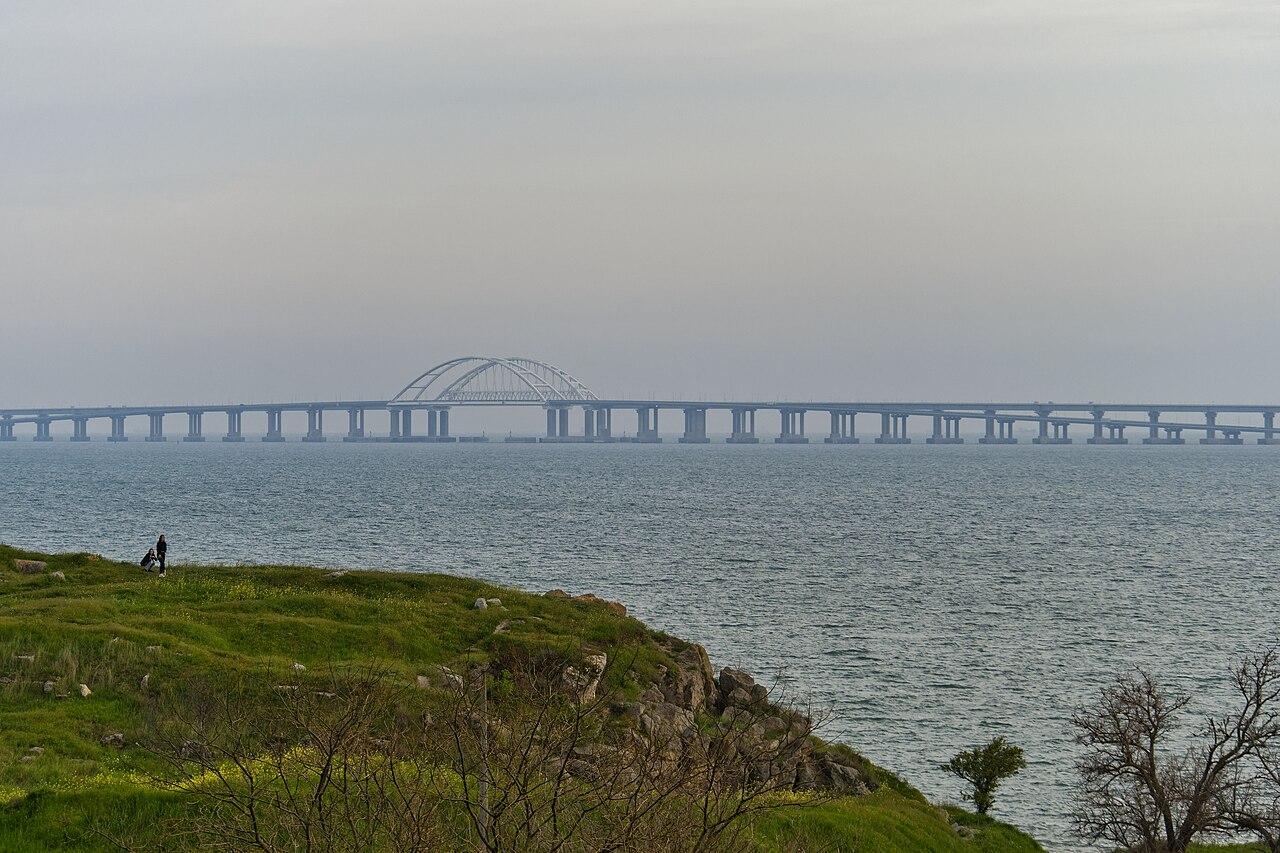
What happened: Ukraine struck the Crimean Bridge — the 19-kilometre road-and-rail link between Russia and occupied Crimea — on two consecutive nights, 16 and 17 November 2026. A road arch and a span of roadway collapsed into the Kerch Strait, road traffic was halted, and shipping through the strait was blocked by the wreckage.
On the night of 16 November, drones struck the bridge. The 227-metre arch supporting the roadway was visibly shifted sideways by about 15 degrees, and the road surface was damaged in at least two places. On the night of 17 November, Ukraine's Defence Forces launched a second, combined attack with drones and missiles. The arch that had been tilted the previous day, and a section of the roadway, could no longer withstand the damage and collapsed into the water.
Video and photographs published by Ukraine's Security Service, the SBU, showed piles of concrete rubble lying on the bridge's base, with a clean gap several dozen metres wide in the middle of the crossing. A section of the bridge appeared to be lying in rubble in the water. Ukraine's General Staff said the arch and a span of the road section had collapsed, that the roadway was out of action, and that no vehicle could cross it. The railway section was still standing, but its arch was damaged.
What Happened
The attack came in two waves. On the night of 16 November, drones hit the crossing, tilting the 227-metre road arch and damaging the road surface. On the night of 17 November, a second and heavier combined strike followed. According to the SBU, the operation was carried out jointly with other branches of Ukraine's Defence Forces and had been in preparation for several weeks. President Volodymyr Zelenskyy said the strike was the seventh stage of a multi-week operation that had methodically destroyed Russian air defences, radar systems and electronic-warfare equipment around the bridge before the final blow.
The scale of the damage is significant. Ukraine's defence company Fire Point, which took part in the operation, said more than 270 metres of roadway had been destroyed and that an FP-5 Flamingo cruise missile had struck the railway section. The SBU said one of the bridge's metal arches "and the road span beneath it have been completely destroyed" and that the rail section had suffered critical damage. A retired Ukrainian navy captain, Andriy Ryzhenko, told RBC-Ukraine that rebuilding the destroyed road span and arch would take more than a year.
Russia's Transport Ministry confirmed the attack and announced a temporary suspension of traffic on both the road and railway sections. By noon on 17 November, railway traffic across the bridge had been restored on one track, according to Russian officials, with repair work under way on the second section. Road traffic, however, remained completely halted, and the Russian-installed authorities on the peninsula urged residents not to panic, saying the delivery of food and essentials would not be affected.
Two people were killed in Crimea in the attack, according to the Russian-installed governor, Sergei Aksyonov. Russia's defence ministry said it had shot down 1,441 Ukrainian drones in a major overnight barrage — the second-highest one-day figure this year, by its count. At the same time, Russia struck bridges in Kyiv, with reporters seeing crater-like holes on the capital's Northern Bridge and people crossing on foot during the morning rush hour.
The Weapons Used
What stands out about this strike is that it was carried out largely with Ukrainian-built weapons. President Zelenskyy confirmed that the operation was a joint effort by the SBU and Ukraine's General Staff, and listed the systems involved: Palianytsia missile-drones struck the road section, while Neptune missiles, Ruta drones and FP-5 Flamingo missiles struck the railway section. Other systems named in Ukrainian reports include Dovbush, Vendetta, Da Vinci, Sichen, MICH 2000, An-197, FP-1 and the R-360 Neptune.
The SBU said its Alpha special forces struck the roadway section with Palianytsia missile-drones, causing it to collapse into the water. Seven out of nine missiles that hit the bridge were Ruta missiles, produced by Destinus, a private European aerospace startup, according to its co-founder Oleksandr Danylyuk, speaking to Bloomberg. The combined attack lasted from the evening of 16 November into the early hours of 17 November, and the arch supporting the roadway collapsed around midnight, taking the roadway down with it.
This was the SBU's fourth strike on the Crimean Bridge since Russia's full-scale invasion began in 2022. Earlier attacks damaged the bridge but did not destroy a main arch. The November 2026 operation was different in two ways: it was staged over several weeks, with the air defences around the bridge degraded first, and it used a combination of drones and cruise missiles in a single night, rather than a single weapon type.
Why the Bridge Matters
The Crimean Bridge stretches 19 kilometres (12 miles) across the Kerch Strait, linking southern Russia to the Crimean peninsula, which Russia annexed from Ukraine in 2014. It was a signature project for President Vladimir Putin after the annexation, and it has been the main road-and-rail supply route for Russian forces in Crimea and southern Ukraine ever since. It is also, as analysts note, the physical symbol of Moscow's claim over Crimea — a monument to the annexation, in the words of one analysis.
That dual role — supply route and symbol — is why Ukraine has repeatedly targeted it. Cutting the road link forces Russia to supply Crimea by other routes, including ferries and the land corridor through occupied southern Ukraine, both of which are slower and more exposed. Ukraine's General Staff pointed out that the number of land routes to Crimea available to Russian forces is shrinking, after the destruction of the bridges at Chongar and in Henichesk as well.
The timing matters too. The strike came days before Putin was due to meet Donald Trump and Xi Jinping on the sidelines of the APEC Economic Leaders' Meeting in Shenzhen on 18–19 November, where the three leaders were expected to discuss trade and the war. Ukraine's strike was, in that context, both a military operation and a message: that Kyiv can still hit Russia's most protected infrastructure, and that it intends to keep doing so while diplomacy continues.
What Each Side Says
President Zelenskyy hailed the strike as "unprecedented" and a justified retaliation for Russia's barrages of Ukrainian infrastructure in the almost five years since Moscow invaded. Ukraine's defence ministry said the central arch and spans had collapsed and the rail section had suffered critical damage. The SBU published video of the damage, and Ukrainian officials presented the operation as the result of careful planning over several weeks.
Russia's response was to promise repair. The Kremlin said the bridge would be "restored and will be even better than before", and President Putin was briefed on the situation, according to the state news agency Tass. Russia's investigative committee opened a criminal case into the attack, saying it had resulted in structural damage. Russian officials confirmed that rail traffic had resumed on one track, and the Transport Ministry said repair work was under way.
Some claims could not be independently verified. Reuters, which reported the strike from Kyiv and Moscow, said it could not immediately verify the footage published by Zelenskyy, although photographs circulating on social media appeared to show extensive damage. Bloomberg likewise said it was unable to verify Ukraine's information independently. The broad picture — a collapsed road arch, halted road traffic, and a damaged but partly functioning railway — is confirmed by both sides, even if the exact extent of the damage is still being assessed.
Shipping and Supply Impact
The most immediate consequence may not be on land but at sea. The collapsed arch is a metal structure weighing about 6,000 tons and standing about 45 metres tall, and it fell directly into the navigable channel of the Kerch Strait. That blocks shipping through the strait, which is the route out of the Sea of Azov. Clearing the wreckage will most likely take at least weeks, possibly months, according to military experts cited by RBC-Ukraine.
That matters for grain. The attack may substantially delay the resumption of grain shipping from Russia's Sea of Azov ports, because the debris must be cleared before ships can pass safely, according to analysts cited by Bloomberg. Russia is a major grain exporter, and the Sea of Azov ports are part of that trade, so a prolonged blockage could have commercial consequences beyond the military ones.
For Crimea itself, the immediate effect is on road transport. With the roadway out of action and no vehicle able to cross, supplies must move by rail — on a single restored track — or by ferry and the land corridor. The Russian-installed authorities said food and essentials would not be affected, but the loss of the road link removes the fastest and most flexible route for moving goods and people onto the peninsula.
What Happens Next
- Repairs: Russia says the bridge will be restored. Experts say rebuilding the destroyed road span and arch will take more than a year, and clearing the shipping channel will take weeks or months. The railway is already partly running again.
- APEC meeting: the Trump–Xi–Putin meeting in Shenzhen on 18–19 November will be watched for any sign that the strike changes the diplomatic picture. Ukraine struck the bridge days before the meeting, and the war is expected to feature in the leaders' discussions.
- More strikes: Ukraine has now hit the bridge four times. The November operation showed that its domestically built drones and missiles can defeat the defences around the crossing, which makes further attempts likely if the bridge is repaired.
- Russian response: Russia has already struck bridges in Kyiv in return, and further retaliation against Ukrainian infrastructure is likely. The pattern of the war — Ukrainian strikes on Russian logistics, Russian strikes on Ukrainian cities — continues.
The bridge will be rebuilt, if the Kremlin keeps its promise. But the strike has shown that the most visible symbol of Russia's annexation of Crimea is not safe, and that Ukraine's weapons industry can now produce the drones and missiles needed to hit it. That is the lasting significance of two nights in November.
Frequently Asked Questions
What happened to the Crimean Bridge?
Ukraine struck the bridge on the nights of 16 and 17 November 2026. A 227-metre road arch was first tilted by drone strikes, then collapsed into the Kerch Strait in a second combined drone-and-missile attack, along with more than 270 metres of roadway. Road traffic was halted; the railway was damaged but partly restored.
How long is the Crimean Bridge?
The bridge stretches 19 kilometres (12 miles) across the Kerch Strait, linking southern Russia to Crimea, which Russia annexed from Ukraine in 2014. It carries both a road and a railway and is the main supply route for Russian forces on the peninsula.
What weapons did Ukraine use?
According to President Zelenskyy and the SBU, the strike used Ukrainian-built systems: Palianytsia missile-drones hit the road section, while Neptune missiles, Ruta drones and FP-5 Flamingo missiles hit the railway section. The operation was the seventh stage of a multi-week campaign that first degraded Russian air defences around the bridge.
Was anyone killed?
Two people were killed in Crimea in the attack, according to Sergei Aksyonov, the Russian-installed governor of the peninsula.
Is the bridge still usable?
Road traffic is completely halted — Ukraine's General Staff said no vehicle can cross. Railway traffic resumed on one track by noon on 17 November, according to Russian officials, with repairs under way on the second section.
Why is the bridge a target?
It is the main road-and-rail supply route for Russian forces in Crimea and southern Ukraine, and it is also the most visible symbol of Russia's 2014 annexation of Crimea. Ukraine has now struck it four times since the full-scale invasion began in 2022.
Does the damage block shipping?
Yes. The collapsed arch, a structure of about 6,000 tons and 45 metres tall, fell into the navigable channel of the Kerch Strait. Experts say clearing it will take weeks or months, which may delay grain shipping from Russia's Sea of Azov ports.
How long will repairs take?
Russia's Kremlin says the bridge will be restored and 'will be even better than before'. Military experts cited by RBC-Ukraine say rebuilding the destroyed road span and arch will take more than a year.
Related Reading
- Russia–Ukraine Abu Dhabi Talks 2026 — the diplomatic track running alongside the fighting.
- Trump–Putin–Xi Meeting in Shenzhen — the three leaders meet at APEC days after the strike.
Sources
- Channels TV — Ukraine Missile Strike Severs Russia's Crimean Bridge — AFP report on the collapsed arch, the halted road traffic and the Kremlin's repair promise.
- The New Voice of Ukraine — Ukraine destroys Crimean Bridge arch and 270 meters of roadway — SBU and Fire Point accounts of the operation, the weapons used and the 270 metres of roadway destroyed.
- Kyiv Independent — Analysis: Why Ukraine's strike on the Crimean Bridge is such a big deal — explains the bridge's role as supply route and symbol of annexation.
- RBC-Ukraine — Ukraine strikes Crimean Bridge twice in two days — timeline of the two nights, the 6,000-ton arch in the shipping channel and the repair estimate.
- Reuters via Jack 1065 — Ukraine damages Crimean bridge in major strike — Reuters reporting on the strike, the two deaths in Crimea and the retaliatory strikes on Kyiv's bridges.
This article was published on 18 November 2026 and describes the strikes of 16–17 November 2026. Some details, including the exact extent of the damage, could not be independently verified by the news agencies cited, and are attributed to the side that reported them. Casualty and damage figures may change as assessments continue.