 MixKhazana
Trump Posthumously Pardons Baseball Legend Pete Rose
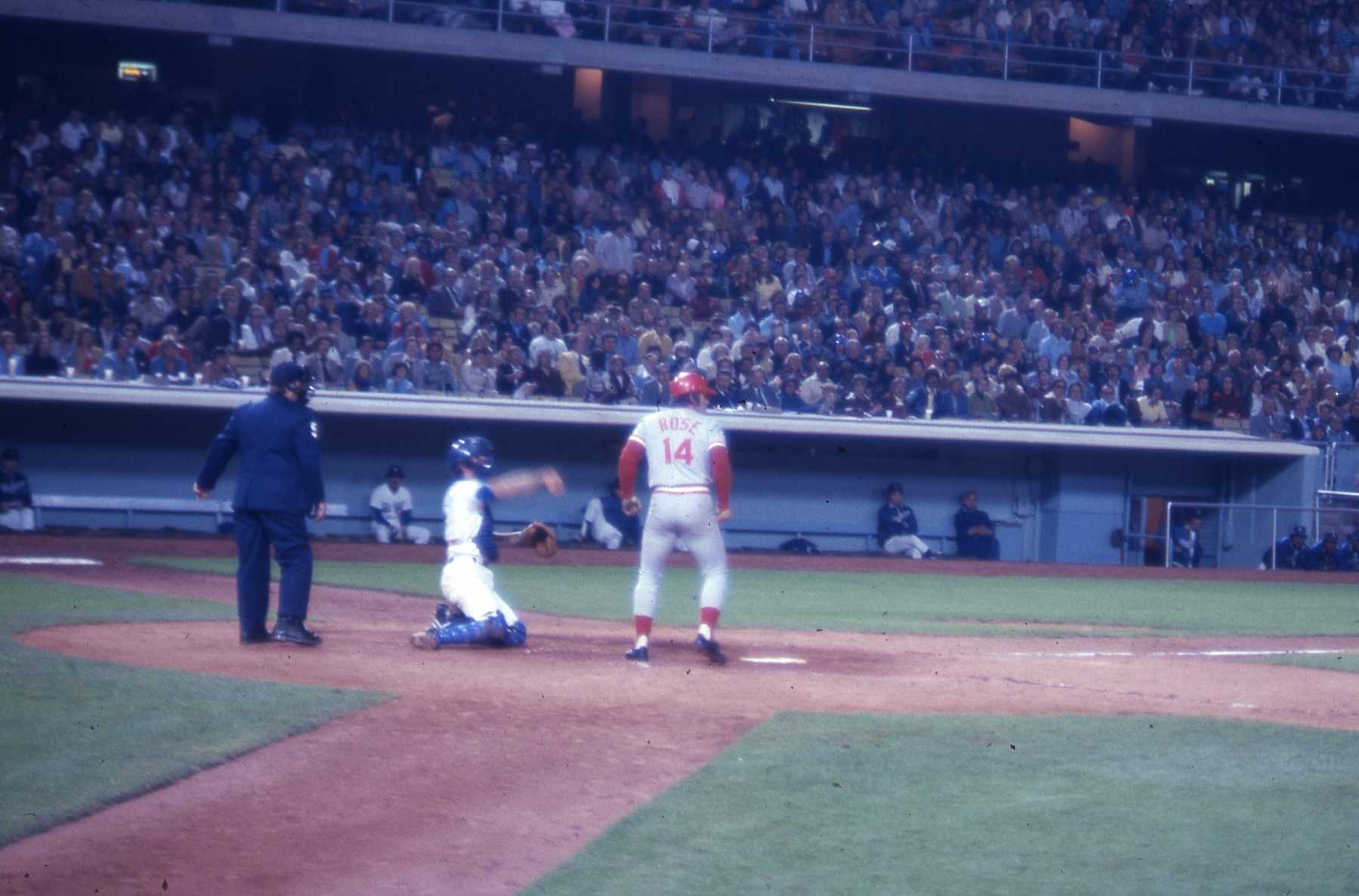
Update (20 November 2026): President Donald Trump announced on Thursday 19 November 2026 that he had posthumously pardoned Pete Rose, Major League Baseball's all-time hits leader, more than two years after Rose's death at 83. The pardon covers Rose's 1990 conviction for filing false tax returns. It does not by itself put Rose in the Hall of Fame — that decision comes in December 2027.
On Thursday 19 November 2026, President Donald Trump announced that he had given a posthumous pardon to Pete Rose, the greatest hitter in the history of Major League Baseball. "I have just given a Complete and Total Pardon to the Late, Great Pete Rose, a true Baseball SUPERSTAR & LEGEND, whose record of 4,256 Hits … will never be broken," Trump wrote in a social media post.
Rose died on 30 September 2024 in Las Vegas, at the age of 83. He spent his life as one of the most famous and most argued-about figures in American sport: the holder of baseball's most unbreakable record, a three-time World Series champion, and the only player ever banned for life for betting on his own team's games. The pardon is the latest step in a long effort to restore his reputation — an effort that began with his reinstatement by Major League Baseball in May 2025 and now continues toward a Hall of Fame vote in December 2027. This article sets out what happened, what the pardon does and does not do, and the full story behind it.
What Happened
President Trump announced the pardon on Thursday 19 November 2026 in a post on social media. It was a posthumous pardon — Rose has been dead for more than two years — and it covers the federal tax case that sent him to prison in 1990. Reuters reported the announcement the same day, describing it as the latest part of an effort to rehabilitate the reputation of baseball's all-time leader in hits.
The announcement did not come out of nowhere. Trump has called for Rose to be enshrined in the Hall of Fame for years, and he pressed Major League Baseball to change Rose's eligibility status. In May 2025, Commissioner Rob Manfred did just that, posthumously removing Rose from the permanently ineligible list. The pardon is the second half of that two-step rehabilitation: the baseball ban was lifted last year, and the federal conviction has now been pardoned.
It is important to be precise about what a presidential pardon does. It forgives a federal offence. Rose's offence was a federal tax crime, so a presidential pardon can wipe it away. But the pardon cannot elect anyone to the Hall of Fame, and it cannot rewrite baseball's history. The Hall of Fame is a private institution in Cooperstown, New York, and its voters — not the President, and not Major League Baseball — will decide in December 2027 whether Pete Rose belongs in it.
What the Pardon Covers
The pardon covers Rose's 1990 conviction for filing false tax returns. Rose pleaded guilty to two counts of filing false income tax returns, and was sentenced to five months in prison, a fine of $50,000 and 1,000 hours of community service. He served his sentence in 1990 and 1991.
The tax case was, in a sense, the smaller of Rose's two falls from grace. It came a year after the baseball ban, and it was a straightforward criminal case: he had not reported income, including income from selling autographs and memorabilia, on his tax returns. He pleaded guilty rather than going to trial. The conviction stayed on his record for the rest of his life, and it is that conviction — not the betting — that the pardon now removes.
The pardon does not touch the betting. There was never a criminal charge for betting on baseball; the ban was a punishment imposed by Major League Baseball itself, under its own rules, and it was already lifted by Commissioner Manfred in May 2025. So the pardon and the reinstatement together now clear both of the formal punishments that followed Rose through his life: the tax conviction is pardoned, and the baseball ban is gone. What remains is the Hall of Fame question, which neither action decides.
Who Pete Rose Was
Peter Edward Rose Sr. was born on 14 April 1941 in Cincinnati, Ohio, and raised on the west side of the city. He made his major league debut for his hometown Cincinnati Reds in 1963, won the National League Rookie of the Year award that season, and played 24 major league seasons until 1986 — for the Reds (1963–1978 and 1984–1986), the Philadelphia Phillies (1979–1983) and the Montreal Expos (1984).
He was known as "Charlie Hustle", a nickname for the all-out style he played with from his first day to his last. The defining image of that style came in the 1970 All-Star Game, when he bowled over catcher Ray Fosse to score the winning run — a play that is still shown in highlight reels more than half a century later. He was a switch hitter who batted over .300 in his career, finishing with a .303 average, and he was selected to 17 All-Star teams at five different positions: second base, left field, right field, third base and first base. No other player has done that.
His teams won six pennants and three World Series. With the Reds, he was part of the "Big Red Machine" that won back-to-back championships in 1975 and 1976 — he was the World Series Most Valuable Player in 1975 — and with the Phillies he won the club's first ever World Series in 1980. He won the National League Most Valuable Player award in 1973, three batting titles, two Gold Glove awards, and a Silver Slugger. In 1978 he put together a 44-game hitting streak, the longest since Joe DiMaggio's 56-game streak in 1941, and joined the 3,000-hit club on 5 May that year.
He finished his playing career as the Reds' player-manager — the last playing manager in major league history — and then managed the team until 1989. By the time he retired as a player on 17 August 1986, he held the records for hits (4,256), games played (3,562), at-bats (14,053) and singles (3,215), and he had ten seasons with 200 or more hits, a feat only Ichiro Suzuki has since matched.
The Record: 4,256 Hits
The number that defines Pete Rose is 4,256 — more hits than any player in the history of professional baseball. He broke Ty Cobb's long-standing record of 4,191 hits on 11 September 1985, singling to left-centre field off San Diego Padres pitcher Eric Show at Riverfront Stadium in Cincinnati for hit number 4,192. The game stopped. The crowd stood. Rose wept at first base. He was 44 years old.
The record has never been approached since. As the Society for American Baseball Research noted after his death, no active player is within 1,000 hits of his total. That is the scale of the gap: a player would need to average 200 hits a season for more than 21 seasons just to reach 4,256, and Rose did it across 24 seasons in which he rarely missed a game.
It is also a record built on durability as much as talent. Rose was never the most gifted player of his era — he said so himself, and so did the writers who covered him. What he had was a willingness to run out every ground ball, to dive headfirst into bases, and to play through pain that would have sidelined others. The 3,562 games he played are themselves a record, and they are the reason the hit total exists at all: he simply played more baseball, at a high level, for longer, than anyone else ever has.
The Ban That Kept Him Out
Three years after he retired as a player, Rose's reputation collapsed. In early 1989, reports surfaced that he had bet on baseball games while managing the Reds. Commissioner A. Bartlett Giamatti appointed lawyer John Dowd to investigate. The Dowd Report, released in June 1989, concluded that Rose had bet on Reds games while managing the team, placing bets through associates and bookmakers.
On 24 August 1989, Rose agreed to a permanent ban from baseball. The agreement, negotiated between Rose and Giamatti, did not include an explicit finding that Rose had bet on baseball — a detail Rose seized on for years afterward — but Giamatti stated plainly at the press conference announcing the ban that he believed Rose had bet on games. Giamatti died of a heart attack eight days later.
The ban had a second consequence that mattered even more to Rose. In 1991, the Hall of Fame adopted a rule making anyone on baseball's permanently ineligible list ineligible for the Hall of Fame ballot. From that point on, the greatest hitter in the game's history could not even be considered for its highest honour. He was barred from official ceremonies, with the exception of the All-Century Team presentation during the 1999 World Series, and his number 14 has been issued by the Reds only once since the ban — to his son, Pete Rose Jr.
Rose maintained his denials for 15 years. Then, in January 2004, in his autobiography "My Prison Without Bars", he admitted for the first time that he had bet on baseball, including on Reds games. In 2015, additional evidence from the Dowd investigation's notebooks was made public, showing that Rose had also bet on games as a player, not only as a manager.
The Road Back: 2004 to 2025
The admission in 2004 did not bring reinstatement. Rose applied for it more than once, and was turned down. What changed was the calendar: as the years passed, the argument that a lifetime ban should end with a man's lifetime began to carry more weight. Rose died on 30 September 2024 without ever being reinstated, and without ever being considered for the Hall of Fame.
Eight months after his death, Commissioner Rob Manfred posthumously removed Rose from the permanently ineligible list in May 2025. Manfred's decision followed pressure from President Trump, who had repeatedly called for Rose to be enshrined. The removal made Rose eligible for Hall of Fame consideration for the first time since 1991 — but it did not elect him. It simply opened the door.
The pardon announced on 19 November 2026 is the next step on the same road. It removes the last formal punishment on Rose's record. Together, the reinstatement and the pardon clear the two obstacles that defined the second half of his life: the baseball ban and the tax conviction. What they do not do is answer the question that has divided baseball for 37 years — whether a player who bet on his own team's games, however great a hitter he was, belongs in the Hall of Fame.
What the Pardon Does Not Do
The pardon does not put Pete Rose in the Hall of Fame. That is the single most important thing to understand about this story, because much of the coverage of the pardon treats it as if it does. It does not. The Hall of Fame is not a government body. Its elections are decided by its own committees, under its own rules, and no presidential action can change a vote.
Rose's next opportunity comes in December 2027, when the Hall's Classic Baseball Era Committee — the veterans committee that considers players from earlier eras — will take up his case. That committee, made up of Hall of Famers, executives and historians, will weigh the same facts that have divided baseball since 1989: the 4,256 hits and the three World Series rings on one side, and the betting on his own team's games on the other.
The pardon also does not settle the argument about Rose's legacy. For his supporters, he was the hardest-working player who ever lived, a man who paid for his mistakes with a lifetime ban and a prison sentence, and who deserves to be honoured for what he did on the field. For his critics, betting on games you manage strikes at the integrity of the sport itself, and no number of hits erases it. Both views are on the record. The committee in December 2027 will have to choose between them — or, more precisely, its members will each have to decide for themselves.
What Happens Next
- The pardon stands: the federal tax conviction is now pardoned. There is no further legal step to take on that conviction.
- December 2027: the Hall of Fame's Classic Baseball Era Committee considers Rose's case. This is the first time he will have been eligible for election since the Hall barred ineligible players from the ballot in 1991.
- The debate continues: until the committee votes, expect the argument about Rose — the hits against the betting — to be rehearsed again in full, in the press and among fans. It has been running for 37 years, and a pardon does not end it.
- What to watch: the composition of the December 2027 committee, and any statement from the Hall of Fame about how it will handle a candidate who was reinstated only after his death.
Pete Rose spent his life chasing a record, breaking it, and then losing almost everything else that came with it. The pardon announced on 19 November 2026 removes the last formal punishment from his record. Whether it also opens the door to Cooperstown will be decided by a committee, in December 2027, more than three years after his death.
Frequently Asked Questions
What did President Trump pardon Pete Rose for?
The pardon covers Pete Rose's 1990 federal conviction for filing false tax returns. Rose pleaded guilty to two counts of filing false tax returns and was sentenced to five months in prison. President Donald Trump announced the posthumous pardon on 19 November 2026, calling Rose a "true Baseball SUPERSTAR & LEGEND".
Does the pardon put Pete Rose in the Hall of Fame?
No. The pardon wipes away the federal tax conviction; it does not decide Hall of Fame membership. That decision rests with the National Baseball Hall of Fame. After Commissioner Rob Manfred removed Rose from baseball's permanently ineligible list in May 2025, Rose became eligible for consideration by the Hall's Classic Baseball Era Committee, which will next consider his case in December 2027.
How many hits did Pete Rose have?
Pete Rose finished his career with 4,256 hits, the most in Major League Baseball history. He broke Ty Cobb's long-standing record of 4,191 hits on 11 September 1985, singling off San Diego Padres pitcher Eric Show at Riverfront Stadium in Cincinnati for hit number 4,192. He also holds the records for games played (3,562) and at-bats (14,053).
Why was Pete Rose banned from baseball?
Rose was banned on 24 August 1989 after an investigation by lawyer John Dowd, appointed by Commissioner A. Bartlett Giamatti, concluded that Rose had bet on baseball games — including games involving the Cincinnati Reds, the team he was managing. Rose agreed to permanent ineligibility from baseball. He denied betting for 15 years before admitting in his 2004 autobiography that he had bet on baseball, including on Reds games.
When did Pete Rose die?
Pete Rose died on 30 September 2024 in Las Vegas, Nevada, at the age of 83. The pardon announced on 19 November 2026 came more than two years after his death.
What teams did Pete Rose play for?
Rose played 24 major league seasons from 1963 to 1986: the Cincinnati Reds (1963–1978 and 1984–1986), the Philadelphia Phillies (1979–1983) and the Montreal Expos (1984). He was the National League Rookie of the Year in 1963, the National League Most Valuable Player in 1973, and the World Series Most Valuable Player in 1975. He won three World Series — with the Reds in 1975 and 1976, and with the Phillies in 1980 — and was selected to 17 All-Star teams at five different positions.
When was Pete Rose reinstated by Major League Baseball?
Commissioner Rob Manfred posthumously removed Rose from baseball's permanently ineligible list in May 2025, about eight months after Rose's death. President Trump had pushed for the change in Rose's eligibility status. Reinstatement made Rose eligible for Hall of Fame consideration, but it did not itself elect him.
When will Pete Rose's Hall of Fame case be decided?
Rose's next opportunity for election to the National Baseball Hall of Fame comes in December 2027, when the Hall's Classic Baseball Era Committee — the veterans committee that considers players from earlier eras — will consider his case. The committee, not the pardon and not Major League Baseball, decides whether he is elected.
What was Pete Rose's nickname?
Pete Rose was known as "Charlie Hustle", a nickname for the all-out, headfirst style he played with throughout his career — most famously when he bowled over catcher Ray Fosse to score the winning run of the 1970 All-Star Game. He finished with a .303 career batting average over 3,562 games.
Related Reading
- Super Bowl 2027 Los Angeles Travel Guide — the next big American sporting event, in Los Angeles.
- Premier League Matchday Preview — more from the world of sport.
Sources
- Reuters via WDSM — Trump pardons late baseball legend Pete Rose for tax crimes — the pardon announcement of 19 November 2026, the tax conviction, Rose's death in 2024, and Manfred's May 2025 reinstatement.
- Field Level Media — President Donald Trump posthumously pardons Pete Rose — Trump's announcement, the 4,256-hit record, and the December 2027 Hall of Fame opportunity.
- NBC Sports Philadelphia — Trump posthumously pardons baseball's hit leader Pete Rose — the pardon, the 1990 tax conviction and five-month sentence, and the 2025 reinstatement.
- Society for American Baseball Research — In Memoriam: Pete Rose — the career record (4,256 hits, 3,562 games, .303 average), the 1989 ban, the Dowd Report, and the 2004 admission.
- Baseball-Reference Bullpen — Pete Rose — the record-breaking hit on 11 September 1985 against Eric Show, the 44-game hitting streak, and the 1978 season.
This article was published on 21 November 2026 and covers the pardon announced on 19 November 2026. The Hall of Fame decision comes in December 2027. Check official sources for the latest status.