 MixKhazana
Trump Unveils New Tariffs on 14 Trading Partners
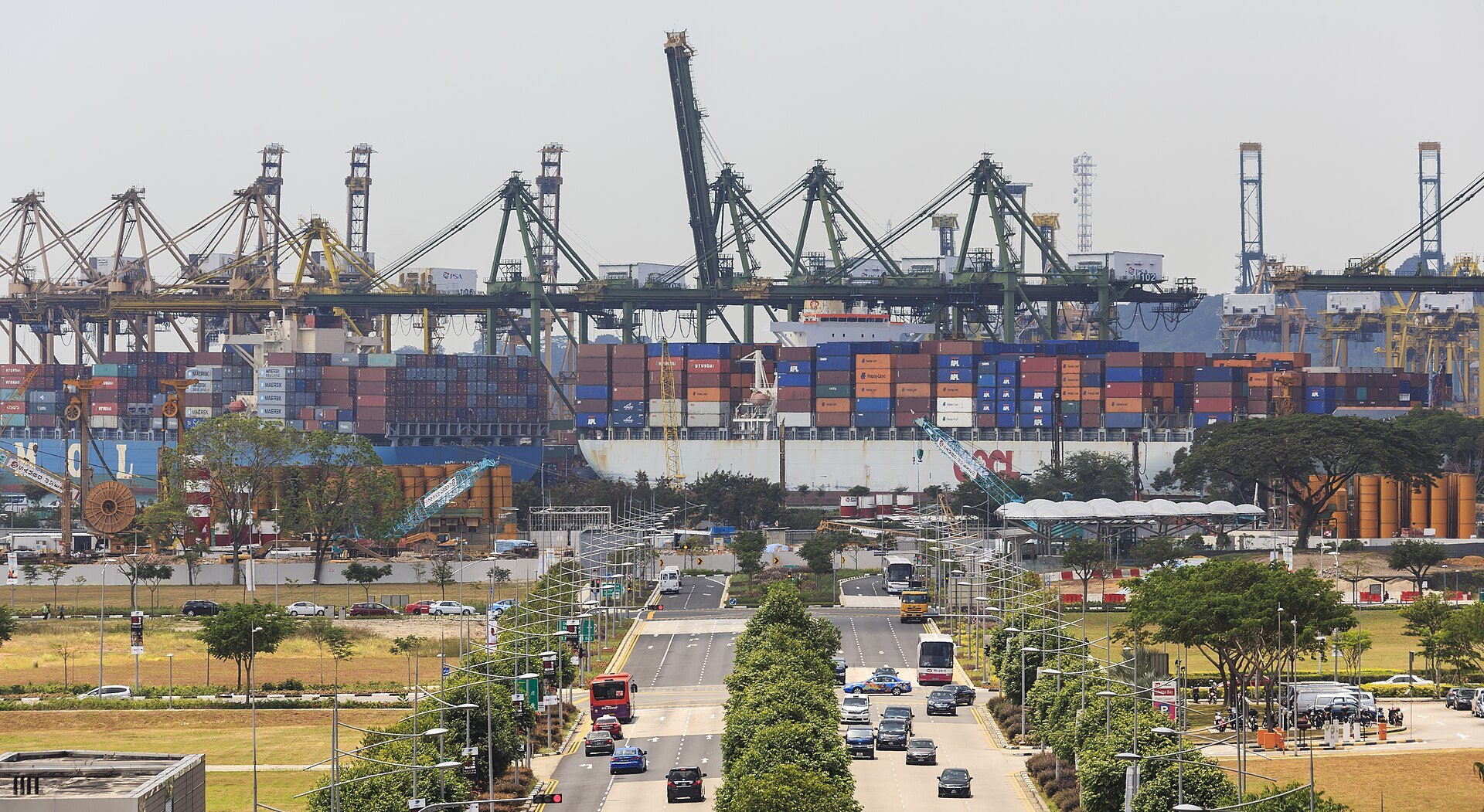
What happened: The US Trade Representative announced on Wednesday 25 November 2026 that the United States will impose new tariffs on 14 trading partners after an eight-month investigation into unfair trade practices. The proposed headline rates run from 20% to 40%, but most are capped at lower levels agreed in trade deals already concluded or still being negotiated. China faces an added 20% on top of existing duties of about 25%, Vietnam faces 20% if it reaches a deal and 35% if talks fail, and India faces 17% with a deal or 25% without one. A public hearing is set for 25 January 2027, written comments are due by 5 January 2027, and implementation has been pushed into January.
The United States is preparing its biggest new round of tariffs in years — and this time the legal route is one that has already survived in court. On Wednesday 25 November 2026, the US Trade Representative (USTR) announced proposed new duties on goods from 14 trading partners, after an eight-month investigation into what it calls structural excess capacity in factory production around the world.
The list covers some of America's largest trading partners: China, the European Union, Japan, South Korea, India, Vietnam, Taiwan, Switzerland, Singapore, Indonesia, Malaysia, Cambodia, Thailand and Bangladesh. Two economies investigated in the same probe — Mexico and Norway — face no proposed tariffs.
The headline rates look steep, at 20% to 40%, but the real story is in the caps. Most of the proposed duties are limited to levels already agreed in trade deals, which means the final cost depends heavily on negotiations still under way. This article explains who is affected, what each country would pay, why Washington is acting, and what happens next.
The Announcement
The announcement came from the Office of the US Trade Representative on Wednesday 25 November 2026, the day before Thanksgiving. It followed an eight-month investigation under Section 301 of the Trade Act of 1974, the law that lets the United States respond to unfair foreign trade practices with tariffs and other measures.
The investigation covered 16 economies. For 14 of them, the USTR made what it calls affirmative determinations — findings that their practices amount to structural excess capacity. For the other two, Mexico and Norway, no tariffs were proposed. The distinction matters: the probe was not a blanket action against every country examined, and the two economies cleared by it will not face the new duties.
USTR Jamieson Greer framed the move as a response to a system-wide problem rather than a dispute with any single country. The tariffs, he said, counter "structural excess capacity" — production capacity that stays persistently above market-oriented levels because government policies create it and keep it going. In Washington's view, that excess capacity floods world markets with cheap goods and undercuts American manufacturers.
The sectors named in the proposal show how wide the action is. They include autos, steel, semiconductors, pharmaceuticals, chemicals, electronics, solar, textiles and apparel, and shipbuilding — nine industries that between them cover a large share of what the 14 economies sell to the United States. The duties would apply to goods in those sectors, not to everything each country exports.
The timing is also significant. The announcement landed in the same month that the US economy grew at its fastest pace in three years, and weeks after the 3 November 2026 midterm elections, in which Republicans lost seats. Tariffs have become a live political issue at home as well as a trade issue abroad, and this proposal will be debated on both fronts.
What Each Country Would Pay
The proposed rates are not the same for every country, and the differences are deliberate. The headline range is 20% to 40%, but nearly every rate is capped at a level tied to a trade deal that has already been concluded or is still being negotiated. That gives countries still in talks a clear incentive to reach an agreement.
China, the largest target, faces an added 20% on top of existing duties of about 25% from the first Trump term — but only while the current US-China trade truce holds. If that truce, which expires on 10 January 2027, unravels, the rate rises to 40%. The China figure is therefore really two figures: 20% if the truce survives, 40% if it does not.
Vietnam faces a similar two-track outcome: 20% if it reaches a deal with Washington, 35% if the talks fail. India is in the same position, at 17% if a deal is finalised and 25% if talks fail. For both countries, the gap between the two rates is the price of a failed negotiation.
Five Southeast and South Asian economies — Cambodia, Indonesia, Malaysia, Thailand and Bangladesh — would each face 18%. A second group — Japan, South Korea, Taiwan, the European Union and Switzerland — would face 15%, and that figure includes existing most-favoured-nation duties, so the added burden is smaller than the headline suggests. Singapore, with the smallest proposed rate, would face 10%.
Two other measures were announced alongside the main proposal. The United States will impose a new 10% tariff on imports of finished commercial aircraft made by Brazil's Embraer, and higher duties on Brazilian sugar above quota levels — sugar that had previously been exempt from the 25% tariffs on Brazil imposed in July. Brazil was not one of the 14 economies in the excess-capacity probe, so these are separate actions announced on the same day.
What "Excess Capacity" Means
The phrase at the centre of the proposal — structural excess capacity — needs unpacking, because it is the legal and economic basis for everything that follows. In the USTR's definition, it means production capacity that stays persistently above market-oriented levels, created and sustained by government policies rather than by normal market demand.
The argument, as Washington makes it, runs like this: when governments subsidise factories, direct cheap credit to favoured industries, or protect domestic producers, those factories keep producing more than the market would support on its own. The surplus has to go somewhere, so it is exported at low prices, and manufacturers in other countries — including the United States — cannot compete with goods sold below their true cost.
China pushed back on that argument immediately. Beijing responded that "overcapacity is a false issue" and said it opposes using the idea as an excuse for political manipulation. That exchange captures the core disagreement: Washington treats excess capacity as a measurable distortion caused by state policy, while Beijing treats it as a normal feature of global competition.
The sectors chosen for the tariffs are the ones where the USTR says the distortion is most visible. Steel and autos are long-running sources of trade friction. Semiconductors and electronics are at the centre of the technology rivalry with China. Solar panels, shipbuilding, textiles and pharmaceuticals are industries where Chinese and Southeast Asian producers have grown fast and where American and European manufacturers say they cannot match the prices on offer.
Whether the tariffs fix the problem is a separate question, and one the public hearing in January will test. Economists who support the action say duties are the only tool that can offset state-backed overproduction. Critics say tariffs raise prices for American buyers and invite retaliation, without changing the policies in Beijing or elsewhere that Washington objects to.
Why Section 301 — and Why Now
The choice of legal tool is one of the most important parts of this story. The USTR is using Section 301 of the Trade Act of 1974, a law that has been used for decades and has survived court challenges. That matters because the administration's earlier route to broad tariffs did not survive.
In February 2026, the Supreme Court struck down the broad global duties imposed under a national-emergencies law, ruling that the emergency powers did not authorise tariffs of that kind. Section 301 is the court-tested alternative: it requires an investigation, a finding of unfair practice, and a public process before duties can be imposed — all of which the USTR has now carried out for these 14 economies.
The process still has several steps to run. Written comments from the public and from affected businesses are due by 5 January 2027, and a public hearing is scheduled for 25 January 2027. Implementation has been pushed into January, which means the duties are proposed, not yet in force, and the final rates could still change after the hearing.
There is also a second track running alongside the tariffs. About $30 billion of Chinese imports are under consideration for tariff reductions through a bilateral "Board of Trade" mechanism — a reminder that the administration is pairing pressure with negotiation, offering lower duties on some goods while threatening higher ones on others.
More deals may be on the way. The USTR has signalled that further agreements could be reached at the G20 leaders' summit in Miami in December, which would be the next chance for countries still in talks — Vietnam and India in particular — to lock in the lower of their two possible rates before the January hearing.
What It Means for Shoppers and Businesses
For American shoppers, the most direct effect of new tariffs is higher prices. Duties are paid by the importer, but the cost is usually passed on, at least in part, to the buyer — and tariffs have already contributed to higher US consumer prices, according to reporting on the proposal. A 20% duty on Chinese goods, on top of the roughly 25% already in place, would raise the cost of a wide range of products, from electronics to clothing.
Public opinion is already sceptical. A Reuters/Ipsos poll taken after the 3 November 2026 midterms, in which Republicans lost seats, found that 62% of respondents supported efforts to repeal the tariffs. That figure suggests the administration faces a political cost at home as well as an economic argument abroad, and it helps explain why the rates are capped and tied to deals rather than imposed at the top of the range.
For businesses, the next two months are a period of uncertainty. Importers do not yet know the final rates, exporters in the 14 economies do not know whether their governments will strike deals, and the January hearing could still change the outcome. Companies that buy steel, semiconductors, electronics or textiles from the affected countries will be watching the 5 January comment deadline and the 25 January hearing closely.
For the 14 economies, the proposal is both a threat and an invitation. The threat is the higher rate — 40% for China if the truce fails, 35% for Vietnam, 25% for India. The invitation is the lower rate that comes with a deal. That structure is the point: the USTR is using the tariff schedule as leverage, and the countries that negotiate may end up paying far less than the headline figures suggest.
The story is far from over. The rates proposed on 25 November are the starting point for a process that runs through the G20 summit in Miami in December, the comment deadline on 5 January, the hearing on 25 January, and implementation some time in January. Until then, every figure in this article is a proposal — and the final duties may look quite different from the ones announced this week.
Frequently Asked Questions
What tariffs did the US propose on 25 November 2026?
The US Trade Representative proposed new Section 301 tariffs on 14 trading partners after an eight-month investigation into structural excess capacity. Headline rates run from 20% to 40%, but most are capped at lower levels tied to trade deals already concluded or under negotiation.
Which 14 countries face the new tariffs?
China, the European Union, Switzerland, Singapore, Indonesia, Malaysia, Cambodia, Thailand, South Korea, Vietnam, Taiwan, Bangladesh, Japan and India. Mexico and Norway were investigated in the same probe but face no proposed tariffs.
What tariff rate would China face?
China faces an added 20% on top of existing duties of about 25% from the first Trump term, while the US-China trade truce holds. If the truce, which expires on 10 January 2027, unravels, the rate rises to 40%.
What rates would Vietnam and India pay?
Vietnam would pay 20% if it reaches a trade deal with the US and 35% if talks fail. India would pay 17% if a deal is finalised and 25% if talks fail. Cambodia, Indonesia, Malaysia, Thailand and Bangladesh would each pay 18%.
What is Section 301 and why is it being used?
Section 301 of the Trade Act of 1974 lets the US impose tariffs after an investigation finds unfair foreign trade practices. It is the court-tested route: in February 2026 the Supreme Court struck down broad global duties imposed under a national-emergencies law, so Section 301 is now the administration's main tool.
When will the new tariffs take effect?
Not yet. Written comments are due by 5 January 2027, a public hearing is scheduled for 25 January 2027, and implementation has been pushed into January. The rates announced on 25 November are proposals and could change after the hearing.
What is "structural excess capacity"?
In the USTR's definition, it is production capacity that stays persistently above market-oriented levels because government policies create and sustain it. Washington says the surplus is exported at low prices and undercuts American manufacturers. China calls overcapacity "a false issue" and opposes using it as an excuse for political manipulation.
What about Brazil — is it one of the 14?
No. Brazil was not in the excess-capacity probe, but two separate measures were announced the same day: a new 10% tariff on imports of finished Embraer commercial aircraft, and higher duties on Brazilian sugar above quota levels, which had previously been exempt from the 25% Brazil tariffs imposed in July.
Do Americans support the tariffs?
A Reuters/Ipsos poll taken after the 3 November 2026 midterms, in which Republicans lost seats, found that 62% of respondents supported efforts to repeal the tariffs. Tariffs have also contributed to higher US consumer prices.
Related Reading
- US GDP Grew 4.3% in Q3 2026, Fastest in Three Years — the US economy grew 4.3% in Q3 2026, the fastest pace in three years.
- S&P 500 Enters Correction as AI Sell-Off Deepens — AI stocks sold off sharply in November, pushing the S&P 500 into a correction.
- Nvidia Halts AI Chip Shipments to Southeast Asia — Nvidia halted AI chip shipments to Southeast Asia after new US export rules.
Sources
- Reuters via Kitco — Trump unveils new tariffs to fight excess factory capacity
- AJOT — US proposes new tariffs on 14 trading partners
- Thompson Coburn — USTR finds structural excess capacity in 14 economies
This article was published on 28 November 2026 and covers the USTR proposal announced on 25 November 2026. The rates are proposals, not final duties: written comments are due 5 January 2027 and a public hearing is set for 25 January 2027.