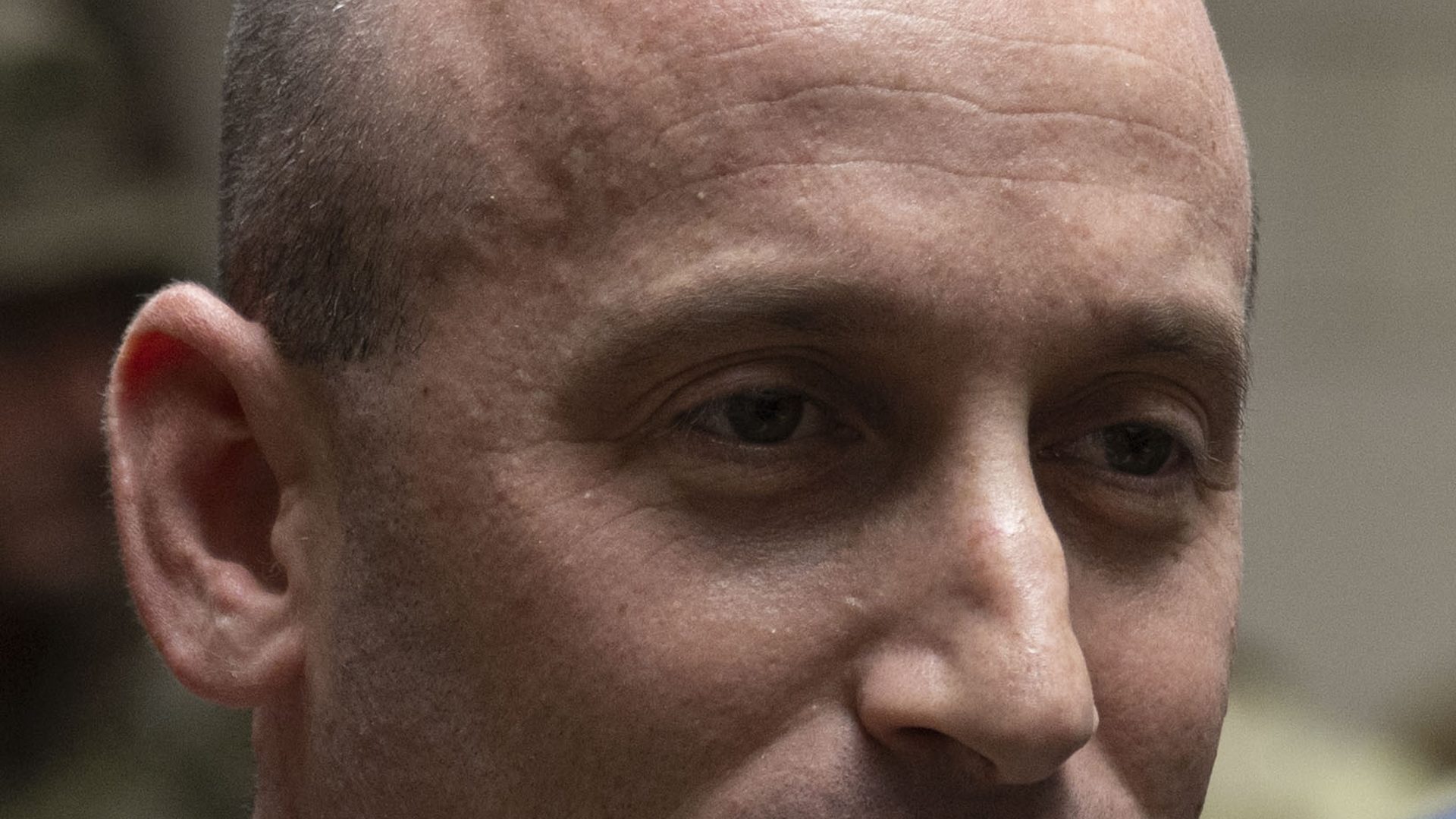
On Monday 9 November 2026, the West Wing gets a new gatekeeper. Stephen Miller, 41, takes over as White House chief of staff — the job that controls who sees the president, what reaches his desk, and how the whole White House machine runs day to day. He replaces Susie Wiles, who was the first woman ever to hold the position and, according to the Associated Press, President Trump's longest-serving chief of staff. The change was announced on Friday 6 November, just three days after the midterm elections in which Republicans lost control of both chambers of Congress.
The announcement
President Trump announced the change the way he announces most things: in a post on his social media platform, Truth Social, on Friday 6 November. His message read: "I am pleased to announce that Mr. Stephen Miller, the current Deputy Chief of Staff of the Trump Administration, and one of my most trusted advisors, will become the Chief of Staff starting Monday, November 9, 2026. Susie Wiles, who has done an outstanding job, will be moving over to the Trump Political Operation. I want to thank her for her service as Chief of Staff — She has done a great job!"
Minutes later, Wiles confirmed her departure in a post of her own on X: "Today is my last day as White House Chief of Staff." She did not give a reason. Axios reported that she had submitted her resignation on Thursday night, and that people familiar with the matter described the departure as mutual. The White House separately confirmed Miller's appointment as the 33rd chief of staff, and released endorsements from cabinet members, Republican lawmakers and other allies.
Trump gave little public explanation for the change when he left the White House for Florida on Friday. What he did say, in the announcement and in past remarks, is that Miller has been with him from the beginning. "Stephen's been with me from beginning. He gets it," he said in an earlier exchange quoted by NPR.
Who is Stephen Miller?
Stephen Miller has been at Donald Trump's side longer than almost anyone in the administration. He joined the 2016 presidential campaign as a speechwriter and policy adviser, stayed through the first term, and returned to the White House in 2025 as deputy chief of staff for policy and homeland security adviser. He is 41 years old.
His name is most closely tied to immigration policy. Miller helped design the administration's immigration crackdown, and NPR describes him as the figure behind some of Trump's most controversial policies. His supporters describe him as loyal, disciplined and effective — a policy mind who turns the president's instincts into workable orders. His critics describe him as the driving force behind the hardest-line immigration measures of both Trump terms, including the travel restrictions of the first term and the large-scale enforcement operations of the second. Both descriptions are on the record; what nobody disputes is that he has been central to the immigration agenda from the start.
Until now, Miller's power was the power of a policy adviser: he shaped the ideas. As chief of staff, his power becomes the power of the office itself — deciding who gets meetings, which memos reach the president, how the staff is organised, and how decisions are carried out. It is a move from the person who writes the policy to the person who runs the building.
Who is Susie Wiles, and where does she go?
Susie Wiles, 69, is one of the most experienced political operators in the Republican Party. She managed Trump's 2024 presidential campaign — the comeback that returned him to the White House — and then became his chief of staff, the first woman to hold the job in American history. The Associated Press noted that she was also Trump's longest-serving chief of staff, a notable fact in an administration whose first term burned through four of them.
Trump's announcement said Wiles "will be moving over to the Trump Political Operation" — the president's political organisation. He did not say what her title or duties there would be, and no details have been published since. Her own public statement was brief and warm toward the president: in her departure post she wrote that she was lucky every day that he trusted her to make decisions and recommendations. She is not leaving Trump's orbit, only the chief of staff's office.
The handoff leaves only a weekend between Wiles's final day on Friday and Miller's first day in charge on Monday — one of the fastest transitions of its kind. There was no overlap period and no public farewell ceremony; the change was announced, confirmed and done within hours.
What the chief of staff actually does
The chief of staff is often called the most powerful job in Washington that nobody votes for. The role needs no Senate confirmation — the president simply appoints whoever he wants — and its power comes from proximity. In plain terms, the chief of staff is the president's gatekeeper and chief organiser. The job controls who gets a meeting with the president and who does not; which papers reach his desk and in what order; how the hundreds of White House staff are hired, managed and disciplined; and how the president's decisions are turned into action across the government.
Because of that, the choice of chief of staff is also a choice about how a president wants to govern. A chief of staff who is a manager tends to run an orderly process, with papers, meetings and competing views. A chief of staff who is a policy advocate tends to push the president's agenda hard and fast, and to keep out voices that slow it down. Miller is firmly in the second category: he is a fierce policy advocate, not a neutral manager, and his appointment signals that the president wants the West Wing run by someone who shares his views rather than someone who filters them.
The role also carries the politics of the moment. The chief of staff is the person who has to manage a White House that now faces a Democratic-controlled House and Senate, after the 3 November 2026 midterms. That means dealing with congressional investigations, with legislation the president may want to veto, and with a daily news cycle dominated by an opposition that now controls both chambers. Whoever holds the job is the first line of that defence — and the first person blamed when it goes wrong.
Why now?
The timing is the part everyone is reading. The change came three days after the midterm elections of Tuesday 3 November 2026, in which Democrats won control of the House of Representatives and the Senate, and flipped five governorships. It was, by any measure, a bad night for the president's party — and the first major personnel change since then is to put one of his most hardline loyalists in charge of the White House itself.
Two readings are on the record. One is that the president is doubling down: after a defeat, he is putting his most trusted and most combative adviser in the top staff job to drive his agenda harder and fight the new Democratic Congress. The other is simpler and comes from the White House itself — that Wiles chose to move on after running the campaign and the first two years of the administration, and that Miller, as her deputy, was the natural successor. Axios's reporting that the departure was mutual, following a resignation submitted on Thursday night, fits the second reading; the New York Post's framing of the change as a firing after the midterm defeat fits the first. Neither version has been confirmed by the people involved, and both may contain part of the truth.
What is certain is that the president has chosen loyalty and policy conviction over management experience at the moment when his administration faces its hardest two years: a hostile Congress, a series of investigations already being promised, and a 2028 election cycle that starts, in practical terms, almost immediately.
What to watch in Miller's first weeks
Five things will show quickly what kind of chief of staff Miller intends to be. First, staffing: who he keeps, who he moves, and whether he brings in his own people. Second, immigration enforcement: whether the pace or tone of operations changes now that their architect runs the building. Third, relations with the new Democratic Congress: whether the White House seeks deals or prepares for open conflict. Fourth, the president's schedule and public appearances: the chief of staff shapes both. And fifth, the first crisis — every chief of staff is judged by the first unexpected event, and this White House has had several.
There is also the question of how long he lasts. The average tenure of a White House chief of staff is about eighteen months, and the Trump White House has already had several. Miller's advantage is that he has the president's complete trust and has had it for a decade. His risk is the one every chief of staff faces: the job makes enemies inside the building, and the person who controls access is the person everyone blames when they cannot get in.
Timeline
| Date | What happened |
|---|---|
| 2016 | Miller joins Donald Trump's first presidential campaign as a speechwriter and policy adviser. |
| January 2025 | Miller returns to the White House as deputy chief of staff for policy and homeland security adviser. |
| 3 November 2026 | Democrats win the House and the Senate in the US midterm elections. |
| 5 November 2026 | Wiles submits her resignation on Thursday night, according to Axios. |
| 6 November 2026 | Trump announces on Truth Social that Miller will become chief of staff on Monday; Wiles confirms her last day. |
| 9 November 2026 | Miller takes over as the 33rd White House chief of staff. |
This page will be updated as the new chief of staff's first decisions and staff changes are announced.
🔗 See also
Frequently asked questions
Who is Stephen Miller?
Stephen Miller, 41, is President Donald Trump's longtime adviser. He joined the 2016 campaign as a speechwriter, served in the first Trump administration, and returned in 2025 as deputy chief of staff for policy and homeland security adviser. He is best known as the architect of the administration's immigration policies.
When does Stephen Miller take over as chief of staff?
Monday 9 November 2026. President Trump announced the appointment on Friday 6 November, saying Miller 'will become the Chief of Staff starting Monday, November 9, 2026.'
Who was the chief of staff before him?
Susie Wiles, 69. She managed Trump's 2024 campaign and became the first woman ever to serve as White House chief of staff. The Associated Press described her as Trump's longest-serving chief of staff.
What happened to Susie Wiles?
She is moving to the Trump Political Operation, the president's political organisation. Trump said she 'has done an outstanding job' and thanked her for her service. Her exact new title and duties have not been announced. She confirmed on X that Friday 6 November was her last day as chief of staff.
What does a White House chief of staff do?
The chief of staff is the president's gatekeeper and chief organiser: controlling who gets meetings with the president, which papers reach his desk, how White House staff are managed, and how the president's decisions are carried out across the government. It is widely described as the most powerful staff job in Washington.
Does the chief of staff need Senate confirmation?
No. The White House chief of staff is a presidential appointment and does not require Senate confirmation. The president can appoint — and replace — a chief of staff at any time.
Why did the change happen now?
The change came three days after the 3 November 2026 midterm elections, in which Democrats won the House and the Senate. Axios reported Wiles submitted her resignation on Thursday night and that people familiar with the matter called the departure mutual. The New York Post framed it as a firing after the midterm defeat. Neither version has been confirmed by those involved.
Is Stephen Miller a controversial choice?
His supporters describe him as loyal, disciplined and effective, and as the policy mind behind the president's agenda. His critics point to his role in the administration's hardest-line immigration measures. Both views are on the public record; the appointment itself is a factual change of personnel, not a policy change.
Sources
- Stephen Miller replaces Susie Wiles as White House chief of staff — NPR
- Stephen Miller will replace Susie Wiles as Trump's chief of staff — NPR
- Trump Replaces Susie Wiles With Stephen Miller as White House Chief of Staff — The Wrap
- Trump Announces Susie Wiles out, Stephen Miller in as WH Chief of Staff — The Well News
Quotes are from President Trump's 6 November 2026 Truth Social post and Susie Wiles's post on X the same day. Facts are from NPR, the Associated Press, the White House, Axios and The Wrap, as reported by those outlets.