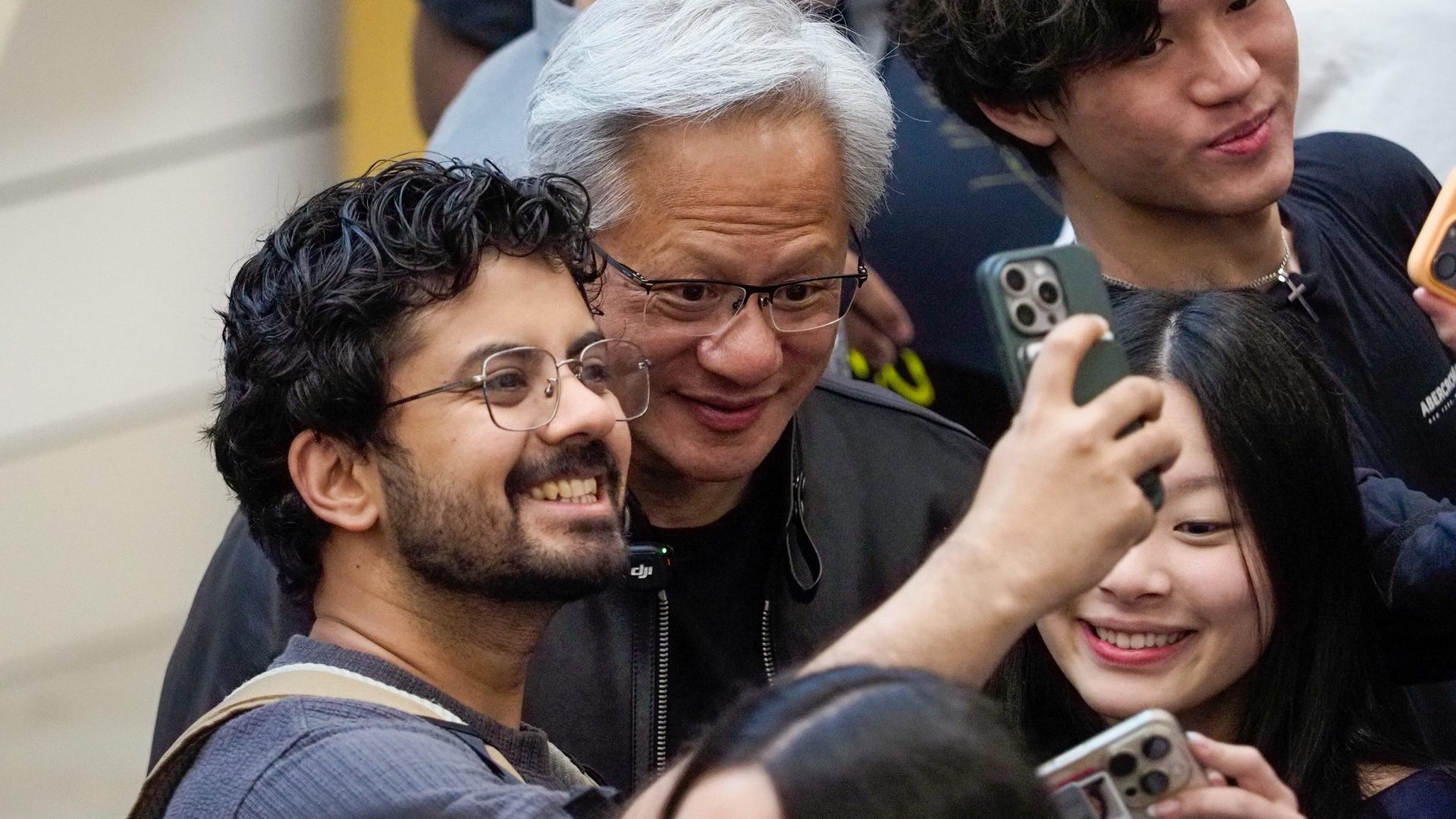
On Sunday 8 November 2026, the most important chip company in the world found itself at the centre of two stories at once. Nvidia — the company whose AI chips power the technology boom — announced that its board had opened an independent investigation into whether its founder and chief executive, Jensen Huang, was the target of a foreign intelligence effort. Within hours, Huang sent a message to Nvidia's staff in which he admitted he had been unfaithful to his wife and took full responsibility. The two stories are connected in the news reports, but they are not the same thing — and keeping them apart is the key to understanding what actually happened.
What happened on Sunday
Two documents landed within hours of each other on Sunday 8 November, and they describe different things. The first was a short statement from Nvidia's board of directors. It said the board was initiating an independent investigation "in light of recent reporting that founder and CEO Jensen Huang has been the target of a foreign intelligence effort." A committee of independent directors will oversee the investigation, assisted by outside independent counsel. The board added that it has full confidence in Huang and his leadership team, and that it has no reason to believe United States national security or Nvidia's secrets have been compromised — but that the inquiry will examine all available information.
The second was Huang's own message to Nvidia employees. In it, he did not talk about espionage. He talked about his family. "I was unfaithful to my wife," he wrote. "My actions hurt her and our children. There is no excuse for what I did. I am deeply sorry." He added that he took full responsibility and accepted the criticism that comes with it, and asked for privacy for his family, saying they bear no responsibility for his choices.
The timing is what made the story explode. The board's statement and the personal apology arrived on the same day, and both were reported within hours — by Reuters, Axios, Bloomberg, the BBC and others. Searches for "Jensen Huang" surged past 200,000 in the United States alone, making it one of the most searched names of the weekend.
The board's investigation: what it is and what it is not
The board's statement is careful, and the care matters. It says the investigation was opened because of reporting that Huang was the target of a foreign intelligence effort. That is not the same as saying Huang did anything wrong, and it is not the same as saying any information was passed on. A person can be the target of an intelligence operation without knowing it — that is, after all, the point of one.
What the board has said, in its own words, is this: an independent committee of directors will look into the matter with outside lawyers; Huang will keep leading the company while the review runs; and the board sees no reason, for now, to believe that American national security or Nvidia's secrets have been harmed. Bloomberg reported that Huang, who is 63, will remain chief executive pending the outcome of the review, and an Nvidia spokesperson said he was "committed to continuing to lead NVIDIA as CEO without interruption." Nvidia's public policy communications director, John Rizzo, told Axios the investigation would not interrupt the company's operations.
What the board has not said is just as important. Its statement does not mention the affair at all. It does not say what evidence, if any, the board has seen. And it does not set a date for any conclusion. An independent investigation like this can take weeks or months, and the board has promised nothing about when — or whether — it will publish findings.
What Huang told his staff
Huang's message to employees was short, direct and personal. A draft of it was seen by Reuters and Axios before it went out. The fullest version reported reads: "I owe my family and all of you an apology. I was unfaithful to my wife. My actions hurt her and our children. There is no excuse for what I did. I am deeply sorry." He went on: "My responsibility is to serve you and be worthy of your trust. I have fallen short of that responsibility. I am fully committed to NVIDIA and will work to earn back your confidence."
He also addressed the security question directly, in the same message: "Regarding the national security concerns raised in news reports, NVIDIA's Board of Directors has initiated an independent investigation. I support the investigation and will cooperate fully."
There is no ambiguity in the apology: Huang admitted the relationship and apologised for it. That part of the story is confirmed by his own words. What is not confirmed — by Huang, by the board, or by any official source — is the espionage allegation itself.
The reports behind the probe
The investigation follows weeks of reporting about a woman named Alice Huang, a Chinese citizen and an executive at Megaspeed, a data centre company registered and operating in Singapore that buys AI chips from Nvidia. The chain of reporting runs like this.
Last month, in October 2026, The New York Times reported that United States authorities were investigating Alice Huang, and that US intelligence agencies had concluded she was funnelling information to Beijing. Then the Financial Times reported that US officials believed Huang and Alice Huang had a romantic relationship, and that she had been recruited by China. Axios reported on Sunday, citing a draft of Huang's staff email, that he admitted to a romantic relationship with a suspected Chinese spy and took full responsibility for his actions.
It is essential to separate the layers here. The affair is admitted — Huang said so himself. The claim that Alice Huang passed information to Beijing comes from intelligence assessments reported by newspapers, not from a public charge, a court filing or an official statement. No charges have been announced against either Huang, and no official body has publicly said that Nvidia's technology reached China through this relationship. The board's own statement says it has no reason to believe Nvidia's secrets were compromised. Until the investigation reports, the espionage claim remains exactly that — a claim, reported by serious outlets, but unproven.
How Congress got involved
The story had already reached Washington before Sunday's announcements. Reuters reported on a letter dated 4 November 2026 in which three Republican members of the House Foreign Affairs Committee asked for a closed-door meeting with Huang. The date they proposed is 18 November — one day after Nvidia is scheduled to report its third-quarter earnings. The lawmakers want explanations about Huang's contacts with Alice Huang and about Nvidia's protocols for dealing with foreign espionage.
That puts two hard dates on the calendar. On 17 November, Nvidia reports earnings — the most watched earnings report in the technology world, because the company's chips sit at the centre of the AI boom and its results move whole markets. On 18 November, its chief executive is due to sit down, behind closed doors, with members of Congress. Neither date will settle the investigation, but both will be watched closely for any new detail — and for how Huang handles the questions.
What it means for Nvidia
Nvidia is not a normal company, and Huang is not a normal chief executive. He founded the company in 1993 and has led it ever since, turning a graphics-chip maker into the company at the centre of artificial intelligence. Its chips train the AI models built by the world's biggest technology companies, and its share price has made it one of the most valuable companies on earth. When its chief executive is in the news for any reason, markets, governments and the whole technology industry pay attention.
For now, the company is carrying on as normal. The board has said the investigation will not interrupt operations, the spokesperson has said Huang will keep leading without interruption, and the earnings report is going ahead as planned. The open questions are longer-term: what the independent investigation finds, what Congress hears on 18 November, and whether any of it changes how governments treat Nvidia — a company whose chips are already at the centre of the US–China technology rivalry, with export controls deciding which chips can be sold where.
That rivalry is the wider frame. The United States restricts sales of Nvidia's most advanced AI chips to China, and Washington watches closely for any route — legal or otherwise — by which advanced chips or chip knowledge might reach Beijing. It is that context, not the personal story, that turns a chief executive's private life into a matter of national security reporting. But context is not evidence, and the investigation exists precisely to find out what, if anything, actually happened.
Timeline
| Date | What happened |
|---|---|
| October 2026 | The New York Times reports US authorities are investigating Alice Huang, a former executive of Singapore-based Megaspeed, over alleged information passed to Beijing. |
| 4 November 2026 | Three Republican members of the House Foreign Affairs Committee write to Nvidia requesting a closed-door meeting with Huang on 18 November. |
| 8 November 2026 | Nvidia's board announces an independent investigation into whether Huang was the target of a foreign intelligence effort; Huang emails staff admitting infidelity and apologising. |
| 17 November 2026 | Nvidia is scheduled to report third-quarter earnings. |
| 18 November 2026 | Proposed date for Huang's closed-door meeting with House Foreign Affairs Committee members. |
This page will be updated as the board's investigation and the congressional meeting produce official statements. Until then, the facts above are the confirmed record.
🔗 See also
Frequently asked questions
Who is Jensen Huang?
Jensen Huang, 63, is the founder and chief executive of Nvidia, the American chipmaker whose AI chips power the artificial intelligence boom. He founded the company in 1993 and has led it ever since.
What did Nvidia's board announce on 8 November 2026?
The board said it was initiating an independent investigation 'in light of recent reporting that founder and CEO Jensen Huang has been the target of a foreign intelligence effort.' A committee of independent directors, assisted by outside independent counsel, will oversee it. The board said it has full confidence in Huang and no reason to believe US national security or Nvidia's secrets were compromised.
What did Jensen Huang admit?
In a message to Nvidia employees on 8 November 2026, Huang wrote: 'I was unfaithful to my wife. My actions hurt her and our children. There is no excuse for what I did. I am deeply sorry.' He said he took full responsibility and would cooperate fully with the board's investigation.
Who is Alice Huang?
Alice Huang is a Chinese citizen and an executive at Megaspeed, a data centre company based in Singapore that buys AI chips from Nvidia. US media reported in October 2026 that American authorities were investigating her, and that US intelligence agencies believed she passed information to Beijing. Those claims have not been confirmed by any official charge or public finding.
What is Megaspeed?
Megaspeed is a data centre company registered and operating in Singapore, and a customer of Nvidia. Its former executive Alice Huang is the woman named in the news reports at the centre of this story.
Did Nvidia say any secrets were leaked?
No. The board said it has no reason to believe United States national security or Nvidia's secrets have been compromised, while adding that the investigation will examine all available information. No official body has publicly said Nvidia technology reached China through this relationship.
Is Jensen Huang still CEO of Nvidia?
Yes. The board said it has full confidence in him, Bloomberg reported he will remain chief executive pending the outcome of the review, and a company spokesperson said he was committed to continuing to lead Nvidia as CEO without interruption.
What happens next?
Two dates matter: Nvidia reports third-quarter earnings on 17 November 2026, and Huang is due to meet members of the House Foreign Affairs Committee behind closed doors on 18 November. The board's independent investigation has no published deadline.
Sources
- Reuters: Nvidia opens probe after report of CEO Huang's relationship with alleged Chinese spy
- Nvidia Board Probes Spy Plot as Its CEO Admits Affair — Global 1 News
- Nvidia boss Jensen Huang admits affair as board launches spy probe — Mediaweek
- Jensen Huang affair with Alice Huang sparks Nvidia board investigation — EuropeSays
Facts are from Reuters (8 November 2026), the Nvidia board statement of 8 November 2026, Axios, Bloomberg, The New York Times (October 2026 report) and the Financial Times, as reported by those outlets. Espionage claims are reported allegations, not findings; the board's investigation is under way and no conclusion has been published.