 MixKhazana
Mamdani Signs NYC Horse-Carriage Ban, Ends 2028
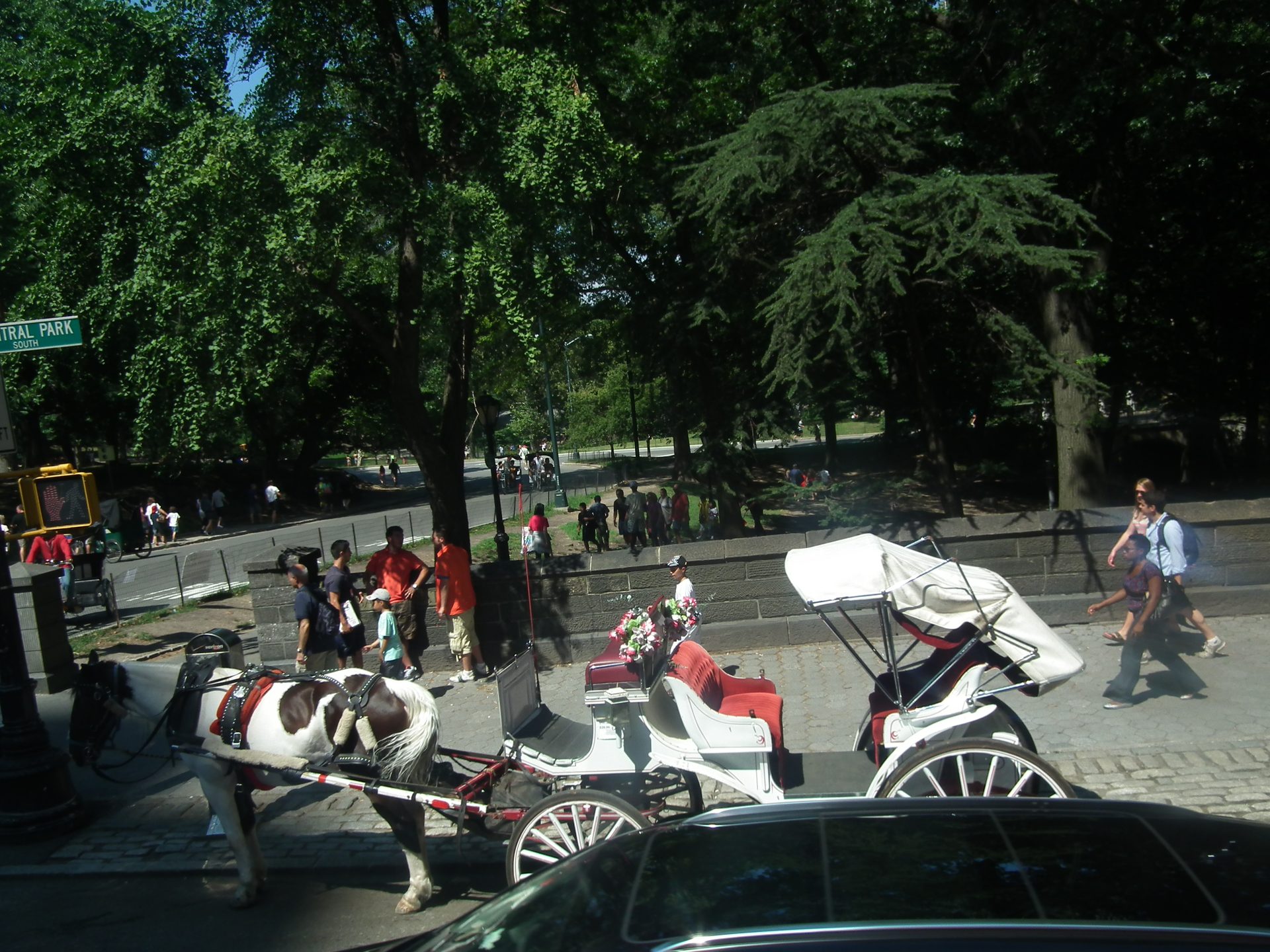
Update (20 November 2026): Mayor Zohran Mamdani signed Romanch's Law on Thursday 19 November 2026 at City Hall's Blue Room, ending New York City's horse-drawn carriage industry. Carriages must stop operating on city streets by 1 June 2028, and the Transport Workers Union Local 100 filed a federal lawsuit the same day.
On Thursday 19 November 2026, Mayor Zohran Mamdani signed the law that will end horse-drawn carriage rides in New York City. The signing, held at City Hall's Blue Room, closes a chapter that Mamdani himself described as a century and a half long: "For 150 years, horse-drawn carriages have been a fixture of Central Park. Today, we are bringing that chapter to a close." From 1 June 2028, the carriages will no longer operate on the city's streets.
The law is called Romanch's Law, named for Romanch Mahajan, an 18-year-old visitor from India who died in June 2026 after the horse pulling his family's carriage bolted during a Central Park ride. His death turned a long-running debate about the carriage industry into a law with a firm end date — and the same day, the drivers' union had gone to federal court to try to stop it. This is what the law does, who it affects, and what happens next.
What Happened
Mamdani signed Romanch's Law on Thursday 19 November 2026, in a ceremony at City Hall's Blue Room. The law ends New York City's horse-drawn carriage industry outright: every existing carriage licence expires on 31 May 2028, no new licences will be issued, and carriages must stop operating on city streets by 1 June 2028. The phase-out gives the industry about eighteen months to wind down, rather than ending the rides overnight.
With the signing, New York becomes the largest metropolitan area in the United States to ban the practice, following Philadelphia, Chicago and San Antonio. The ban covers the carriage rides that have long operated around Central Park.
The mayor framed the decision as the end of a long era. "For 150 years, horse-drawn carriages have been a fixture of Central Park. Today, we are bringing that chapter to a close," Mamdani said at the signing. The law does not take effect in full at once: the licences run until the end of May 2028, and the city has set out a transition process for the people and animals involved, with a full plan due by 1 April 2027.
Who Was Romanch Mahajan?
The law is named for Romanch Mahajan, an 18-year-old visitor from India who died on 17 June 2026. During a carriage ride in Central Park with his family, the horse pulling their carriage bolted and threw him. He died from his injuries. The accident became the event that pushed the long-running campaign against the carriage industry over the line, and the bill that followed carries his name.
The bill itself has a longer history. It began as Ryder's Law, named after a carriage horse that collapsed in Hell's Kitchen in 2022. That collapse had already drawn attention to the conditions of the carriage horses and the safety of the rides, and campaigners had been pressing the City Council to act ever since. After Romanch Mahajan's death in June 2026, the effort took his name, and the bill moved through the Council as Romanch's Law.
The renaming shows how the debate changed. What had been argued for years as a question about animal welfare became, after June 2026, a question about public safety as well.
How the Bill Passed the Council
The New York City Council passed the bill on 22 October 2026, about four weeks before the mayor signed it. The vote was 40 in favour and 7 against, with 2 abstentions — a clear majority, though not a unanimous one. The bill, Intro 943-A, was sponsored by Council Member Christopher Marte.
A 40-7 vote means the ban had broad support across the Council, and it passed despite opposition from the carriage industry and its union. The seven votes against it, and the two abstentions, show that the measure was contested.
Mamdani, who won the mayoral election on 4 November 2025 and took office on 1 January 2026, signed the bill into law less than a year into his term. The signing was one of the most visible acts of his first year in office, and it puts the city on a fixed timetable: licences expire on 31 May 2028, and the rides end the next day.
What Happens to the Workers
About 200 workers are affected by the ban: the carriage drivers, the medallion owners who hold the licences that allow the carriages to operate, and the stable hands who care for the horses. For many of them, the carriage industry is their main source of income. The end of the industry means the end of those jobs as they exist today, and that is the heart of the opposition to the law.
Two days before the signing, on 17 November, the city announced the outline of its plan for those workers. It aims to buy back the 68 horse carriage medallions — the licences that give their holders the right to operate a carriage — and to offer retraining and workforce programmes to help affected workers find other work. A full transition plan is due by 1 April 2027, setting out how the buyback and the retraining will work in practice.
What the city has not done is put a price on any of this. No dollar figures have been released for the medallion buyback or for the retraining programmes, and the value of a medallion — which for its owner represents years of investment — is one of the main points of dispute. The union's lawsuit argues that the law takes medallions, licences, horses and carriages without guaranteed just compensation, and the question of what the medallions are worth will be central to that case.
The Lawsuit Against the City
The legal challenge arrived the same day as the signing. Transport Workers Union Local 100, which represents the carriage drivers, filed a federal lawsuit on 19 November 2026, the same day Mamdani signed the law. The case is Chiarello v. City of New York, No. 1:26-cv-10154, filed in the Southern District of New York.
The union's argument is that the law is unconstitutional because it takes the industry's property — the medallions, the licences, the horses and the carriages — without guaranteed just compensation. In the union's view, the city is ending a lawful business and taking the assets that business depends on, while the compensation on offer is a promise rather than a guarantee. The lawsuit asks the court to step in, and the court will decide whether to pause the transfer freeze while the case is heard.
That question — whether the court pauses parts of the law while the case proceeds — is the first test the ban will face. If the court grants a pause, the timetable could slip; if it does not, the law stands and the transition plan goes ahead on schedule.
What Happens to the Horses
The law also sets out what must happen to the horses themselves. It requires humane placement of the horses once the carriage industry ends, with protections against sale for slaughter or transfer to other carriage businesses. That means the horses cannot simply be sold on to another city where carriage rides still operate, and they cannot be sent to slaughter.
This part of the law answers one of the main concerns raised by supporters of the ban: that ending the industry in New York would simply move the problem elsewhere, with the same horses pulling carriages in another city. The protections are written into the law so that the end of the rides in New York is also the end of carriage work for these particular horses.
Electric Carriages and Alternatives
Mamdani has also ordered a feasibility study of electric carriages and electric pedal-assist bicycles as possible alternatives in Central Park. The idea is that visitors could still take a ride through the park, but in a vehicle that does not depend on a horse.
Nothing has been decided. The study will look at whether electric carriages could work in the park, and no replacement has been approved. The pedal-assist bicycle option would be a different kind of ride altogether — smaller, slower and without the carriage itself. For now, both are possibilities being studied, not plans being carried out, and the law itself only ends the horse-drawn rides; it does not create a replacement.
Supporters and Opponents
The ban has divided opinion in the city, and both sides argue from the same set of facts. Supporters of the ban point to the death of Romanch Mahajan and to the 2022 collapse of the horse Ryder as evidence that the rides are unsafe for passengers and unfair to the animals. In their view, a horse working in traffic in the middle of Manhattan is a risk that the city should not keep taking, and the June 2026 accident showed what can go wrong. The humane-placement protections for the horses are, for supporters, part of the point: the law does not just end the rides, it makes sure the horses are cared for afterwards.
Opponents of the ban start from the workers. About 200 people depend on the carriage industry, and for the medallion owners the medallions represent a substantial investment built up over years. Opponents argue that the city is taking that investment away without a guaranteed payment, which is the argument the union has now put before a federal court. They also say the rides are part of the city's character — a fixture of Central Park for 150 years, in the mayor's own words — and that ending them removes something visitors come to New York to see.
What Happens Next
- Transition plan — by 1 April 2027: the city must produce its full plan, including the medallion buyback and the retraining and workforce programmes for the affected workers.
- Court case — ongoing: the federal court will decide whether to pause the transfer freeze while Chiarello v. City of New York is heard, and will rule on the union's claim that the law takes property without guaranteed just compensation.
- Feasibility study — ongoing: the study of electric carriages and electric pedal-assist bicycles as possible alternatives in Central Park will report back, but no replacement has been approved.
- Licences expire — 31 May 2028: every existing horse carriage licence expires, and no new licences will be issued.
- Rides end — 1 June 2028: horse-drawn carriages must stop operating on New York City streets.
For visitors, the rides will still be running until the end of May 2028. For the drivers and medallion owners, the next milestone is the transition plan in April 2027, and the court case will decide whether the timetable holds.
Frequently Asked Questions
What is Romanch's Law?
Romanch's Law is the New York City law signed by Mayor Zohran Mamdani on 19 November 2026 that ends the city's horse-drawn carriage industry. It is named for Romanch Mahajan, an 18-year-old visitor from India who died in June 2026 after the horse pulling his family's carriage bolted during a Central Park ride.
When do horse-drawn carriages stop in New York City?
Horse-drawn carriages must stop operating on city streets by 1 June 2028. Every existing licence expires on 31 May 2028, and the city will not issue any new licences.
Who was Romanch Mahajan?
Romanch Mahajan was an 18-year-old visitor from India who died on 17 June 2026 after the horse pulling his family's carriage bolted during a Central Park ride and threw him. The law ending the carriage industry is named after him.
How did the City Council vote on the ban?
The New York City Council passed the bill, Intro 943-A, on 22 October 2026 by 40 votes to 7, with 2 abstentions. The bill was sponsored by Council Member Christopher Marte.
What happens to the carriage drivers and workers?
About 200 workers are affected, including drivers, medallion owners and stable hands. The city announced on 17 November that it aims to buy back the 68 horse carriage medallions and offer retraining and workforce programmes. A full transition plan is due by 1 April 2027, and no dollar figures have been released.
What happens to the horses?
The law requires humane placement of the horses, with protections against sale for slaughter or transfer to other carriage businesses.
Why is the drivers' union suing?
Transport Workers Union Local 100 filed a federal lawsuit on the day the law was signed, arguing the law is unconstitutional because it takes medallions, licences, horses and carriages without guaranteed just compensation. The case is Chiarello v. City of New York, filed in the Southern District of New York.
Will electric carriages replace the horse-drawn ones?
That has not been decided. Mayor Mamdani ordered a feasibility study of electric carriages and electric pedal-assist bicycles as possible alternatives in Central Park, but no replacement has been approved.
Related Reading
- Zohran Mamdani and the Democrats' 2026 Election Wins — how Mamdani won the New York mayoral election on 4 November 2025.
- Hakeem Jeffries: First Black House Speaker — another historic first from the 2026 elections.
Sources
- South Shore Press — Mamdani signs horse carriage ban as drivers and medallion owners sue in federal court — reports the 19 November 2026 signing, the union's federal lawsuit and the medallion buyback plan.
- New York News — Mamdani horse carriage transition plan, medallion buybacks and retraining — covers the transition plan announced on 17 November 2026, including the buyback of the 68 medallions and the retraining programmes.
- First Feed News — Mamdani signs NYC horse carriage ban, union sues — reports the signing of Romanch's Law on 19 November 2026 and the same-day lawsuit by Transport Workers Union Local 100.
- ItsBizKit — NYC horse carriage ban — covers the ban, the 1 June 2028 end date and the background of the bill, from Ryder's Law to Romanch's Law.
- VegNews — Mamdani, New York City horse carriages ban 2028 — reports the signing, the humane placement protections for the horses and the electric carriage feasibility study.
This article was published on 20 November 2026, the day after Mayor Mamdani signed Romanch's Law. The court case and the transition plan are still developing — check the sources above for the latest updates.