 MixKhazana
Mamdani's Plan to Close Rikers Island by 2032
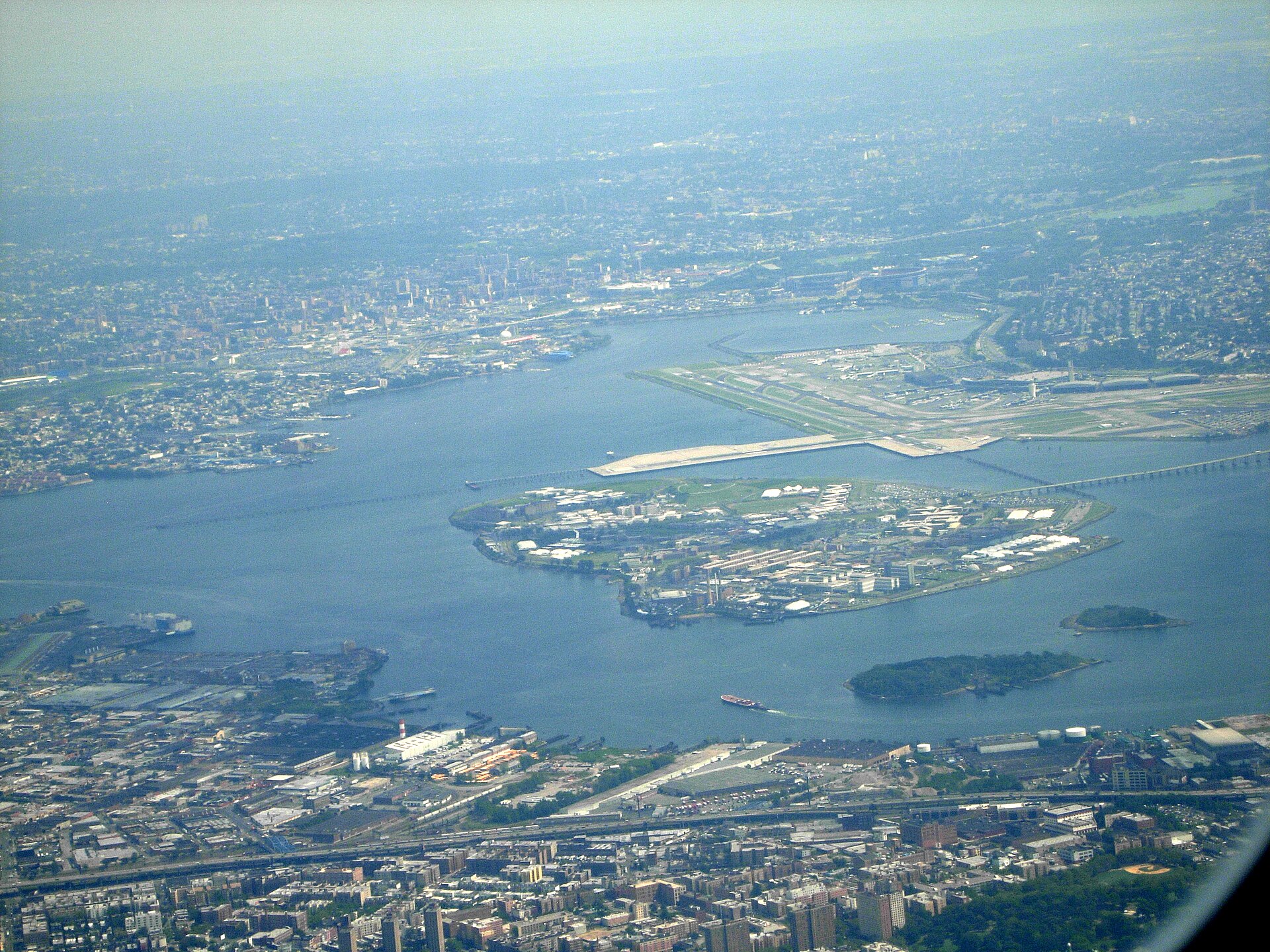
What happened: On Friday, 20 November 2026, New York City Mayor Zohran Kwame Mamdani released the city's first comprehensive plan to close the Rikers Island jail complex by 2032. The plan, called "Close Rikers: Strategic Plan", would replace the island jail with four smaller borough-based jails — Brooklyn first in 2029, Queens and the Bronx in 2031, and Manhattan in 2032 — each designed for about 1,040 people. The city is legally required to close Rikers by August 2027 under a 2019 law, a deadline the administration says will be missed, so the City Council must pass legislation to extend it to 2032. The plan aims to cut the jail population from about 6,700 people now held at Rikers to a little over 4,000, and invests $146 million in the next fiscal year in mental health care, substance-use treatment, education, job training and services for crime victims.
Rikers Island has been one of the most criticised jails in the United States for decades. The complex sits on an island in the East River, near LaGuardia Airport, and for generations it has held people awaiting trial as well as people serving short sentences. Campaigners, former detainees and oversight bodies have raised concerns about conditions there for years, and the effort to close the island jail was first championed as long ago as 1979. Now, nearly half a century later, New York City has a new mayor, a new plan, and a new date: 2032.
On Friday, 20 November 2026, Mayor Zohran Kwame Mamdani released what the city describes as its first comprehensive plan to close Rikers Island. Standing beside him was Department of Correction Commissioner Stanley Richards, the first formerly incarcerated person to lead the department — a detail the administration highlighted as it presented the plan. Mamdani's message was direct. "It is time to finally close Rikers Island," he said, adding that he was proud New York City "will close Rikers Island once and for all."
The plan does not close the jail tomorrow, or even next year. It sets out a six-year path, with new jails to be built in four boroughs, the jail population to be brought down by roughly two-fifths, and a large new investment in the health and social services that the administration says will make the smaller system work. It also acknowledges, openly, something previous plans have struggled with: the legal deadline to close Rikers by August 2027 will be missed, and the City Council will have to vote to move it.
The Plan at a Glance
The document released on 20 November 2026 is titled "Close Rikers: Strategic Plan", and the city presents it as the first comprehensive plan for closing the complex. That wording matters, because earlier efforts set the goal and the deadline without laying out, in one place, how the population would fall, where people would be held instead, and what it would cost. This plan tries to answer all three questions at once.
At its centre is a simple swap: one large island jail complex replaced by four smaller jails, one in each of four boroughs. Each of the new jails is designed for about 1,040 people, which means the four together would hold a little over 4,000 people — matching the population target the plan sets. The idea behind borough-based jails is that people are held closer to their families, their lawyers and the courts where their cases are heard, rather than on an island that is difficult to reach. That closeness, supporters of the idea argue, makes it easier for families to visit, for lawyers to meet their clients, and for people to attend court on time.
None of this happens by the mayor's word alone. The most important next step is a vote in the City Council, because the 2019 law that requires Rikers to close by August 2027 has to be changed before any 2032 date can stand. The plan is therefore as much a proposal to the Council as it is a statement of intent — and the debate over it will be one of the defining arguments of Mamdani's first year in office.
Four Borough Jails: The Timeline
The building timeline is staggered over six years, with one jail opening at a time. Brooklyn comes first, in 2029. Queens and the Bronx follow in 2031, and Manhattan — the last of the four — is due in 2032. Only when the fourth jail is ready would Rikers Island itself close, at the end of 2032.
Each jail is designed for about 1,040 people. That figure is not accidental: four jails of that size add up to about 4,160 places, which lines up with the plan's target of bringing the jail population down to a little over 4,000. In other words, the buildings and the population target are two halves of the same calculation. If the population does not fall to that level, the four jails will not have enough space; if it falls further, there will be room to spare. The whole plan therefore depends on the population measures working as intended.
Cutting the Jail Population
The hardest part of closing Rikers is not building four new jails. It is reducing the number of people the city holds. Right now, about 6,700 people are held at Rikers. The plan aims to bring that number down to a little over 4,000 — a fall of roughly 2,700 people, or about 40 per cent. Without that fall, the four new jails, with about 1,040 places each, would not be big enough.
The plan sets out several ways to get there. The first is expanded diversion: steering people, where appropriate, away from jail and into programmes and services instead. The second is supervised release, under which people awaiting trial are released under supervision rather than held in jail while their cases proceed. The third is more housing and social services, aimed at the underlying problems — such as homelessness and untreated health needs — that can bring people into contact with the criminal justice system in the first place.
Two practical measures sit alongside those. The plan would restore an online bail payment system, so that bail can be paid quickly and people who can post bail do not spend extra days in jail simply because payment is slow or difficult. And it would reduce case delays, because a large share of the people held at Rikers are awaiting trial: the longer a case takes, the longer a person waits in jail, and the higher the daily population. Faster cases mean fewer people held on any given day.
The $146 Million Investment
Alongside the building and population measures, the plan commits $146 million in the next fiscal year to services that the administration says are central to making a smaller jail system work. The money is aimed at mental health care, substance-use treatment, education, job training and services for crime victims — five areas that, in the administration's view, address the reasons people end up in jail and help them stay out of it afterwards.
Part of the investment is concrete and countable: 340 therapeutic beds, including 236 new Outposted Therapeutic Housing Units in Brooklyn and the Bronx, located in NYC Health + Hospitals facilities. These are beds for people who need treatment rather than a standard jail cell — people with mental health needs or substance-use needs whose care, the plan argues, is better provided in a health setting than in a jail. The units are described as "outposted", meaning they sit within hospital facilities rather than inside a jail building, which is a deliberate part of the design: treatment first, custody second.
It is also worth noting the human context in which the plan was presented. The Vera Institute of Justice says at least nine people have died in New York City Department of Correction custody so far in 2026. That figure was part of the background to the announcement, and it underlines why campaigners have pressed for closure for so long: for them, Rikers is not only a question of buildings and budgets, but of safety and lives.
Why 2027 Became 2032
To understand why the new date is 2032, it helps to look back. The effort to close Rikers Island was first championed in 1979 — nearly fifty years ago. For decades it remained an aspiration rather than a plan. Then, in 2019, the City Council passed a law requiring the city to close Rikers by August 2027, and former Mayor Bill de Blasio's plan set out the four borough-based jails that would replace it.
That 2027 deadline is now less than a year away, and the administration says it will be missed. The new jails are not ready, the population has not fallen far enough, and the work has taken longer than the 2019 timetable allowed. The new plan is therefore honest about a failure — the failure to meet the 2027 date — and it asks the City Council to pass legislation extending the deadline to 2032.
That request is the plan's first real test. The Council wrote the 2027 deadline into law, and only the Council can change it. Some council members and campaigners may welcome a realistic timetable; others may see the extension as a retreat from a commitment the city made in 2019. The debate will also be shaped by the fact that Mamdani himself, during his campaign, had pledged to work towards closing Rikers by 2027 — a pledge the new plan now moves five years later. The administration's case will be that a credible plan for 2032 is worth more than a deadline for 2027 that cannot be met.
The Cost Question
Closing Rikers Island was never going to be cheap, and the price has risen sharply. When the 2019 plan was drawn up, the cost was estimated at about $8 billion. It is now reported at roughly $13.8 billion to $16 billion — roughly double the original figure. That increase will be one of the most argued-over numbers in the debate ahead, and it raises a straightforward question: how will the city pay for it, and is it worth it?
Part of the increase reflects the same pressures that have pushed up the cost of large construction projects everywhere: higher prices for labour and materials, longer timetables, and the complexity of building secure facilities in dense city neighbourhoods. Part of it reflects the scale of what is being built — four separate jails, each with its own site, design and services, rather than a single complex on an island the city already owns.
Opposition is also expected from two directions. Some neighbourhood residents near the proposed jail sites have opposed the plans, and the union representing correctional officers has argued to keep Rikers Island open. Those are different objections — one about the impact of a new jail on a neighbourhood, the other about the working conditions and future of the officers who staff the system — but together they mean the plan will face organised resistance at every stage, from the Council vote on the deadline to the planning decisions for each individual jail.
What Happens Next
The immediate next step is legislative. The City Council must pass a law extending the closure deadline from August 2027 to 2032, and that vote will be the first formal test of whether the plan has the political support it needs. Until that vote happens, the 2027 deadline stands in law even though the administration says it cannot be met — an awkward position that both sides will want resolved.
After that, the work splits into two tracks. On the construction track, the Brooklyn jail is the first milestone, due in 2029. Its progress — whether the site is secured, the design is approved, and building starts on time — will be the earliest evidence of whether the 2032 timetable is realistic. On the population track, the measures to bring the jail population down from about 6,700 to a little over 4,000 will need to show results well before 2032, because the four new jails are sized for that smaller population.
The $146 million investment in the next fiscal year is also a near-term test: it is the first money committed under the plan, and its delivery — the therapeutic beds, the treatment places, the education and training — will be watched as a sign of whether the administration's approach is working. The 340 therapeutic beds, including the 236 new Outposted Therapeutic Housing Units in Brooklyn and the Bronx, are among the most concrete commitments in the document.
Why It Matters
Rikers Island matters beyond New York City because it is one of the best-known jails in the world, and its closure — if it happens — would be one of the largest changes to a city jail system anywhere. Other cities watch New York's experiment with borough-based jails, and with the idea that a jail population can be reduced through services rather than simply through building more cells. If the plan works, it will be studied. If it fails, it will be cited as a warning.
It matters within the city for a simpler reason: the people held at Rikers are, in large part, people awaiting trial — people who have not been convicted of the charges against them. Where they are held, how long they wait, and what care they receive while they wait are questions that affect thousands of New Yorkers and their families every year. A jail closer to home, with better access to lawyers and visitors, would change that experience in practical ways.
Finally, it matters because of the history. The effort to close Rikers was first championed in 1979. Mayors have come and gone, plans have been drawn up and deadlines have been set and missed. Mamdani's plan is the latest attempt — and, with a date of 2032, it asks the city to wait another six years. The question now is whether this plan, unlike the ones before it, survives the Council vote, the neighbourhood disputes, the cost arguments and the population challenge to reach the day when Rikers Island finally closes. As the mayor put it on 20 November 2026: "It is time to finally close Rikers Island."
Frequently Asked Questions
What is Mamdani's plan to close Rikers Island?
On 20 November 2026, Mayor Zohran Mamdani released the city's first comprehensive plan to close the Rikers Island jail complex by 2032, replacing it with four smaller borough-based jails in Brooklyn, Queens, the Bronx and Manhattan.
When will Rikers Island close?
Under the plan, Rikers Island would close by the end of 2032. The Brooklyn jail would open first in 2029, followed by Queens and the Bronx in 2031 and Manhattan in 2032.
Was Rikers Island not already meant to close by 2027?
Yes. A 2019 City Council law requires the city to close Rikers Island by August 2027. The Mamdani administration says that deadline will be missed, and the City Council must pass legislation to extend it to 2032.
How will the jail population be reduced?
The plan aims to cut the jail population from about 6,700 people now held at Rikers to a little over 4,000, through expanded diversion and supervised release, more housing and social services, restoring an online bail payment system, and reducing case delays.
How much will closing Rikers Island cost?
Cost estimates have risen sharply. The 2019 plan was estimated at about $8 billion; the cost is now reported at roughly $13.8 to $16 billion. The plan also invests $146 million in the next fiscal year in mental health care, substance-use treatment, education, job training and services for crime victims.
What are borough-based jails?
They are four smaller jails, one in each of four boroughs — Brooklyn, Queens, the Bronx and Manhattan — each designed for about 1,040 people. The idea is to hold people closer to their families, lawyers and courts instead of on an island in the East River.
Who is leading the closure effort?
Mayor Zohran Mamdani announced the plan, and Department of Correction Commissioner Stanley Richards appeared with him. Richards is the first formerly incarcerated person to lead the department.
Who opposes closing Rikers Island?
Opposition is expected from some neighbourhood residents near the proposed jail sites and from the union representing correctional officers, which has argued to keep Rikers Island open.
Related Reading
- Democrats Clinch 259 House Seats, Largest Since 1990 — the Democrats' historic House majority after the 3 November 2026 midterms, and what divided government means for the new Congress.
Sources
- City of New York — the plan announcement — Mayor Mamdani releases the city's first comprehensive plan to close Rikers Island.
- AP — plan hinges on cutting the jail population — Mamdani sets out a plan to close New York City's notorious Rikers Island jail.
- CNN via LA Post — 2032 deadline, costs, opposition — Mamdani pledged to work toward closing Rikers Island by 2027; now his new plan aims to shut it five years later.
This article was published on 25 November 2026 and covers the plan announced on 20 November 2026. The closure date, costs and Council vote are developing — check the City of New York website for the latest updates.