France Nationwide Strike: Pay Protests, 17 November
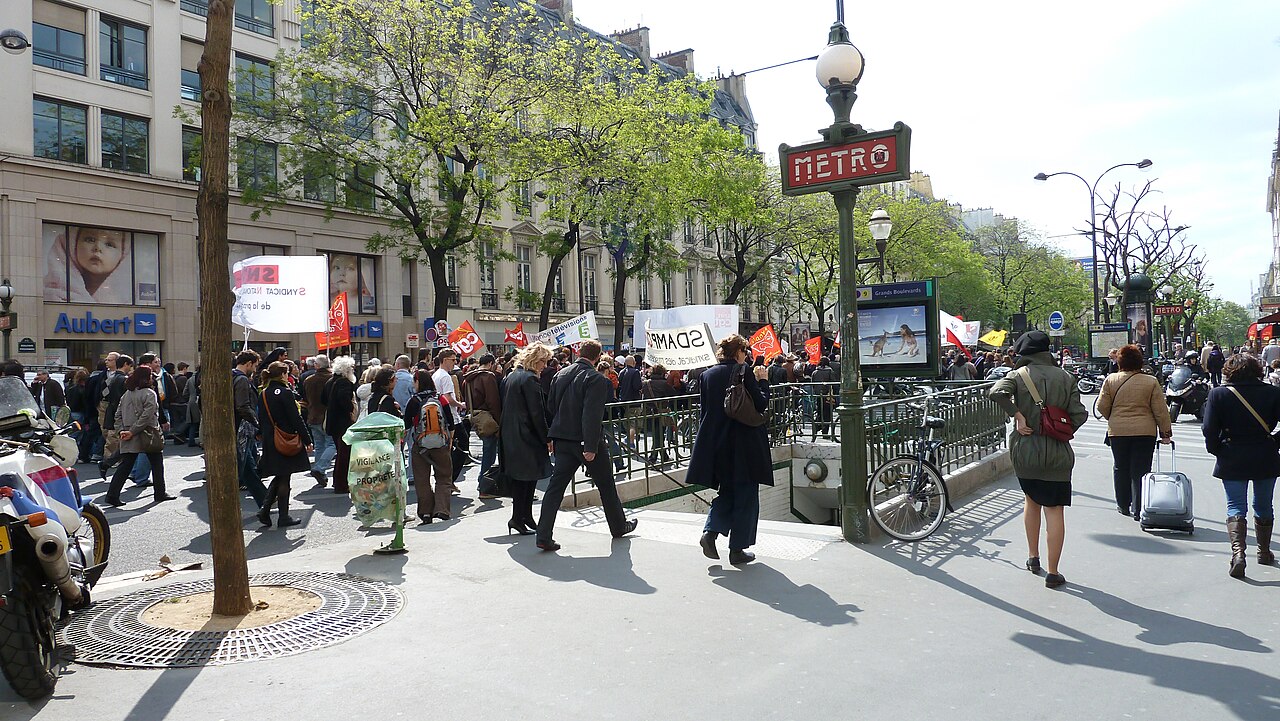
What happened: On Tuesday 17 November 2026, France's public-sector unions called a nationwide strike over pay, the third united day of action since September. Tens of thousands marched in Paris and other cities, rail and metro services were disrupted, and the government and unions gave very different accounts of how many people took part.
France stopped work on Tuesday. Schools, hospitals, town halls and transport services were hit as the country's 5.8 million public-sector employees were called out on strike, and demonstrators marched in Paris and dozens of other cities to demand higher pay. It was the third coordinated day of public-sector strikes since September, and it came after talks between the unions and Prime Minister Sébastien Lecornu broke down the previous Friday without a deal.
The dispute is about purchasing power. Unions say public servants have lost 16 percent of their purchasing power since 2017, and they want the government to unfreeze the "index point" — the figure used to calculate the basic salaries of civil servants — and to agree an across-the-board pay rise. The government's draft budget for 2027 rules out a general pay rise for the fourth consecutive year, and the unions say the concessions offered so far do not come close to what is needed.
What Happened
Unions called the strike after a meeting with Prime Minister Lecornu on Friday 13 November failed to satisfy them. The unions had been pushing for across-the-board pay rises since the government announced an increase in the minimum wage for private-sector workers the previous week, and they left Friday's meeting saying the proposals on the table did not address the urgency of the pay situation. More unions joined the strike call after that meeting, and all of France's trade unions took part in Tuesday's demonstrations.
In Paris, the main rally began at 2 p.m. local time, marching from the Place de la Nation in the east of the city to Place d'Italie in the south. Dozens of other gatherings were held across the country. High-school and university students joined the protests, as did some private-sector workers, retirees and Yellow Vest activists, turning a public-sector pay dispute into a broader cost-of-living demonstration. It followed a fifth consecutive Saturday of protests over issues including conditions in schools, rising prices and better protection for children.
The strike is part of a longer wave of unrest. Tuesday marked the third call for a united day of action and strikes in the public sector since September, including one earlier in November that drew hundreds of thousands of workers onto the streets, with police firing tear gas amid clashes in some cities. France has also seen more than a month of high-school blockades and protests, and the government is racing to pass a deficit-cutting budget for 2027 ahead of presidential elections next year, with the far right, in the words of one report, eyeing power.
Why Workers Are Striking
The core demand is simple: a pay rise that keeps up with the cost of living. Public-sector staff want the government to unfreeze the index point used to calculate their basic salaries. That figure has been frozen in practice, and unions calculate that public servants have lost 16 percent of their purchasing power since 2017. The result, they say, is that growing numbers of public employees now earn at or close to the minimum wage — a situation the unions call unacceptable for people doing the work of the state.
The immediate trigger was the minimum wage. Last week the government announced an increase in the SMIC, the national minimum wage, for private-sector workers — a rise of 1.6 percent, according to the CGT union. Public-sector unions say that small rise does nothing for their members, whose pay is set by the frozen index point rather than the SMIC, and they have demanded across-the-board rises instead. Sophie Binet, general secretary of the CGT, one of France's main union confederations, told French broadcaster RMC that the government's response amounted to "€5 more a month on the minimum wage" — a figure she presented as proof that Paris was not taking the pay problem seriously.
Behind the pay claim sits the budget. The government's draft budget for 2027 again makes no provision for a general pay rise — the fourth consecutive year without one — because the government is trying to cut the deficit. That is the heart of the standoff: the unions want pay restored, while the government says the public finances cannot afford it. The same budget pressure explains why the dispute has kept returning since September, with each round of talks producing offers the unions reject as too small.
There is also a timing question. Public-sector elections are scheduled for 11 December, and union leaders are under pressure from their members to show results. The government's spokesman, Mathieu Lefèvre, said the public accounts minister would meet the unions after those elections, and that work was under way to review civil service pay scales — a timetable the unions regard as a delaying tactic rather than a promise.
What the Government Offered
The government says it has moved. Government spokesman Mathieu Lefèvre told Sud Radio that Lecornu had proposed an increase in index points for the lowest-paid workers, a guarantee that no civil servant would earn less than the minimum wage, and pay rises of up to €650 gross for more than 1.3 million public-sector employees. Lefèvre also said work was under way to review civil service pay scales, with a meeting between the public accounts minister and the unions after the 11 December elections.
The unions' answer was that the offer misses the point. Their demand is an across-the-board rise and an unfreezing of the index point for everyone, not targeted increases for the lowest paid. Binet and other union leaders said the proposals put to them on Friday did not answer the urgent need for action on wages, and that is why more unions signed up to the strike after the meeting rather than calling it off.
Both sides, in other words, describe the same meeting very differently. The government presents a package worth hundreds of euros for the lowest-paid 1.3 million staff as a serious step. The unions present it as a partial measure that leaves the pay freeze in place for most public servants and does nothing about the 16 percent loss of purchasing power since 2017. That gap — targeted help versus a general rise — is what Tuesday's strike was called to close.
How Big the Protests Were
How many people marched is disputed, as it usually is in France. Police expected between 40,000 and 80,000 demonstrators in Paris and between 220,000 and 300,000 at dozens of protests nationwide. After the marches, the unions said more than 500,000 people had taken part across the country, including 175,000 in Paris. The Interior Ministry counted 146,000 across France and 28,000 in the capital.
The gap between those figures is normal for French protests: unions count everyone who passes through a demonstration, including people who join for part of the route, while the police count a snapshot of the crowd at a given point. Neither figure is independently verified, and the truth is almost certainly somewhere between the two. What is not in dispute is that the demonstrations were large, nationwide, and joined by groups beyond the public sector — students, retirees and private-sector workers among them.
One figure that puts the day in context comes from the protest movement as a whole: one correspondent put cumulative turnout since the protests began in September at 5.5 million people. That number, like the daily counts, comes from the unions' side and cannot be checked independently, but it shows how the movement's organisers see the campaign — not as a single day of action, but as a rolling mobilisation that has now produced three national strike days in under three months.
Travel Disruption
Travellers felt the strike directly. Regional train services were disrupted and several Paris metro stations were closed as railway workers joined the action. Anyone travelling in France on Tuesday faced delays and cancellations, and the disruption was worst in Paris, where the march route itself closed roads in the east and south of the city during the afternoon.
The disruption was not limited to transport. Schools were affected, with teachers among the strikers, and public services from town halls to hospitals ran on reduced staffing. The pattern is familiar from earlier strike days this autumn: the public sector stops, the streets fill, and daily life in France's cities slows for a day, then resumes while the underlying dispute continues.
For visitors, the practical advice is the same as on any French strike day: check with the operator before travelling, allow extra time, and expect last-minute changes. The strike was called for a single day, and services were expected to return to normal on Wednesday — but with the dispute unresolved, further days of action remain likely.
What Happens Next
- Budget battle: the government must get its deficit-cutting 2027 budget through parliament. The budget's refusal of a general pay rise is the central grievance, so the parliamentary debate will be the next test of whether the government holds its line.
- 11 December elections: public-sector elections take place on 11 December, and the government has promised a meeting between the public accounts minister and the unions afterwards. The unions will judge that meeting by whether it produces a real offer.
- More strike days: with three national strike days since September and no agreement, further days of action are likely if the December meeting fails. The movement has shown it can mobilise hundreds of thousands of people repeatedly.
- Presidential election: France holds presidential elections next year, and the pay dispute is now part of that campaign. The government will want the unrest settled; its opponents will want to keep the pressure on.
For now, both sides are holding their positions. The unions want the index point unfrozen and a general rise; the government offers targeted increases for the lowest paid and a review of pay scales after December. Until one side moves, France can expect more Tuesdays like this one.
Frequently Asked Questions
What is the France strike about?
Public-sector workers are striking for higher pay. Unions say civil servants have lost 16 percent of their purchasing power since 2017 because the index point used to calculate their basic salaries has been frozen, and the government's draft 2027 budget rules out a general pay rise for the fourth consecutive year.
When did the strike take place?
The nationwide strike took place on Tuesday 17 November 2026. It was the third united day of public-sector action since September, called after talks with Prime Minister Sébastien Lecornu on Friday 13 November failed to produce a deal.
How many people took part?
The figures are disputed. Unions said more than 500,000 people marched nationwide, including 175,000 in Paris. The Interior Ministry counted 146,000 across France and 28,000 in Paris. Police had expected 220,000 to 300,000 nationwide before the marches.
What is the index point?
The index point is the figure used to calculate the basic salaries of France's public-sector employees. Unions want it unfrozen so that pay rises with the cost of living; the government has kept it effectively frozen, which unions say is why so many civil servants now earn at or close to the minimum wage.
What did the government offer?
Government spokesman Mathieu Lefèvre said Prime Minister Lecornu proposed higher index points for the lowest-paid workers, a guarantee that no civil servant earns less than the minimum wage, and pay rises of up to €650 gross for more than 1.3 million public-sector employees. The unions rejected the offer as too small and too narrow.
What is the SMIC?
The SMIC is France's national minimum wage, the legal pay floor for private-sector workers. The government recently announced a 1.6 percent rise in the SMIC. Public-sector unions say that rise does not help their members, whose pay is set by the frozen index point rather than the SMIC.
Was transport disrupted?
Yes. Regional train services were disrupted and several Paris metro stations closed on 17 November, and the Paris march route from Place de la Nation to Place d'Italie closed roads in the east and south of the city during the afternoon.
What happens next?
The government must pass its deficit-cutting 2027 budget, public-sector elections take place on 11 December, and the public accounts minister is due to meet the unions after those elections. If that meeting produces no agreement, further national strike days are likely.
Related Reading
- Paris Trip Cost 2026 — what a visit to the French capital costs right now.
- New Year City Break in Paris — Paris at its festive best — if you are planning a trip.
Sources
- Bangkok Post — New French pay protests bring tens of thousands onto the streets — reports the 17 November marches, the turnout dispute and the 2027 budget context.
- Arab News — France braces for fresh public sector strike over pay — AFP report on the strike call, the failed Lecornu talks and the expected turnout.
- Al Mayadeen — Pay freeze fuels fresh French protests, strike — reports the unions' turnout figure of more than 500,000 and the Interior Ministry count.
- Kuwait Times — France braces for fresh public sector strike over pay — the third day of action since September, the 5.8 million public-sector workforce and the 16 percent purchasing-power loss.
- Modern Ghana — France braces for second nationwide strike over demands for higher wages — quotes CGT leader Sophie Binet and government spokesman Mathieu Lefèvre on the offers made.
This article was published on 18 November 2026 and describes the strike and protests of 17 November 2026 as reported by AFP and other outlets on the day. Turnout figures differ between the unions and the Interior Ministry and are reported as each side stated them. Check official transport operators before travelling in France during strike action.