 MixKhazana
Delta Outage Delays 1,300 Flights Before Thanksgiving
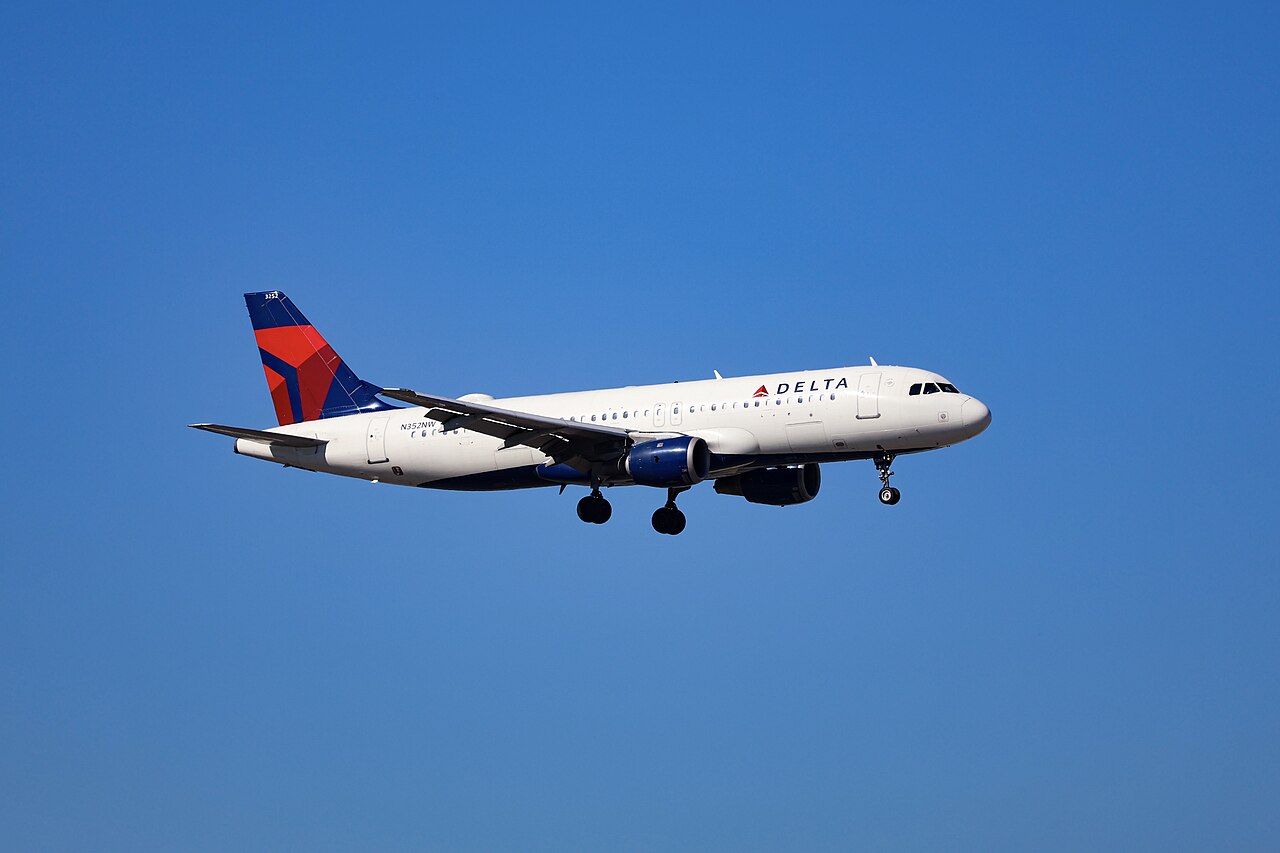
What happened: On Sunday 22 November 2026, Delta Air Lines' automated weight-and-balance calculation system failed, delaying more than 1,300 of the airline's mainline flights — at least 40% of its planned operation for the day. By 1 p.m. EST, around 40% of all flights at Hartsfield-Jackson Atlanta International Airport, Delta's main hub and the world's busiest airport, were delayed. Delta used manual workarounds while the system was down, and the system was later restored, but flights were still not back to normal by Sunday afternoon. The disruption came just days before Thanksgiving, one of the busiest travel weeks of the year in the United States.
It was supposed to be an ordinary Sunday in late November. Instead, it turned into one of the messiest travel days of the year for Delta Air Lines — and it happened at the worst possible moment, just days before Thanksgiving. On Sunday 22 November 2026, a computer system that Delta relies on to work out whether each of its planes is safe to take off simply stopped working. The result was a day of long delays that spread from Atlanta, the airline's home base, across the whole of the United States, with more than 1,300 Delta flights delayed by early afternoon and hundreds of regional flights cancelled.
This page brings together what is known so far about the outage: what failed and why it matters, how badly Atlanta was hit, why the weather made a bad day worse, what Delta is doing for the passengers caught up in it, and what it all means for Thanksgiving week — when more than 80 million Americans are expected to travel. The figures here come from Delta, the Federal Aviation Administration and flight-tracking data reported on 22 November 2026.
What Happened on Sunday
The problem began with a single system: Delta's automated weight-and-balance calculation system. Every flight Delta operates needs this calculation done before the aircraft can leave the gate, and normally a computer does it in moments. On Sunday 22 November 2026, that automated system failed. With the computer unable to produce the numbers, Delta's staff fell back on manual workarounds — working the calculations out by hand, flight by flight. That is far slower than the automated system, and the delays piled up through the morning and into the afternoon.
The scale of the disruption grew quickly. By early afternoon, more than 1,300 of Delta's mainline flights had been delayed — at least 40% of everything the airline had planned to fly that day. Flight-tracking data from FlightAware told a similar story by mid-afternoon, showing about 67% of Delta's flights delayed, roughly 1,000 flights at that point in the day. The two figures describe the same day from different angles and at different times, but they agree on the main point: a very large share of Delta's operation was running late.
Cancellations followed the delays. Delta's regional subsidiary Endeavor Air, which flies as Delta Connection, reported more than 230 cancellations. Delta later restored the automated system, but the damage to the day's schedule was already done: even with the system back up, flights were still not back to normal by Sunday afternoon. Delta said that around 70% of the delays and cancellations were connected to the automation issue, with the rest caused by the weather.
The Atlanta Hub
Nowhere felt the disruption more than Atlanta. Hartsfield-Jackson Atlanta International Airport — known by its airport code, ATL — is Delta's main hub and the world's busiest airport, handling more passengers than any other airport on the planet. When Delta has a bad day, Atlanta has a bad day, because so much of the airline's flying passes through the city. A passenger flying from New York to New Orleans, or from Boston to Orlando, will very often change planes in Atlanta — so a delay in Atlanta ripples out to passengers right across the United States.
By 1 p.m. EST on Sunday, around 40% of all flights at Atlanta airport were delayed — not just Delta flights, but flights across the whole airport. Gates stayed occupied by aircraft that should already have left, arriving aircraft had nowhere to park, and the queues built in every direction.
The Federal Aviation Administration stepped in to manage the flow of traffic into Atlanta. The FAA issued a ground stop lasting about an hour for flights heading into the airport — planes bound for Atlanta were held on the ground at their departure airports rather than being allowed to take off and join a queue in the sky. Around 8:40 a.m., that ground stop was downgraded to a ground delay program, a softer version of the same idea, with inbound delays at Atlanta averaging 57 minutes. The FAA was clear that the delays were not related to FAA air-traffic systems: the air-traffic control system itself was working, and the ground stop was a response to Delta's problem, not the cause of it.
What Is Weight and Balance?
The phrase at the centre of this story — weight and balance — sounds technical, but the idea behind it is simple. Before an aircraft can fly, the airline has to know exactly how heavy it is and how that weight is spread out inside it. Passengers, bags, cargo and fuel all add weight, and where that weight sits matters as much as how much of it there is. Too much weight in the nose, or too much in the tail, and the aircraft will not handle properly in the air.
The calculation exists for a clear safety reason. An aircraft must not be too heavy to fly, and the weight has to be within the limits the aircraft was designed for. According to the Federal Aviation Administration, exceeding those limits can compromise the structural integrity of the aircraft — in other words, the plane itself can be damaged by carrying more than it is built to carry. That is why the calculation is not optional and cannot be skipped: no weight-and-balance calculation, no take-off.
In normal times, all of this is done by computer in seconds, which is what lets a large airline turn an aircraft around quickly. When the automated system failed on Sunday, Delta's staff had to do those same calculations by hand — something airlines did for decades, but far more slowly per flight. That is why a single computer failure could delay more than 1,300 flights: the weight-and-balance system sits on the critical path of every single departure, and there is no way to send a plane out without it. It is also worth noting what this failure was not — Delta's own system, not the national air-traffic system, which the FAA said was not the cause.
Weather Made It Worse
As if the computer failure were not enough, the weather added its own delays on Sunday. Low cloud ceilings — cloud hanging low over the airports — caused delays of their own, slowing arrivals and departures where the cloud was thickest. Low cloud matters because pilots and air-traffic controllers need enough visibility to land and take off safely, and when the cloud sits low, fewer aircraft can move in and out each hour.
The airport most heavily affected by the weather was New York's LaGuardia, where nearly half of all departing and arriving flights were delayed, and 42 flights were diverted to other airports. A diversion is a serious step: a plane that was supposed to land at LaGuardia is sent somewhere else entirely, and its passengers end up in the wrong city. Forty-two diversions in a single day is a sign of how badly the weather was biting in New York.
The weather problem and the computer problem overlapped in the worst way. Delta said about 70% of the day's delays and cancellations came from the automation issue and the rest from the weather — but in practice the two fed into each other. A flight delayed by the weight-and-balance problem might then arrive at an airport where low cloud was already causing its own delays, and a crew that was already running late could face a weather delay on its next leg too. The same weekend, a storm system was also complicating travel on the East Coast, with flooding in South Florida closing schools and flooding roads.
What Delta Is Doing for Passengers
Delta apologised to the customers affected by the disruption, and set out a series of practical steps for the people caught up in Sunday's delays and cancellations. Passengers whose flights were delayed or cancelled were rebooked onto other flights — though on a busy weekend before Thanksgiving that is easier said than done, because the later flights are already carrying their own full loads of passengers.
Delta also provided meals and hotel rooms where they were needed. For a passenger facing a delay of several hours, a meal matters; for a passenger whose flight is cancelled outright and who cannot travel until the next day, a hotel room matters more. These are the practical things that turn a miserable day at the airport into something bearable.
Third, refunds. Delta offered refunds if a flight was cancelled. That is an important right for passengers to know about: if the airline cancels your flight, you can ask for your money back rather than accepting a rebooking onto a later flight. For some passengers — those who can drive instead, or whose trip no longer makes sense — a refund is the better option. What Delta did not do, as far as the reports on Sunday show, was put a time on when the operation would be fully back to normal.
Thanksgiving Week Ahead
The timing of the outage is what makes it a bigger story than a single bad Sunday. Thanksgiving falls on Thursday 26 November 2026 — just four days after the outage — and the week around it is one of the busiest travel periods of the year in the United States. AAA, the motoring and travel organisation, projects that 81.5 million Americans will travel at least 50 miles from home between Tuesday 24 November and Monday 30 November. That forecast was issued on 16 November, before the outage, and it covers all forms of travel, driving as well as flying.
Sunday 29 November could be the busiest day of the year to fly — the Sunday after Thanksgiving, when everyone who flew home for the holiday flies back again, all on the same day. If the return leg is anything like previous years, it will be the single busiest flying day of 2026, with full aircraft, full airports and very little slack in the system for anything to go wrong.
That is why an outage on the Sunday before Thanksgiving week is more worrying than the same outage on a quiet weekend in February: there are fewer spare aircraft, fewer spare crews and fewer empty seats to absorb a disruption. There is also a recent warning in the background: just over a week before the Delta outage, a separate technology failure triggered a nationwide ground stop that disrupted more than 18,000 flights. That was a different failure — a nationwide one, rather than a problem with a single airline's system — but it showed how fragile air travel can be when a piece of technology stops working.
What Travellers Should Do
For anyone flying with Delta — or any airline — in Thanksgiving week, the lessons of Sunday are practical ones. The first is the simplest: check your flight status before you leave home. Delta's app and website carry live flight information, and on a week like this one, a flight that was on time when you booked it can change. Checking before you set out saves a wasted journey to an airport where your flight is already hours late.
The second lesson is to allow extra time and to know your options. In Thanksgiving week the airports are busier, the queues are longer, and the margin for error is thinner — so arrive early. If your flight is cancelled, you can ask Delta for a refund or accept a rebooking; if you are delayed for hours, ask about meals and, if you are stuck overnight, about a hotel room. And if your journey involves changing planes, especially at Atlanta, think about how tight the connection is: a connection of under an hour leaves little room for a delay on the first flight.
Finally, keep an eye on the weather as well as on your airline. Low cloud was a real part of Sunday's problems, and the weather in late November can change quickly. Thanksgiving week will be busy whatever happens. The Delta outage on Sunday was a warning of how quickly a normal travel day can turn into a difficult one — and a reminder that, in the busiest week of the year, the best preparation is the simple kind: check early, arrive early, and know what to do if the flight does not go to plan.
Frequently Asked Questions
What caused the Delta flight delays on 22 November 2026?
Delta Air Lines' automated weight-and-balance calculation system failed on Sunday 22 November 2026. Delta used manual workarounds while the system was down, and the system was later restored, but flights were still not back to normal by Sunday afternoon. About 70% of the delays and cancellations were connected to the automation issue, and the rest to weather.
How many Delta flights were delayed?
By early afternoon on Sunday 22 November 2026, more than 1,300 of Delta's mainline flights had been delayed — at least 40% of its planned operation for the day. FlightAware data from mid-afternoon showed about 67% of Delta's flights delayed, around 1,000 flights. Delta's regional subsidiary Endeavor Air reported more than 230 cancellations.
What is weight and balance on an aircraft?
Weight and balance is the calculation that makes sure an aircraft is not too heavy to fly and that its load is spread correctly. An aircraft must not exceed its weight limits, because exceeding them can compromise the structural integrity of the aircraft, according to the Federal Aviation Administration. A plane cannot legally or safely take off until this calculation is done.
Was Atlanta airport shut down?
No, Hartsfield-Jackson Atlanta International Airport was not shut down, but it was heavily disrupted. By 1 p.m. EST on Sunday, around 40% of all flights at the airport were delayed. The FAA issued an approximately hour-long ground stop for flights into Atlanta, later downgraded to a ground delay program around 8:40 a.m., with inbound delays averaging 57 minutes.
Did the FAA cause the delays?
No. The FAA said the delays were not related to FAA air-traffic systems. The cause was Delta's own automated weight-and-balance system failing, with low cloud ceilings adding further weather delays. The FAA's ground stop and ground delay program were measures to manage the flow of aircraft into Atlanta while Delta worked through the backlog.
What is Delta doing for affected passengers?
Delta apologised to affected customers, rebooked them, provided meals and hotel rooms where needed, and offered refunds if a flight was cancelled. Passengers whose flights were cancelled can ask for a refund, and those still travelling should check their flight status with Delta before heading to the airport.
Will this affect Thanksgiving travel?
Thanksgiving falls on Thursday 26 November 2026, and AAA projects 81.5 million Americans will travel at least 50 miles from home between Tuesday 24 November and Monday 30 November. Sunday 29 November could be the busiest day of the year to fly. The outage happened just days before this peak, so travellers should allow extra time and check flight status before leaving home.
Has this happened before?
Yes, very recently. Just over a week earlier, a separate technology failure triggered a nationwide ground stop that disrupted more than 18,000 flights. The 22 November Delta outage was a different, airline-specific failure — Delta's own weight-and-balance system — rather than a nationwide air-traffic problem.
Related Reading
- South Florida Floods: Up to 15 Inches of Rain — the storm that flooded South Florida days before Thanksgiving, complicating pre-Thanksgiving travel on the US East Coast.
- How to Read Airport Departure Boards — what the boards at the airport are telling you when delays start stacking up.
Sources
- The Points Guy — Delta Air Lines tech outage makes for messy Sunday before Thanksgiving travel — the outage, the scale of the delays and the Atlanta ground stop.
- Simple Flying — Delta weight-balance outage, Atlanta ground stop and Thanksgiving travel — the weight-and-balance system failure, FlightAware figures and Endeavor Air cancellations.
- The Financial Channel — Delta flight delays spread after weight-and-balance system outage — the spread of the delays, the weather impact at LaGuardia and the Thanksgiving travel outlook.
This article was published on 23 November 2026; the figures are from reports on the outage of Sunday 22 November 2026 and the AAA Thanksgiving travel forecast issued on 16 November 2026 — flight status can change, check with Delta before travelling.