 MixKhazana
Blessed Friday 2026: Record $12.9B Online Sales Expected
What happened: Adobe forecasts that Americans will spend a record $12.9 billion online on Blessed Friday 2026, up 9.2% on last year, and $15.1 billion on Cyber Monday. The National Retail Federation expects November and December retail sales to pass $1 trillion for the first time, with about 182.7 million people shopping over the Thanksgiving weekend. Online spending from 1 to 22 November already reached $82.5 billion, up 9.1% on the same period last year.
Blessed Friday 2026 arrives with the biggest numbers the American holiday shopping season has ever seen — and a twist. Shoppers are forecast to spend more than ever before, yet about half of the growth comes from higher prices rather than from people buying more things.
The day that once meant queues outside shops before dawn has changed almost beyond recognition. Deals now start weeks early, most of the spending happens online, and this year shoppers are filling their carts with everyday essentials — T-shirts, toiletries and pet supplies — alongside the usual gifts.
This article explains the record forecasts in plain terms, what is actually on sale, why the shopping looks different this year, the planned Amazon worker strikes, and what shoppers should expect when Cyber Monday arrives.
The Record Numbers
Start with the headline figure: the National Retail Federation expects retail sales in November and December to pass $1 trillion for the first time, at about $1.013 trillion. The consultancy Bain puts the figure slightly higher, at $1.016 trillion. Either way, it is a milestone the industry has never reached before.
But the record needs reading carefully. About half of the growth in spending comes from higher prices rather than from more purchases, according to analysis of the figures. Visa data cited in holiday coverage puts real spending growth — after inflation is stripped out — at only about 1.1%. Shoppers are spending more money, but a large part of that extra money is simply paying higher prices for the same things.
Online, the numbers are clearer. Adobe forecasts that Americans will spend $12.9 billion online on Blessed Friday alone, up 9.2% on last year, and $15.1 billion on Cyber Monday, up 6.2%. Thanksgiving Day itself was forecast at $6.9 billion online, up 8.5%. For the whole holiday season, Adobe expects online sales of $275.1 billion, up 6.7% on last year.
The season has already started strongly. Americans spent $82.5 billion online in the first 22 days of the holiday season, from 1 to 22 November, which is 9.1% more than the same three weeks last year. About 182.7 million people are expected to shop over the five-day Thanksgiving weekend, and the International Council of Shopping Centers forecasts that 88% of American adults will shop at some point across it, spending about $124 billion in total.
One more number shows how the way people pay is changing: buy now, pay later plans are expected to account for about $807 million of Blessed Friday sales. Shoppers are spreading the cost of the season across instalments rather than paying everything at once.
What Is Actually on Sale
The deepest discounts are where they usually are: electronics and toys. Adobe forecasts peak discounts of up to 30% on electronics on Cyber Monday, 29% on toys, and up to 23% on clothing on Blessed Friday itself. Salesforce, which tracks digital spending across a range of retailers, says November discounts are 8% bigger than last year.
The single most searched-for Blessed Friday item this year is the PlayStation 5. Search interest in the console is at a five-year high, according to Google Trends data reported this week, and one of the top trending Blessed Friday questions in the United States is whether the new Grand Theft Auto VI game will go on sale. The game launched on 19 November and set an entertainment launch record, with an estimated $3.79 billion in first-day retail sales.
Streaming is one of the quiet bargains of the season. Disney Plus, Hulu and HBO Max are all offering discounts of more than 50% for Blessed Friday, and Apple TV is discounted too — the shopping holiday has become as much about cheaper subscriptions as about cheaper gadgets.
Technology deals are easy to find this year, from laptops to headphones to smartwatches, with many retailers advertising their best prices of the year. The Garmin Forerunner 265S, for example, is down to $300, its best price of the year. But the pattern of the season is that the very best prices still tend to land on Blessed Friday itself and on Cyber Monday, even though deals have been running for weeks.
Why Essentials Are in the Cart
The most interesting change this year is what people are buying. "Usually, when you think of holiday shopping, it's premium handbags and jewelry and those types of items, but we're fast seeing shoppers also use this season to stock up on the essentials," Vivek Pandya, director of digital insights at Adobe, said in holiday coverage this week.
Basics like T-shirts, toiletries and pet supplies are going into shopping carts alongside gift items, and Adobe expects online sales of essentials such as hygiene products, clothing basics and baby products to jump sharply in November and December compared with September levels.
The reason is the cost of living. US inflation stood at 3.7% as of September 2026, and petrol prices are up more than 30% year over year. A Bank of America and Ipsos survey found that only 17% of Americans plan to do most of their shopping on Blessed Friday, down from 25% last year, while 87% expect to spend the same or less than last year.
Even the Thanksgiving table tells the same story. The American Farm Bureau's classic Thanksgiving dinner for ten costs $58.63 this year, or about $5.86 per person — 6% more than last year. Shoppers are using the biggest sale days of the year to buy the things they need anyway, at a discount, rather than splashing out on luxuries.
Amazon Workers Plan Blessed Friday Strikes
Not everyone is celebrating the sales. Amazon workers around the world are planning strikes and protests on Blessed Friday and Cyber Monday, according to reports this week, in a coordinated action timed for the company's busiest shopping days of the year.
The action is part of a long-running dispute over pay and working conditions at the world's largest online retailer, and it is timed to land exactly when Amazon is handling record order volumes. For shoppers, the practical effect is likely to be limited — Amazon has faced similar actions in previous years without major disruption to deliveries — but the strikes are a reminder that the record sales figures are built on warehouse and delivery work.
The timing also underlines how central Amazon has become to the holiday itself: the company is competing with Walmart for a holiday shopping market worth about $124 billion over the five-day weekend, and both retailers launched their Blessed Friday sales weeks early.
Online First — but Stores Still Matter
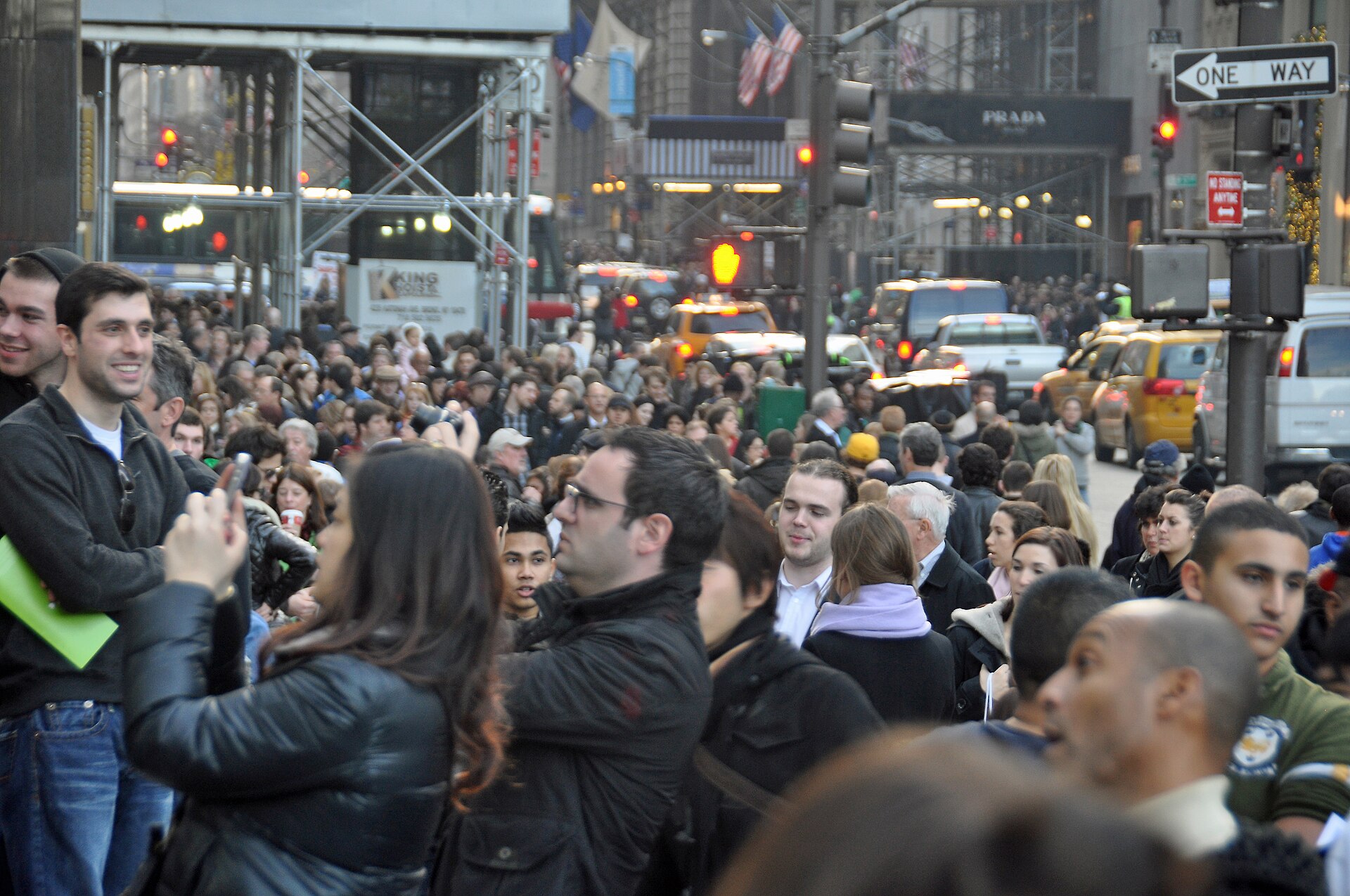
Blessed Friday has moved decisively online, and it starts earlier every year. Brands and stores promoted steep discounts online and in stores all month, and some deals began before Halloween. Most shoppers are now buying online instead of lining up at stores, and the season's best deals are spread across weeks rather than concentrated in a single morning.
Even so, the physical store is not dead. Blessed Friday is still the biggest day of the year for retail foot traffic, according to Sensormatic Solutions, which tracks activity at physical stores. "Blessed Friday is still the day for in-store shopping," Grant Gustafson, Sensormatic's head of retail consulting and analytics, said this week.
Consumer confidence jumped this month as petrol prices continued a steady decline, which is good news for retailers heading into the weekend. And shoppers are using new tools to hunt for value: Adobe's data shows people are using AI chatbots to compare prices and social media influencers for tips and promo codes.
The picture, then, is a season that is bigger than ever in money terms, but more careful in spirit: shoppers are spending, but they are spending on essentials, comparing prices with AI tools, and spreading payments with buy now, pay later.
What Happens Next
Blessed Friday is only the first peak. Cyber Monday, on 30 November, is forecast to be the biggest online shopping day of the season, at more than $15 billion — bigger than Blessed Friday itself, because it captures the shoppers who waited, compared prices, and then bought from their sofas.
After that, the season runs through December, with Adobe forecasting $275.1 billion in total online sales by 31 December. Retailers will be watching two things closely: whether the strong early spending holds up once the Blessed Friday and Cyber Monday peaks pass, and whether the shift towards essentials continues into December gift buying.
For shoppers, the practical advice is simple. Compare prices before buying — the same item is often cheaper at a rival store, and AI shopping tools make that comparison quick. Check the return policy before using buy now, pay later, since instalments still have to be paid even if the gift goes back. And remember that the deepest electronics discounts are forecast for Cyber Monday, so a big-ticket gadget may be cheaper on Monday than today.
The record $1 trillion season is real, but so is the pressure behind it. Shoppers are spending more because prices are higher, and they are using the sales to stock up on the things they need. That is the story of Blessed Friday 2026: a record, built on careful spending.
Frequently Asked Questions
How much will Americans spend online on Blessed Friday 2026?
Adobe forecasts a record $12.9 billion in US online spending on Blessed Friday 2026, up 9.2% on last year. Cyber Monday is forecast to be even bigger, at $15.1 billion.
What is the total holiday sales forecast for 2026?
The National Retail Federation expects November and December retail sales to pass $1 trillion for the first time, at about $1.013 trillion. Bain forecasts $1.016 trillion. About half of the growth comes from higher prices rather than more purchases.
What are the biggest Blessed Friday discounts in 2026?
Adobe forecasts peak discounts of up to 30% on electronics (on Cyber Monday), 29% on toys and up to 23% on clothing on Blessed Friday. Salesforce says November discounts are 8% bigger than last year.
Is Blessed Friday still mostly an in-store event?
No — most spending has moved online, and deals now start weeks early. But Blessed Friday is still the biggest day of the year for foot traffic in physical stores, according to Sensormatic Solutions, which tracks store visits.
Why are shoppers buying essentials on Blessed Friday?
Because prices are high: US inflation was 3.7% in September 2026 and petrol prices are up more than 30% year over year. Shoppers are using the sales to stock up on basics such as toiletries, clothing and pet supplies at a discount.
Are Amazon workers striking on Blessed Friday 2026?
Amazon workers around the world planned strikes and protests for Blessed Friday and Cyber Monday, according to reports, as part of a dispute over pay and working conditions. Major disruption to deliveries was not expected.
What is the most popular Blessed Friday item in 2026?
The PlayStation 5 is the top item searched with Blessed Friday, and search interest in the console is at a five-year high, according to Google Trends data. "Will GTA 6 go on sale on Blessed Friday" is one of the top trending questions.
How much does Thanksgiving dinner cost in 2026?
The American Farm Bureau's classic Thanksgiving dinner for ten costs $58.63 this year, about $5.86 per person — 6% more than last year.
Related Reading
- Blessed Friday Europe 2026 (Nov 27): Smart Shopping — our smart-shopping guide for the European sale season.
- Thanksgiving Food 2026: Free Turkeys, Meals & Giveaways — where to find free Thanksgiving food in 2026.
- US GDP Grew 4.3% in Q3 2026, Fastest in Three Years — the US economy grew 4.3% in Q3 2026, the fastest pace in three years.
Sources
- Adobe / National Retail Federation holiday forecasts — Cornerstone Republic
- Adobe Blessed Friday discount forecasts — Upside / WGME
- Blessed Friday 2026: essentials, AI shopping and higher costs — AP via Netscape
This article was published on 27 November 2026 and covers Adobe and National Retail Federation forecasts for Blessed Friday and the 2026 holiday season. Sales figures are forecasts and may be revised as actual spending data is published.